In this story
A familiar lunch or dinner can be a better starting point than a completely new menu. Add gradually, notice what works and keep the food enjoyable.
Imagine deciding to eat more fiber and immediately replacing most of the groceries in your kitchen. By Wednesday, you are learning three recipes, negotiating with a large bag of lentils and wondering what happened to the dinner you used to like.
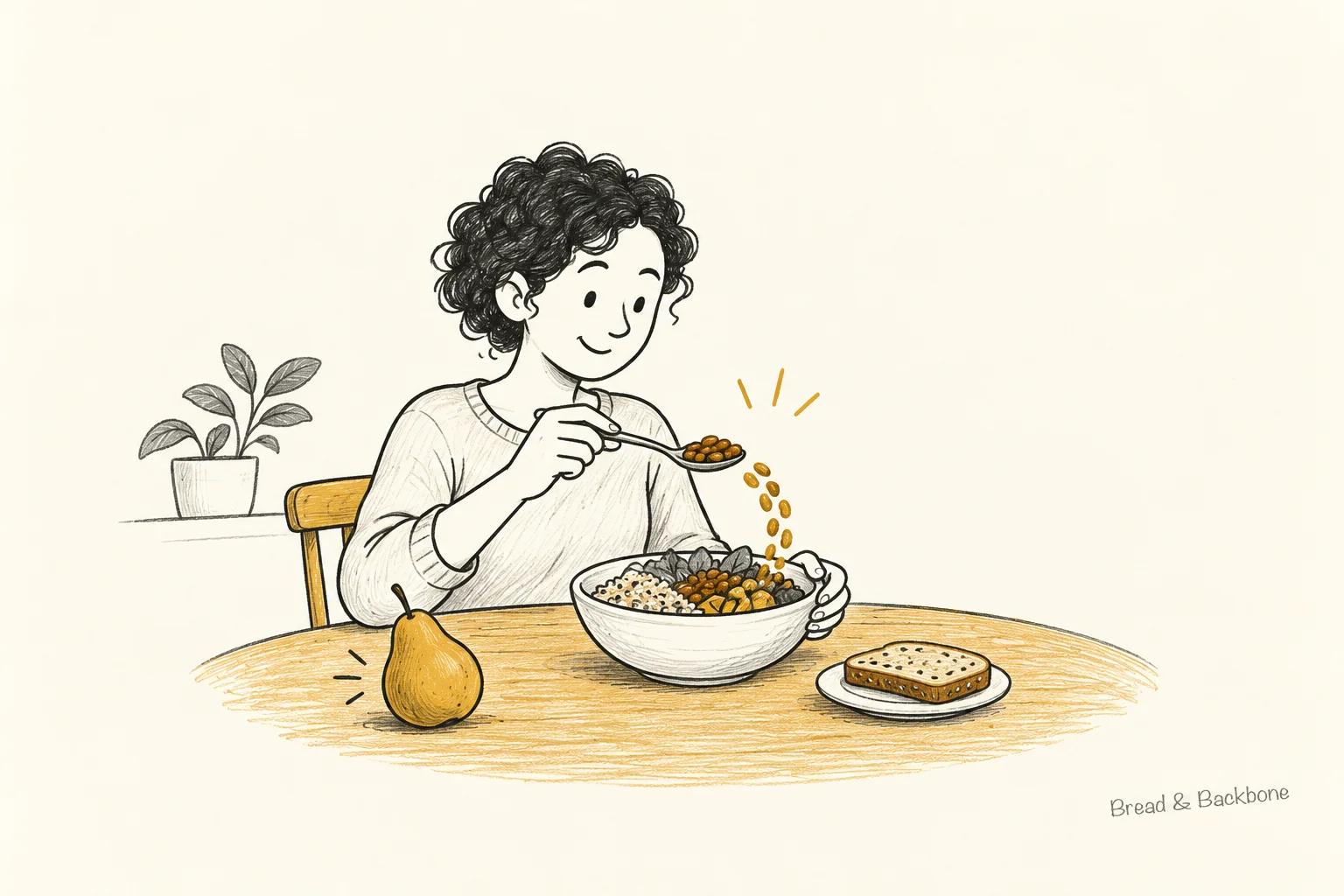
There is a smaller place to begin. Look at a meal you already make and ask what could join it.
Beans, whole grains, vegetables, fruit, nuts and seeds offer different ways to bring fiber into everyday food. The practical advice is to increase it gradually rather than make a sudden leap. The Centers for Disease Control and Prevention (CDC) cautions that a rapid increase can cause digestive discomfort, including gas, bloating and cramps.
Start with the meal that already happens
Think about yesterday’s lunch or a dinner you make often. Keep the parts that work: the flavor, the cooking method, the fact that everyone knows where the ingredients live. Then consider one addition.
If lunch is a sandwich, you could try a whole-grain bread you enjoy or add a piece of fruit alongside it. If dinner is pasta, a small amount of lentils could join a familiar sauce. If soup is already on the menu, beans or vegetables may fit without requiring a different meal.
These are possibilities, not a menu you need to complete. You might dislike one, already do another, or need a different option because of an allergy or dietary restriction. The useful starting point is the meal you actually eat, rather than the meal that would look most impressive in a plan.
The National Institute of Diabetes and Digestive and Kidney Diseases (NIDDK) lists a range of fiber-containing foods, including whole grains, legumes, fruits, vegetables and nuts. No single ingredient has to carry the entire assignment.
Choose a route into the meal
It can help to think in terms of the food’s role instead of starting with a nutrient number. Here are three ways that could look:
- Add to something: Stir a small amount of beans into a soup you already enjoy. The first question is whether the combination tastes good to you.
- Try a different version: Use whole-wheat pasta in a familiar recipe, or start with a mixture if that suits your preference. Compare what you actually like eating rather than insisting on an immediate all-or-nothing switch.
- Put something alongside: Keep the main meal and add fruit or a vegetable you enjoy. An addition can be simpler than rewriting the recipe.
How much fiber you add depends on the foods and amounts you choose. The dietary-fiber line on a package can help when you want that information.
Consider the practical details before shopping. Will you use the rest of the ingredient? Does the preparation fit the time you have? Would someone else in the household eat it too? A small change that fits the kitchen is a more useful candidate than a large one that needs a different household.
Let gradual mean gradual
There is no prize here for changing breakfast, lunch, dinner and snacks on the same day. Choose one place to experiment, use an amount that is comfortable for you, and see how the change fits before adding another.
NIDDK likewise advises adding fiber a little at a time. That leaves room to notice how you feel without committing to a completely different menu.
If a change leaves you uncomfortable, do not treat discomfort as evidence that the plan must be working. Pause the increase and reconsider the amount or food. Persistent or troublesome symptoms deserve a conversation with a qualified health professional, rather than an escalating effort to eat more.
If you have been advised to follow a low-fiber diet, or you have a digestive condition with a specific eating plan, get advice before changing that plan. General suggestions cannot tell you what is appropriate for your particular condition.
Remember fluids without making another challenge
Fluids matter alongside fiber. NIDDK explains that water and other liquids help fiber work and advises people to ask about an appropriate amount based on their health, activity and circumstances. That is more useful than assigning everyone the same large bottle and a deadline.
You might simply notice whether drinks are available with meals and during your day. If you have been given a fluid restriction, keep following it and ask your care team how dietary changes fit.
Nor should more fiber become the automatic explanation for every digestive problem. NIDDK notes that constipation has several possible causes. Seek medical advice if constipation persists despite self-care; constipation with blood in the stool, constant abdominal pain or vomiting warrants prompt medical attention.
Notice more than the number
After trying an addition, ask a few ordinary questions. Did you enjoy the meal? Was the preparation manageable? Did you feel comfortable afterward? Would you choose to have it again?
Those answers help you decide whether the change belongs in your week. If the lentils were not a good fit, you have learned something about that recipe or amount. Another food may suit you better.
You can keep the change small without pretending it is a complete answer to your overall nutrition needs. A dietitian can help when you want an individualized plan. For an everyday starting point, choose one familiar meal and one addition you are curious about.
Dinner can remain dinner while you learn something new about how to make it.
Sources and context
Official guidance checked October 30, 2026. This story uses established consumer guidance, not a newly reported trial. The meal examples are original illustrations, not individual treatment advice. No supplement or disease-treatment recommendation is made.