

In this story
A walk can be a valuable part of your week. Understanding what it does, and what deserves its own attention, can help you build around a habit you already enjoy.
If walking is the movement you can reliably make room for, being told to add something else may sound like moving the finish line. You found an activity that fits. Now apparently it needs colleagues.
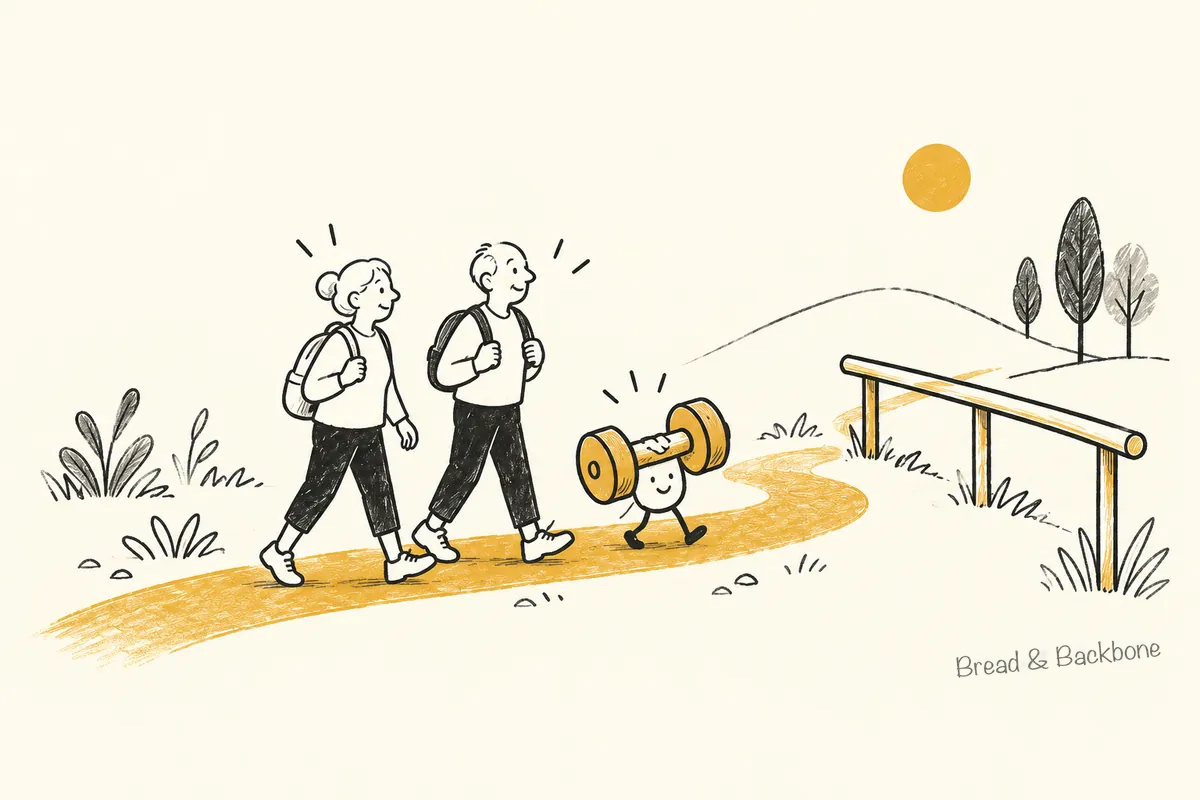
There is a more useful way to look at it. Walking does not have to meet every physical need to be worth doing. A brisk walk can contribute to aerobic activity, the kind that raises your breathing and heart rate. Strength and balance deserve attention too, particularly as we age. The question is what your walks already offer, and what you might want alongside them.
Give the walk credit for the work it does
“I walk” can mean a relaxed trip around the block, a purposeful commute or a sustained uphill effort. Those are different experiences, even if a phone records each one as steps.
The CDC describes intensity in relation to effort, not just the name of the activity. Its practical rule of thumb for moderate aerobic effort is being able to converse but finding singing difficult. That is a rough guide, not a medical assessment or a reason to push beyond what is appropriate for you.
A slower outing does not need to be relabeled a failure. Perhaps its purpose is company, fresh air or getting somewhere. You can value that experience while being honest about whether it contributes much moderate-intensity activity. There is no need to make every walk apply for the same job.
The other parts have their own purpose
For adults 65 and older, CDC guidance includes at least 150 minutes of moderate aerobic activity per week, or 75 minutes of vigorous activity, or an equivalent combination, plus muscle-strengthening activity on at least two days and activities that improve balance. Strength work should involve the major muscle groups, not only the legs.
Those recommendations describe a mix. Completing the walking portion does not automatically complete the others. A step total cannot tell you whether you have challenged your upper-body muscles or practiced balance in an appropriate way.
This is not a demand to become three different kinds of athlete. It is a reason to ask a more specific question about your week: which needs are already represented, and which have not had much attention?
Why a step total cannot answer every question
A step counter can help you notice how much walking is in a day. It does not describe the whole day. Two identical totals could come from very different outings, and neither tells you what happened in a strength session.
That is a limitation of the question, not a criticism of the device. “How much did I walk?” and “Does my week include different kinds of movement?” need different information. The public activity recommendations separate those categories for a reason; there is no step-count shortcut in them that replaces attention to strength and balance.
There is also no need to translate every walk into a prediction about added years. For planning your week, identifying the kind of activity you are doing is more useful than attaching an unearned longevity promise to it.
A small map of the week you actually have
Rather than replacing a walking habit, try looking at its surroundings. The following questions are a planning aid, not a fitness test.
What do my walks usually feel like?
Notice the difference between a leisurely outing and a more sustained effort. Record an ordinary week rather than the unusually energetic one you wish happened more often.
Where does strength fit?
Identify any current strength sessions. If there are none, a useful conversation with an instructor can begin with what you would like help learning, not a commitment to an elaborate program.
Have I made room for balance?
Ask what suitable, supported balance practice would look like for you. Do not turn an uneven sidewalk into an improvised challenge.
What could I keep doing?
Consider access, time, company and enjoyment. Adding a session that you cannot reach is a scheduling problem, not a character flaw.
If walking is difficult or unavailable to you, it is not an entry requirement for caring about your health. CDC advises being active within your abilities and conditions when the full recommendations are not possible. A qualified professional can help you discuss suitable activities and adaptations; new limitations or concerns about safety deserve appropriate clinical advice.
You do not have to demote the walk you love. Let it remain part of your life, then decide what would make the rest of your movement week more complete. For the broader picture, explore strength and balance as we age.
Sources checked October 29, 2026. This story explains general activity guidance, not an individualized exercise prescription.