

What Should Advanced Yoga Study Help a Teacher Notice?
In this story
- Notice the difference between an observation and a story
- Notice what your instruction asks of the listener
- Notice what is yours to decide
- What the training hours do and do not tell you
- Bring a teaching question to the decision
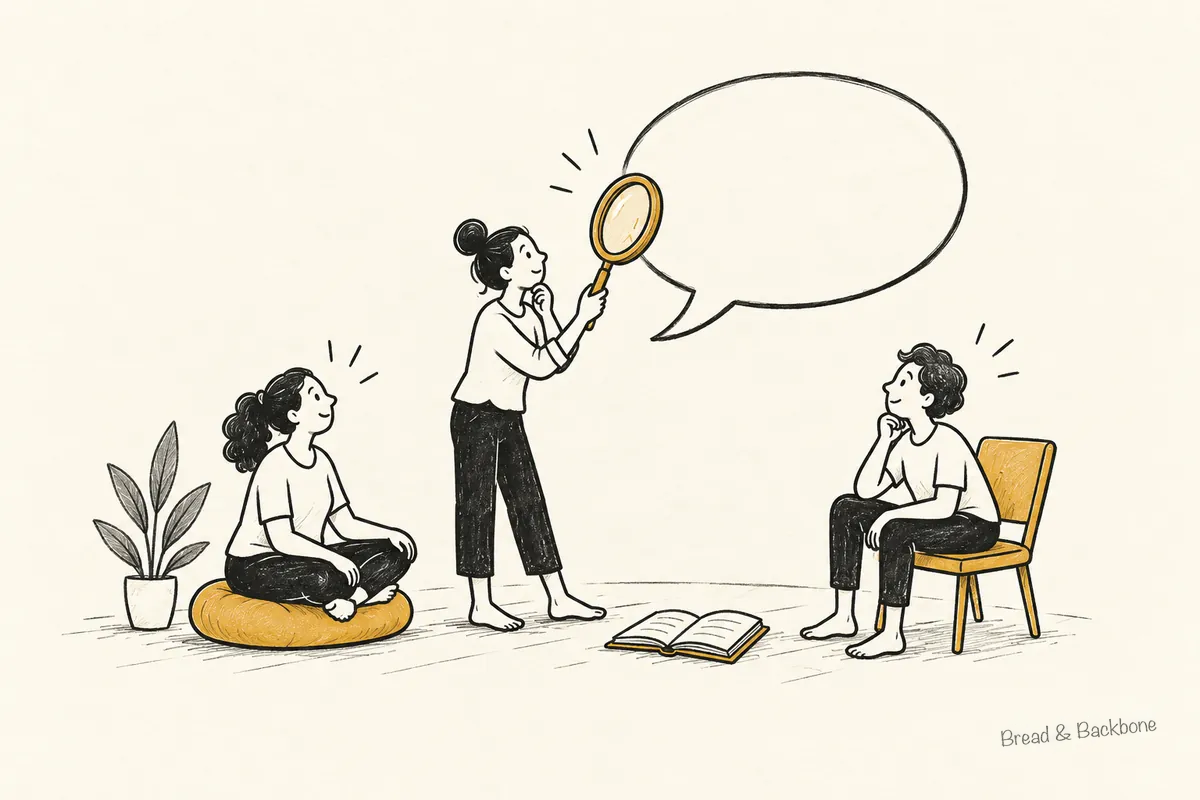
Consider a hypothetical teaching moment. You offer an instruction that has always seemed clear to you. One student responds. Another watches. A third chooses a different option.
You could repeat the instruction more loudly. You could demonstrate again. You could pause and ask what needs explaining. The interesting question is how you choose.
That is a useful place to begin thinking about advanced yoga study. More knowledge matters, but its value is not limited to a longer list of techniques. A deeper course of study should help you examine what you notice, why you respond as you do and where your understanding still needs work.
Notice the difference between an observation and a story
“The student is watching” describes something visible. “The student is afraid” assigns an experience you have not established.
The distinction matters when reflecting on your teaching. A person may be waiting for information, choosing to observe, taking a break or doing something you have not considered. A question gives them room to tell you. A confident interpretation may close that room before they have spoken.
This is an editorial example of reflective teaching, not a method for diagnosing a student's needs. You can use it to examine a remembered class without turning the student into a case study. Keep private details private; obtain permission before sharing identifiable accounts in a training setting.
Notice what your instruction asks of the listener
A cue can be familiar to the teacher and unfamiliar to everyone else. It may contain an anatomical term, a metaphor or an assumption about how someone moves.
For a study exercise, choose one cue you regularly use. Write what you intend it to communicate. Then write a plain-language alternative. Ask a mentor or peer what each version makes clear and what it leaves uncertain. There may not be one perfect sentence. The purpose is to make your choice more deliberate.
Useful feedback would engage with that choice: what was understandable, what could be misread and what the teacher might try differently. A general compliment can be kind without answering those questions. Before choosing further training, ask how its feedback process lets students investigate their actual teaching.
Notice what is yours to decide
Being attentive does not make a teacher responsible for interpreting every symptom or explaining every life experience.
Yoga Alliance's scope of practice asks its members to teach within their education and experience and to represent sources accurately. It also requires explicit, informed consent for physical adjustments. Silence is not permission, and previous consent does not automatically apply to a later adjustment.
These are not merely details to memorize for a credential. They change what a teacher does in a moment: whether to ask, whether to touch, whether to offer a practice or whether a question calls for someone with different expertise. Additional yoga training does not, by itself, establish competence in another profession.
Deeper study can also mean being more careful with the origins of an idea. When discussing philosophy or history, identify the tradition or source. Distinguish your interpretation from a teaching you are citing. Yoga's breadth is a reason to be specific, not a reason to present every interpretation as interchangeable.
What the training hours do and do not tell you
In Yoga Alliance's published teacher standards checked October 29, 2026, the education pathway for RYT 500 can involve a single registered 500-hour program or a registered 200-hour training followed by a separate registered 300-hour advanced training. The standards also include teaching and application requirements. Hours of study do not automatically complete registration.
Yoga Alliance has announced credential changes beginning in January 2027. If registration is part of your plan, verify the requirements that will apply when you finish. Do not assume an older description settles a future application.
The number on a course page can help identify a pathway. It cannot show you how a discussion unfolds, whether feedback is specific or how thoughtfully a course engages with its chosen tradition. Ask for a sample of those things.
Bring a teaching question to the decision
Instead of beginning with “Which advanced course should I buy?”, try beginning with something your teaching has made you curious about.
Perhaps you want to explain familiar movements more clearly. Perhaps you want sustained study of a text or tradition. Perhaps you need better ways to examine a sequence with a mentor. Write the question, then look for a learning experience that can genuinely address it.
A useful next course need not promise to make you a completely different teacher. It can help you understand one recurring choice well enough to make it with more care. That is substantial work, even when it is not especially photogenic.
Professional standards checked October 29, 2026. Teaching examples and reflection exercises are original illustrations, not reports of actual students or verified course outcomes. Credential details should be checked directly before enrollment.


From Personal Trainer to Health Coach: What Changes and What Doesn’t
In this story
- You are bringing useful experience, not starting from zero
- Try hearing the same comment two ways
- 1. Decide what you want to add
- 2. Separate the learning goal from the credential goal
- 3. Practice the conversations before expanding the offer
- 4. Make the two roles easy to understand
- 5. Build a manageable first version
- 6. Check whether the service is helping
- A worthwhile next step
- Sources and reading notes
Imagine finishing a good training session when a client says: “I know what to do. I just can’t seem to keep it going.”
You could adjust the workout. Sometimes that is exactly what is needed. Other times, the conversation points somewhere else: a work schedule that keeps changing, a goal the client no longer cares about, or a plan that leaves no room for a difficult week.
If those conversations interest you as much as programming the next session, health coaching may be worth exploring.
Moving from personal trainer to health coach involves learning and practicing a different service, choosing training that supports your intended role, and making the boundaries clear to clients. You can retain your exercise expertise. You also need to know when to use it, when to ask rather than prescribe a solution, and when to refer.
You are bringing useful experience, not starting from zero
A trainer may already know how to build rapport, explain something clearly, notice uncertainty, and adjust a plan. Behavior-change skills also belong in personal training. ACE’s personal trainer curriculum, for example, includes communication, goal setting, and a client-centered approach alongside exercise programming.
There is no need to dismiss that work to justify studying something new. The question is whether you want to develop a distinct kind of conversation and have the training to offer it responsibly.
Think about the conversations you already have with clients. Where do you feel at ease? When do you rush to fill a silence? Noticing those moments can tell you what you would like to practice.
Try hearing the same comment two ways
Here are two possible responses.
Client: “I missed both workouts. My week just got away from me.”
A possible programming response: “Would a shorter session be easier to fit in? We can look at what to change in the plan.”
A possible coaching response: “What was different about this week? And what, if anything, would you like to do differently next week?”
Neither response wins automatically. A shorter workout could solve a genuine programming problem. The second response gives the client room to identify what matters before either person chooses a solution.
If the client says the goal no longer feels important, that is useful information. So is learning that the missing workouts were a reasonable decision during an unusually demanding week. A conversation can be productive without ending in a bigger commitment.
ACE’s guide to adding health coaching to a training business describes the shift toward a more client-led process and the potential for the two services to complement each other. It does not mean every training client needs a separate coaching package.
1. Decide what you want to add
Before comparing certificates, try describing the service in ordinary language. What would someone actually come to you for?
For example: “I want to offer scheduled conversations for adults who want help making their chosen health habits fit their week. We would agree on a focus, explore obstacles, and review what they decide to try.”
That is a starting proposal, not permission to practice. It gives you something concrete to test against training, employer requirements, insurance, and the needs of the people you hope to serve.
Also decide what you are not adding. A plan to learn coaching does not need to become a plan to sell supplements, interpret lab work, run a membership, and launch a course at the same time.
2. Separate the learning goal from the credential goal
Ask two questions: “What do I need to become better at?” and “What credential does my intended workplace or career route require?” The answers may overlap, but they are not interchangeable.
If the NBC-HWC credential is your goal, consult NBHWC’s current eligibility requirements before enrolling anywhere. Its route includes an approved training program, qualifying coaching sessions, and additional eligibility requirements before the board exam. Completing an unrelated certificate is not the same as satisfying that route.
For any program, ask to see:
- An example of what a student practices, not only a lecture list.
- How someone observes and gives feedback on coaching skill.
- How boundaries and referral decisions are assessed.
- The exact credential awarded and any separate requirements afterward.
- The full time commitment, costs, and refund terms.
Those are buying criteria, not a ranking of schools. Keep written answers so you can compare the same things across programs.
3. Practice the conversations before expanding the offer
Make skill practice a real part of your study plan. Within an appropriate training or supervised practice arrangement, work on a short conversation with a clear focus. Get feedback on what you actually said and how the other person experienced it.
A useful self-review could ask:
- Did I establish what the person wanted from the conversation?
- Did I offer my solution before understanding their situation?
- Was my summary accurate, or did I quietly replace their goal with mine?
- Did we finish with a decision the person understood and owned, including a decision not to change anything yet?
If recording is part of practice, obtain permission and follow your program’s privacy and storage rules. Do not turn real clients into training material without their knowledge.
4. Make the two roles easy to understand
NBHWC’s scope of practice calls for professionals working in dual roles to explain and document both roles and their boundaries. A coaching qualification does not automatically expand a trainer’s existing scope.
Before offering the service, confirm the proposed arrangement with your employer and insurer, and check applicable rules where you practice. Clarify booking, fees, cancellations, communication between sessions, record handling, and referral procedures. Get qualified advice where needed rather than assuming an existing agreement covers a new service.
Then explain the distinction in ordinary language. For example: “In our training session, we work on your exercise program. In a coaching session, we set aside time for the change you want to explore. We’ll agree which service you’re booking.”
A client should not discover halfway through a conversation that they have entered a new paid service.
5. Build a manageable first version
Once you have the relevant preparation and permissions, start with an offer small enough to deliver carefully. Resist promising unlimited access simply because it sounds supportive.
Illustrative planning example: A trainer sets aside two coaching appointments each week, plus separate time for preparation, notes, and professional feedback. Before accepting clients, the trainer checks that those hours genuinely fit alongside existing sessions. After an agreed trial period, the trainer reviews demand, workload, and client feedback before adding capacity.
Your practical limit may be one appointment, a different format, or no new appointments until you finish training.
6. Check whether the service is helping
Decide with each client what makes the service worth their time. At an agreed review point, ask what has helped, what has not, and whether the arrangement still fits. Attendance and package renewals tell you something about a business; they do not, by themselves, establish better health.
For your own learning, keep track of questions that recur. Are you repeatedly unclear about a boundary? Does everyone ask for a service you do not provide? Those patterns may call for further education, a stronger referral relationship, or a clearer description of the offer.
Do not use a client's progress as a marketing story without separate permission. An honest private review and a public testimonial serve different purposes.
A worthwhile next step
Choose one action this week: compare two training programs, speak with your employer about the role, or arrange an opportunity to observe an appropriately consented coaching demonstration. You do not have to redesign your whole career to find out whether this work fits.
The broader goal remains familiar to anyone who enjoys training people: helping someone build a stronger life they can actually live. Our Strength for Life journal explores that connection between fitness and everyday life.
Following DHHLC? Drishti currently lists health and longevity coaching training as coming soon. Check its current training information as details develop, and apply the same credential and practice questions you would ask of any program.
Sources and reading notes
Sources checked October 29, 2026: ACE’s personal trainer program overview and article on integrating health coaching; NBHWC’s exam eligibility requirements and Scope of Practice, linked above. Credential and professional requirements should be rechecked before enrolling or offering a service.
Cardio and Strength Training Can Share a Week
In this story
- Know what you are trying to include
- What happened when researchers shared the time
- Put your real week on the page
- A calendar example, without pretending it's your prescription
- Does the order matter?
- Review the fit before redesigning everything
- Sources and reading notes
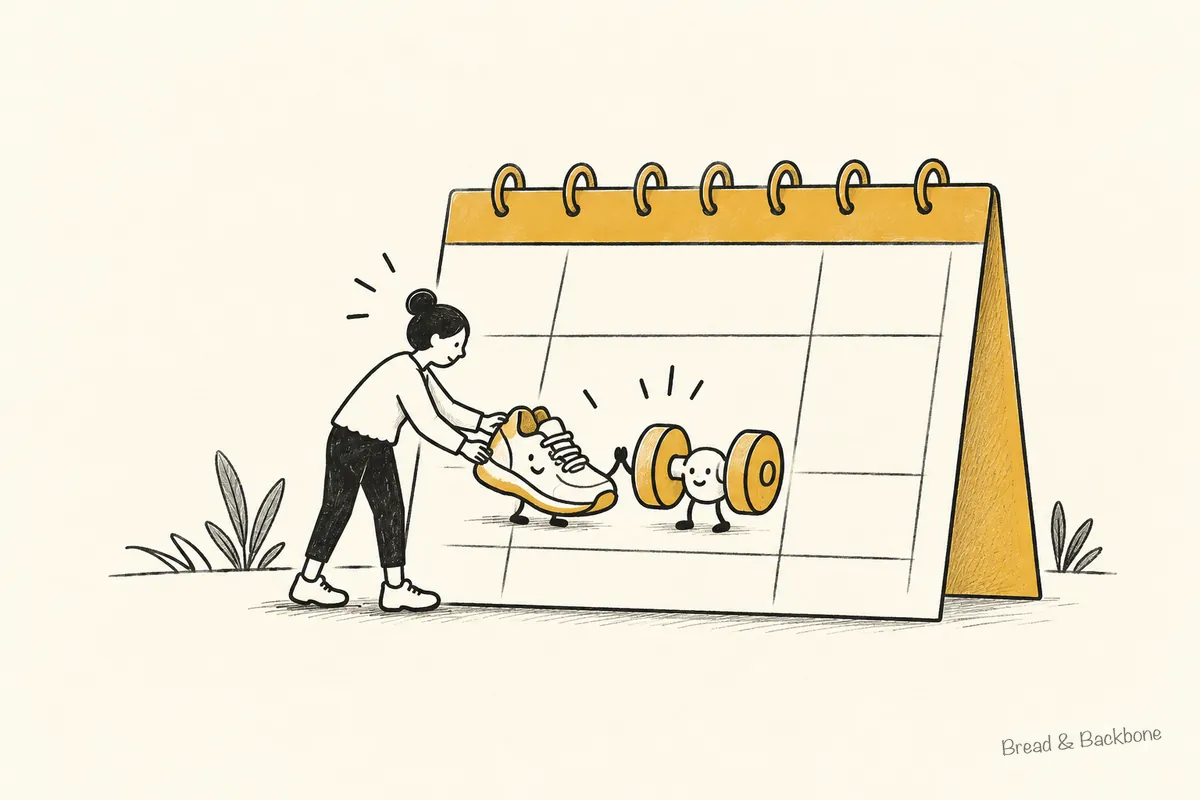
The calendar does not care that your exercise plan has two departments. It offers the same Tuesday evening to the walk you enjoy, the strength session you want to learn, and several things that have nothing to do with fitness.
Choosing between cardio and strength can start to feel like choosing which part of your health to neglect. Usually, that is the wrong starting point.
For general health, aerobic activity and muscle-strengthening work both belong in the picture. They can share a week, and sometimes a session. The practical question is how to make room for both at an amount and intensity that fit your circumstances, without treating each as a separate full-time commitment.
Know what you are trying to include
Cardio is the everyday term for aerobic activity, such as a suitable brisk walk, bike ride, or swim. Strength training involves working muscles against resistance. An activity can have more than one demand, but being tired afterward does not tell you everything about what it trained.
The CDC's adult guidelines recommend at least 150 minutes of moderate-intensity aerobic activity weekly, or 75 minutes vigorous, or an equivalent mix, plus muscle-strengthening activity on at least two days involving the major muscle groups. Aerobic activity can be accumulated in smaller chunks.
Those are population-level recommendations, not a demand to begin at the full amount tomorrow. If you are starting or returning, build gradually. A condition, disability, or symptom may call for individualized advice about appropriate activities and amounts.
For older adults, CDC guidance also includes balance activity. A week is not fully described by two labels, and no calendar template knows your needs in advance.
What happened when researchers shared the time
In the CardioRACE randomized trial, published in 2024, 406 adults aged 35 to 70 with overweight or obesity and elevated blood pressure were assigned to aerobic exercise, strength exercise, a combination, or a no-exercise control.
The exercise groups had the same scheduled time: three supervised one-hour sessions weekly for a year. The combination group split its time between the two types.
Aerobic and combined training improved the study's composite cardiovascular risk score compared with control. Strength training alone did not significantly improve that score. This does not make strength work worthless: strength improved in the resistance and combined groups.
The primary result combined blood pressure, LDL cholesterol, fasting blood glucose, and body-fat percentage into one score. It did not measure fewer heart attacks or longer life. Most participants were white and well educated, and the supervised setting limits generalization. Four participants had study-related, non-serious adverse events. The study supports considering a combined approach; it does not establish one ideal weekly timetable for everyone.
The practical point is modest and useful: making room for both need not mean adding two complete programs on top of each other.
Put your real week on the page
Start with the appointments you cannot easily move. Include travel, caregiving, work, and the time it takes to get to an exercise setting. Then mark the activity already present, including the things you enjoy.
It is easier to make a plan around a walk you look forward to than around a fictional version of yourself who suddenly loves a different activity. At the same time, enjoying one kind of movement does not answer whether another useful element is missing.
Here is an original calendar-planning tool. It helps organize a conversation, not prescribe an exercise dose.
| Arrangement | When it might suit your logistics | What to think through |
|---|---|---|
| Separate appointments | You prefer one main purpose for each visit. | Will the extra travel and transitions fit, and is there adequate recovery in the overall plan? |
| A shared visit | Getting to the facility is the difficult part, so combining appropriate activities is convenient. | What can you reasonably do in the time, which activity deserves priority, and what should be shortened? |
| An anchored week | One or two appointments are predictable; other activity fits in flexible periods. | Which activities need equipment or support, and which can happen conveniently elsewhere? |
These arrangements are not competing scientific protocols. You may use different ones in different weeks.
A calendar example, without pretending it's your prescription
This is an illustrative scheduling decision, not a client result or a complete exercise recommendation.
Suppose someone enjoys walking with a friend on Wednesday and Saturday. They have also agreed on a suitable strength plan with a trainer. Rather than replace the walks, they look for places to put the strength sessions that account for recovery and the demands of the rest of the week.
Another person can get to a facility less often. They ask whether an appropriate amount of aerobic and strength work can share those visits, with additional activity elsewhere if suitable. They also count setup and changing time, because the commute home will not wait for the exercise log to look tidy.
The useful comparison is not which person appears more disciplined. It is whether each arrangement supports the goals and can be carried out without repeatedly colliding with the rest of life.
Does the order matter?
The answer depends partly on what you need the session to accomplish. Preparing for a particular event or pursuing an advanced strength goal is a different planning problem from building a general routine.
Before searching for a universal rule, tell the person designing your program which activity matters most to you and where you feel rushed or depleted. Ask: “If I do these together, how should we arrange them so I can perform the work appropriately?”
Changing order is one possible adjustment. So are changing the amount, choosing another day, or reducing the overall demands. You do not have to solve a programming question by being more determined.
Do not turn every available session into the hardest possible version of both activities. If you are unsure how to balance the demands, seek qualified help. NIH's activity guidance recommends beginning gradually and stopping for concerning symptoms rather than pushing through them.
Review the fit before redesigning everything
After trying an appropriate plan, ask what actually happened. Which appointments were easy to protect? Which required more travel or recovery than expected? Was one kind of activity consistently squeezed out?
That is information you can use. You may need a smaller starting commitment or a different arrangement, rather than a new exercise philosophy.
Our story on strength and balance as we age offers a wider view of capacity beyond any single session. The week in front of you is simply where those longer-term intentions need a place to begin.
You can enjoy your walk and make room for strength. The plan does not have to choose sides. It does need to recognize that both activities are happening in one person's life.
Sources and reading notes
Sources checked October 29, 2026: CDC adult and older-adult activity guidance; Lee and colleagues' CardioRACE trial in the European Heart Journal; and NIDDK activity guidance. The calendar arrangements are original editorial planning options, not tested schedules. The trial's risk-score result should not be read as proof of fewer cardiovascular events or a recommendation to copy its program.
Eating Well When Cooking Is Not on Today's Schedule
In this story
- First, decide what “no cooking” means tonight
- Build from something you already want to eat
- Buying dinner is also a decision you can make thoughtfully
- No cooking still needs food safety
- Let the plan be small enough to use
- Try this today
- Sources and further reading
You can want a decent dinner and have absolutely no interest in making one. Those two facts can coexist.
Perhaps the day ran long. Perhaps cooking is difficult in your current space, or standing at the counter takes more energy than you have. Perhaps you cooked yesterday and would quite like not to cook again tonight.
A meal does not have to be cooked from scratch to be thoughtfully put together. Ready-to-eat ingredients, a simple assembly, or a purchased meal can all be starting points. The useful question is what you can manage with the time, equipment, money, and food available.
First, decide what “no cooking” means tonight
There is a difference between not wanting to use the stove and having no reliable kitchen. Advice to “just batch-cook on Sunday” is not very helpful if Sunday is also full, you have no freezer space, or preparing food is physically difficult.
Choose the situation that actually applies:
- I can assemble: I have ready-to-eat ingredients and somewhere clean to put them together.
- I can heat: I have a microwave or other suitable appliance and can follow the food's heating instructions.
- I need someone else to prepare it: A grocery prepared meal, takeout, or another available service is the workable option.
This is a practical distinction, not a ranking. Each option has different costs and requirements. Start there rather than judging tonight against a meal that would require a different evening.
Build from something you already want to eat
Health Canada's cooking guidance includes no-cook preparation among its options. You can combine ingredients into a meal without turning on the stove.
A simple way to think about an assembly meal is to choose a starting food, then ask what would make it more varied and satisfying for you. That might include a protein food, a grain or other familiar staple, and vegetables or fruit. This is a menu-building prompt, not a fixed plate formula or a guarantee that the meal meets all your needs.
Here are several examples to adapt, not prescribed portions:
A plate instead of a recipe
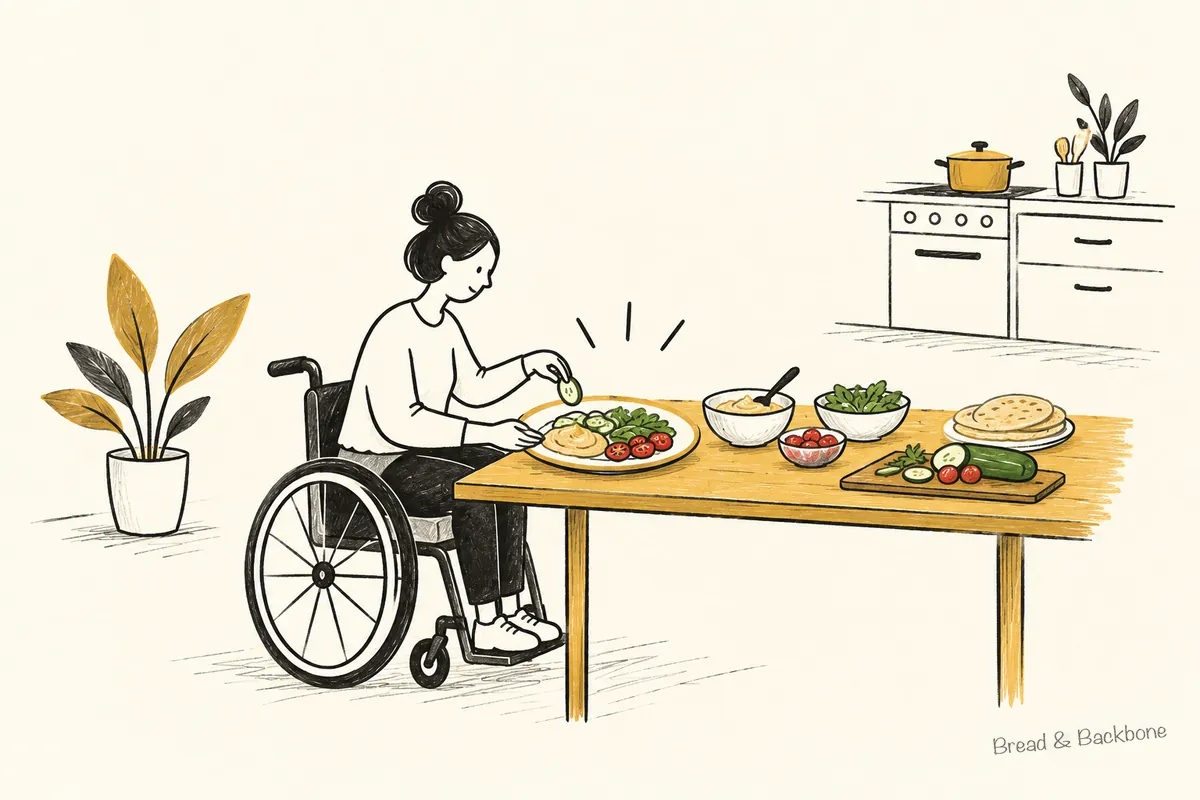
Hummus, whole-grain pita, ready-to-eat vegetables, and a piece of fruit. Add or change foods to suit your appetite, preferences, and dietary needs. A meal can have separate parts without needing a formal name.
A bean salad without a cooking step
Ready-to-eat canned beans, drained and rinsed, with prepared vegetables, a dressing you enjoy, and bread alongside. Use ingredients labeled and suitable for eating without further cooking.
A sandwich with useful company
A filling you enjoy, such as a suitable ready-to-eat bean spread, with bread and a side of vegetables or fruit. A sandwich does not need to be reinvented as a bowl to qualify as dinner.
A meal you can heat
A prepared bean or lentil dish with a grain and vegetables, heated according to the package directions. This is a low-cook option rather than a promise that every packaged ingredient can be eaten cold.
Use the foods that fit your culture and budget. These examples are not nutritionally interchangeable, and they are not a medical diet. If an ingredient does not suit your allergies or individual guidance, leave it out and choose an appropriate alternative.
Buying dinner is also a decision you can make thoughtfully
You do not have to earn a purchased meal by being exhausted enough.
Look at what is available and choose something you expect to enjoy. If you want more variety, consider whether a side or an ingredient you already have would complement it. That is often a smaller decision than finding an entirely different meal.
When choosing packaged food, the Nutrition Facts label can help you compare similar products. Check the serving size before comparing nutrient amounts, since a package may contain multiple servings. Use the information for the things that matter to your needs rather than trying to optimize every number.
There is also the practical price. Compare what you will actually use. A larger package is not necessarily the better purchase if you lack storage or will not finish it. A modest backup that gets eaten may serve your household better than an ambitious collection of ingredients waiting for a quiet week.
No cooking still needs food safety
A ready-to-eat meal may need refrigeration. “Ready” does not mean it can stay on a desk indefinitely.
FoodSafety.gov recommends clean hands, utensils, and surfaces, and keeping ready-to-eat foods separate from raw meat, poultry, seafood, and eggs. Wash produce under running water unless it is labeled prewashed. Follow package directions for foods that require cooking or heating.
The FDA advises refrigerating perishable food within two hours, or one hour when the temperature is above 90°F. Keep the refrigerator at 40°F or below and follow storage instructions. If you do not have reliable refrigeration, choose options that can be stored safely in your circumstances and buy perishable prepared food close to when you will eat it.
If you have been given special food-safety or dietary advice because of pregnancy, a medical condition, or treatment, follow that advice. A general menu idea cannot replace it.
Let the plan be small enough to use
It can help to keep one assembly option in mind before the next busy evening. Not a week of identical containers. Just a meal whose ingredients, storage, and preparation you understand.
The aim is not to avoid cooking forever or to become better at tolerating food you dislike. It is to make room for the nights when cooking is not a reasonable request. You still get to eat something you enjoy.
Try this today
Write down one no-cook meal you would willingly eat. Check which ingredients you already have and whether you can store them safely. If it fits your needs and budget, add only the missing item or two to your next shopping list.
Sources and further reading
- Health Canada: Healthy cooking methods, including no-cook preparation
- FDA: How to Understand and Use the Nutrition Facts Label
- FoodSafety.gov: Four Steps to Food Safety
- FDA: Are You Storing Food Safely?

Thinking About 200-Hour Yoga Training? Start With These Questions
In this story
- What are you hoping to learn?
- Make room for the actual week
- Consider how you feel about being a learner
- Keep completion and registration separate
- A reason to begin, or a reason to wait
Enjoying a yoga class and wanting to learn how to teach one are related possibilities. They are not the same decision.
Perhaps you want more time with the philosophy. Perhaps you notice yourself wondering why a teacher chose a particular sequence. Perhaps teaching sounds interesting, but saying that aloud feels premature. None of those thoughts needs an immediate enrollment button.
Before comparing schools, give yourself room to understand what you want the training to do. A 200-hour program is a substantial learning commitment. The useful readiness question is not whether you can perform the most eye-catching posture in the room. It is whether the course's purpose, requirements and way of learning match what you are prepared to explore.
What are you hoping to learn?
Try finishing this sentence in ordinary language: “I want to understand more about...”
If your answer is personal practice, say so. If it is teaching, name the part that interests you. Explaining something clearly? Creating a welcoming space? Studying a tradition more carefully? You do not need a polished professional mission to identify a genuine question.
A teacher-training course should also involve learning beyond your own experience on the mat. Yoga Alliance's current school standards describe four broad areas for its foundational 200-hour programs: techniques and practice, anatomy and physiology, yoga humanities, and professional essentials. That includes teaching-related learning, not simply attending more classes.
Yoga humanities is an important part of that picture. Yoga has histories, philosophies and traditions worth studying on their own terms. A program's approach to those subjects should be visible, not reduced to a few inspirational phrases between movement lessons.
Ask a school how its teaching responsibilities fit your reasons for studying. If you want deeper personal exploration but do not currently want teacher preparation, a course, workshop or sustained study with a teacher might be another route. That is an option to investigate, not a consolation prize.
Make room for the actual week
“Two hundred hours” can sound reassuringly definite. It does not tell you where those hours will go in your life, or what other work the school expects.
Request a sample week and the complete requirements. Then place the live sessions, individual study, practice teaching and deadlines next to your existing commitments. Ask which hours are included in the advertised total and which activities are additional. Do not assume a school's schedule from its headline.
Here is a hypothetical example. A person can attend a weekend training but discovers that its weekday practice-teaching meetings conflict with work. The problem is not a shortage of dedication. It is information that arrived too late. Finding it before paying is useful progress.
Online study also deserves a concrete question: when will someone see or hear you teach, and how will you receive feedback? A library of lessons and a conversation about your teaching are different learning experiences. Ask what the particular program actually provides.
Consider how you feel about being a learner
You do not have to enjoy every correction to be willing to learn. But it helps to picture the process honestly. You may be asked to explain an idea, practice teaching in front of others or revise something you thought was clear.
Ask the school to describe a typical feedback exchange. Who gives the feedback? Can students ask questions or try again? What happens when a student needs more time? These questions are about the learning environment, not a demand that the course be effortless.
If you have access needs, raise them before enrolling. Ask about participation options, materials and assessment arrangements. Obtain specific answers rather than relying on a general promise that everyone is welcome.
Keep completion and registration separate
A school's completion certificate and a Yoga Alliance teacher credential are different things. Yoga Alliance publishes requirements for the certificates submitted with registration; finishing a course does not itself complete an application.
Timing matters too. As of October 29, 2026, Yoga Alliance has announced credential and membership changes beginning in January 2027. It says the 200-hour and 500-hour training requirements are not being removed. If a credential is important to your decision, ask the school and Yoga Alliance which rules will apply when you finish, rather than relying on an old screenshot or a promise of automatic registration.
A reason to begin, or a reason to wait
Before you commit, write three short notes: what you want to study, what time you can genuinely protect and what you still need answered. There is no pass mark. The notes are there to help you recognize a good fit.
You may find that training is a thoughtful next step. You may discover that you want a different kind of study, or that a later start would let you participate more fully. Curiosity does not expire because you decide to give it a little more room.
When you are ready to compare providers, our online yoga teacher-training comparison addresses a different question: what particular schools offer. Check current terms directly before enrolling.
Credential information checked October 29, 2026. Requirements can change. This story offers a readiness reflection, not a guarantee of admission, registration or employment.

What Is a Rest Day For?
In this story
- Rest belongs inside the plan
- What are you taking a break from?
- Three questions before you change today's plan
- A rest day can be specific without being busy
- When the difficulty is taking the break
- Sources and further reading
A blank square on a training calendar can look suspiciously like something you forgot to do. If you have worked hard to build a routine, taking a day away from it may feel less natural than showing up.
Yet a training plan includes decisions about when to stop as well as when to begin.
A rest day makes room to recover between training sessions. It does not have to mean avoiding all ordinary movement, and it does not have to become another workout disguised as recovery. The useful question is what kind of break fits the training you have been doing and how you are feeling.
Rest belongs inside the plan
The National Library of Medicine's MedlinePlus guidance describes rest as part of training that helps you recover for the next workout. More exercise is not automatically a better response when you are persistently tired or performing worse.
That does not mean a difficult session or a tired morning tells you exactly what is wrong. A calendar cannot diagnose fatigue. It means recovery deserves consideration before the answer becomes “push harder.”
There are also straightforward scheduling principles. The National Institute of Diabetes and Digestive and Kidney Diseases advises beginners following its general strength-training guidance not to work the same muscles on consecutive days. An individual program may organize sessions differently, so ask your trainer how the harder and easier parts of your week are meant to fit together.
What are you taking a break from?
“Rest” can mean a break from structured exercise altogether. It can also describe a day away from a particular demanding activity while you continue with ordinary, comfortable movement.
A leisurely walk is different from a brisk uphill route with a pace target. A few comfortable movements are different from a challenging class. Calling something “active recovery” does not decide how demanding it is for you.
You do not need to turn a day off into a program of special tools and appointments. If an easy activity appeals to you and is appropriate for your situation, it can simply be something pleasant to do. It does not need a claim that it accelerates healing.
Equally, there is nothing to prove by staying on the couch when you would like an ordinary walk. The aim is to make a sensible choice rather than follow a rigid image of what recovery should look like.
Three questions before you change today's plan
Use these as prompts for reflection or a conversation with your trainer. They are not a readiness test, diagnosis, or medical clearance.
What has the week already asked of me?
Look beyond the last workout. Include unfamiliar exercise, a change in training volume, a physically demanding job, travel, and disrupted nights. Those details provide context when you explain why today's session feels different.
You do not need to calculate a recovery score. A short note such as “two hard sessions, a long shift, little sleep” can be more useful in a coaching conversation than “I feel off.”
What is the purpose of the next session?
If you cannot explain it beyond keeping a streak alive, ask whether the schedule needs adjusting. If the session has a clear purpose, discuss how to preserve that purpose without assuming the original workload is mandatory.
Possible decisions include keeping the plan, making it easier with appropriate guidance, or taking the day away from structured exercise. They are choices to consider, not a sequence in which the hardest option earns the highest grade.
Is this an ordinary planning question, or do I need help?
A persistent change in energy, recurring pain, or symptoms that concern you deserves attention rather than a motivational slogan. Do not use an easy workout to test an injury or to prove you are well enough to train. A healthcare professional can assess health concerns; a trainer can help organize exercise within appropriate guidance.
If you are unwell, injured, or have been told to restrict activity, follow the relevant medical advice rather than a general rest-day suggestion.
A rest day can be specific without being busy
Here is an illustrative planning conversation, not a reported member experience. You have strength sessions on Monday and Thursday. Wednesday is free of planned exercise, but you notice yourself searching for a class to fill it.
Before booking, you could ask: “Do I want to go because this particular class interests me, or because the blank day bothers me? How does it fit the plan?”
The answer might be that a comfortable walk with a friend sounds good. It might be that no additional exercise is the better choice. If you work with a trainer, this is useful information to bring them rather than something to conceal.
A simple rest-day note could read:
- Today's boundary: no structured training.
- Optional activity: ordinary comfortable movement if wanted and appropriate.
- Next planned session: the date already in the calendar, subject to how things develop.
This note is an example of planning language, not a prescribed schedule. Its value is that the next step is clear. You do not have to keep renegotiating whether a day off counts as doing something.
When the difficulty is taking the break
Feeling a little restless is not, by itself, a diagnosis. But if you feel unable to stop exercising, keep training through illness or injury, or experience distress about taking time off, support may help. MedlinePlus recommends speaking with a healthcare provider when exercise feels out of control.
You do not have to wait until you can give that experience a name. You can describe what happens and ask for help.
For an ordinary training week, the closing question is simpler: what would make the next session a considered choice rather than an obligation? Sometimes the answer is arranging the time. Sometimes it is talking to your trainer. Sometimes it is letting today's square remain blank.
Sources and further reading

Before You Buy a Health-Coach Certification: Questions Worth Asking
In this story
- First, untangle the credential language
- 12 questions to ask before you enroll
- A simple comparison scorecard
- Make the decision smaller
- Sources and further reading
You have three course tabs open. One promises a new career. Another has an impressive list of modules. A third is offering a discount that expires tonight.
None of that answers the most important question: will this training prepare you for the work you actually want to do?
To choose a health coach certification, start with your intended role, verify what the credential means, and inspect how the program teaches and assesses coaching skills. Then compare the full cost, time commitment, support, and written terms. The best fit is the program whose evidence matches your needs, not necessarily the one with the longest curriculum.
First, untangle the credential language
These labels describe different things. Ask a provider to explain exactly which one applies.
- Certificate of completion: a record that you met a course's completion requirements. Find out what those requirements involve.
- A provider's certification: a credential awarded under that organization's standards. Ask who assesses you, what you must demonstrate, and whether renewal is required.
- Approved education: a particular outside organization has reviewed a training program against its requirements. Check the approving body's own directory and the precise program listed.
- Individual board certification: a separate credential earned by a person. Finishing an approved course is not automatically the same as earning it.
For example, the National Board for Health & Wellness Coaching has a separate board-certification pathway with training, coaching-experience, and other eligibility requirements followed by an examination. Check the current requirements before choosing a course around that goal.
Also read approval language carefully. NBHWC explains that program approval is not an endorsement of every piece of curriculum, faculty opinion, product, or business practice.
12 questions to ask before you enroll
1. What work am I preparing to do?
Write one sentence: “I want to help [these people] with [this kind of challenge] in [this setting].” Someone adding coaching conversations to a fitness practice may need a different pathway from someone applying for a specific healthcare position.
Then check real requirements. Read relevant job listings and ask prospective employers what they recognize. A compelling course description cannot establish what a particular employer will accept.
2. What exactly will I earn?
Ask for the full credential name, the awarding organization, and the graduation requirements in writing. If an external credential matters to you, verify the route with that organization rather than relying on an admissions conversation. Keep the provider's certificate and any later qualification on separate lines in your notes.
3. Will I learn where coaching stops?
Look for realistic practice in boundaries, consent, referrals, and working alongside other professionals. A lesson called “ethics” is a starting point; ask what students actually do with it.
NBHWC's scope of practice distinguishes client-directed coaching from activities such as diagnosis, treatment, and prescribing. Additional qualifications can create separate professional roles, but the boundaries need to be clear. Ask how the course prepares you to explain your role to a client.
4. How much coaching will I actually practice?
Separate watching demonstrations, discussing a case, role-playing with peers, and conducting assessed sessions. All can have a place. They are not interchangeable experiences.
Ask for one sample assignment. What would you do, with whom, for how long, and how often? A list of video hours tells you how much material you can watch. It does not tell you how often someone will see you coach.
5. Who gives feedback, and what does it look like?
“Support included” could mean technical help, an open discussion group, office hours, or individual feedback on your work. Ask which you receive.
Request an anonymized example of feedback or an assessment rubric. Would you learn that you interrupted too quickly, missed the client's goal, or jumped into advice? Specific feedback should give you something you can practice differently next time.
6. What must I demonstrate to pass?
Ask whether assessment covers knowledge, practical skill, or both. Find out who reviews your work, what the passing standard is, and what happens when you need another attempt.
It is worth knowing what happens when learning takes longer than expected. Ask how the program helps a student prepare for another attempt, rather than relying on a general promise of confidence.
7. Who teaches the material, and how is it kept current?
Ask who teaches each subject and check their relevant qualifications. Ask how teaching claims are sourced, when lessons are reviewed, and how corrections reach students.
For a program using “longevity” in its description, ask how it distinguishes established guidance, emerging research, and speculation. An engaging presentation should leave you clearer about the strength and limits of the evidence.
8. Can I make the schedule work in a normal week?
Put required live sessions, practice appointments, assignments, and independent study on your actual calendar. Check time zones and attendance rules. Ask whether recordings replace attendance or only help you review it.
A flexible course may still have deadlines or activities that depend on another person's availability. Build your plan around an ordinary busy week, not an imaginary quiet one.
9. What help is available when I get stuck?
Ask who answers curriculum questions, where you submit them, and what response time to expect. Find out how long access lasts and what changes after graduation.
If community is a major attraction, ask to see its format. A monthly facilitated practice session and a large message board offer different kinds of connection. Choose the support you are likely to use.
10. What is the full cost?
Request one written total covering tuition, required materials, assessments, retakes, extensions, and any separate credential fees. Distinguish optional extras from requirements. Check whether a payment plan costs more overall.
The Federal Trade Commission's guidance on certificate programs recommends checking total costs and written terms, and cautions against guaranteed-job promises. Read cancellation and refund rules before paying, particularly if you need to view course materials to judge fit.
11. What evidence supports the career claims?
A graduate's enthusiastic story can be genuine without representing everyone's experience. If a provider publishes employment or earnings figures, ask who was counted, how many people responded, the time period, and whether the work was related to the training.
Ask what career support actually includes. A business lesson, a job board, an introduction, and employment are four different things. None should quietly stand in for another.
12. Can I see enough to make an informed decision?
A sample lesson, clear syllabus, practice example, assessment explanation, and written policies make comparison easier. Request what matters to your decision. If an answer is unavailable, record it as unknown rather than filling the gap with optimism.
Different programs can teach in different ways. You still deserve enough information to understand what you are buying.
A simple comparison scorecard
Copy the table below for each program. Use verified, unclear, or does not meet my need. This is a decision aid, not a validated rating system. Avoid adding up points: a beautiful learning platform cannot offset a missing credential you require for your intended job.
| Criterion | My requirement | Provider's answer and evidence | Status / follow-up |
|---|---|---|---|
| Role and credential fit | |||
| Boundaries and referral training | |||
| Practice, feedback, and assessment | |||
| Faculty and evidence standards | |||
| Schedule, access, and support | |||
| Total cost and written terms | |||
| Career claims and practical next step |
Make the decision smaller
Choose three nonnegotiables before your next admissions call. Bring the unanswered questions, ask for evidence, and compare the replies after the call rather than deciding under pressure.
You are choosing where to invest your attention, money, and trust. A good next step is one you can explain plainly: what you will learn, how you will practice it, what the credential means, and how it connects to the work you want to do.
Sources and further reading
- NBHWC Scope of Practice
- NBHWC Get Board Certified
- FTC: Choosing a Vocational School or Certificate Program
- NBHWC Approved Training Program Directory

A Short Workout Still Needs a Plan
In this story
- Give the available time an honest name
- What short-session research does, and doesn't, tell us
- Sort the plan before you start the timer
- Two different short days
- Save time around the work before rushing the work
- Look at the week without turning it into a debt
- Sources and reading notes
There is a particular kind of disappointment in getting ready to exercise and realizing the hour you set aside has become twenty minutes. You have not changed your mind. The day has changed the arrangement.
It is tempting to treat the remaining time as too little to count. It is equally tempting to squeeze the whole workout into it, as though a faster clock requires a faster body.
A shorter workout can have a useful purpose. The planning question is what to keep, what to change, and what to leave for another session. Shortening the plan does not mean every part of it should happen in a hurry, or that a brief session delivers every benefit of a longer one.
Give the available time an honest name
First, count the time you really have. Twenty minutes before you need to leave is not necessarily twenty minutes of exercise. You may still need to change, get equipment, warm up, and put things away.
That is not wasted time. It is part of the activity. A plan that only works by leaving out its setup is asking you to have a different afternoon.
Decide on one main purpose for this visit. Perhaps it is completing a shorter version of an established strength session, taking an aerobic activity break, or practicing something you already know. Those are different choices. You do not need to claim that each one is equivalent.
If you follow a trainer's program, ask for a shortened version before the rushed day arrives. A useful question is: “When I have less time, which part should I prioritize, and which part can wait?”
What short-session research does, and doesn't, tell us
One study published in 2019 compared different amounts of strength training over eight weeks. Forty-five young, resistance-trained men entered the study; 34 completed it. Groups performed one, three, or five sets per exercise, three times weekly, under supervision.
All groups improved on the strength tests, with no statistically significant differences between groups. Greater training volume produced more muscle growth at some measured sites. The smallest-volume sessions were much shorter.
The distinction matters: findings for strength and muscle size were not identical. This was a small, short study of experienced men, using demanding sets. It does not establish that any brief routine works equally well, that the programs were equivalent in every respect, or that a beginner should copy the protocol.
Rather than turning the study into a universal number of minutes, take a more useful question from it: Enough time for which outcome, in which kind of plan?
Sort the plan before you start the timer
Here is an original planning tool to use with an appropriate existing program. It is not a tested workout method, and it does not select exercises or loads for you.
| Decision | What it means | Question to settle |
|---|---|---|
| Preserve | Keep the session's main purpose and the preparation, technique, and recovery it requires. | “What would make this a worthwhile session rather than a rushed collection of exercises?” |
| Change | Use a shorter version already agreed with your trainer, or choose a suitable activity that fits the available time. | “Which adjustment still makes sense for me today?” |
| Defer | Leave out work that no longer fits instead of disguising it as an obligation to rush. | “Does this need another place in the week, or can it simply be omitted this time?” |
You may discover that the answer is to do fewer things. You may discover that this is a poor moment to learn a new movement. Or you may choose to reschedule. A planning tool should allow those answers.
Two different short days
These are illustrative scheduling examples, not member stories or prescribed routines.
In the first, a person who already has a strength program arrives late. Their trainer has helped them identify a shorter version. They follow that version without trying to rescue every omitted exercise at the end. The change is in the amount of work, not an instruction to race through it.
In the second, someone has a brief gap at home but no suitable setup for the strength work they had planned. They choose an accessible activity they already know, then reconsider where the strength session fits. They do not label the replacement identical to the original. It was a different choice for a different situation.
Neither example guarantees a training result. Both make the decision visible, which is more useful than pretending the schedule never changed.
Save time around the work before rushing the work
Look at what takes time without serving the session. Are you searching for the plan on your phone? Waiting for a particular machine when an agreed alternative exists? Choosing every exercise from scratch?
Those are logistical questions worth discussing. They are not reasons to guess at unfamiliar equipment or substitute a movement that is unsuitable for you.
Preparation and recovery are different. MedlinePlus exercise-safety guidance emphasizes appropriate equipment, learning form, and avoiding doing too much too quickly. A shorter appointment is not a reason to disregard those considerations. Stop for pain or concerning symptoms rather than treating the clock as permission to push through.
If a medical condition or injury affects your activity, a generic time-saving suggestion cannot determine what is safe for you. Ask the appropriate clinician or qualified exercise professional about modifications to your plan.
Look at the week without turning it into a debt
The CDC's adult activity guidance allows aerobic activity to be spread across smaller chunks of time and includes muscle-strengthening work separately. It also recognizes that some activity is better than none. That offers room to plan, not proof that all brief activities provide the same stimulus.
If sessions regularly shrink, the pattern deserves attention. Perhaps the original plan needs revising rather than repeated apologies. A useful review asks what can fit reliably, what support would help, and which goal matters most right now.
For a broader reason to make room for movement, our story on strength and balance as we age connects training with everyday capacity.
The next shortened session does not need to become a referendum on your commitment. Give the time a purpose, make a deliberate choice, and leave knowing what you did.
Sources and reading notes
Sources checked October 29, 2026: Schoenfeld and colleagues' resistance-training volume trial, published in Medicine & Science in Sports & Exercise in 2019; CDC adult activity guidance; and MedlinePlus exercise-injury guidance. The planning tool and examples are original editorial suggestions, not a validated intervention.
Peptide Is a Category, Not a Promise
In this story
- What the word actually tells you
- Listen for the leap
- Ask for the claim in an ordinary sentence
- A personal story is a beginning, not the whole answer
- Keep the product question separate from the molecule question
- You are allowed to take your time
Sometimes a word starts appearing everywhere before anyone stops to explain it. In a podcast. In a conversation after a workout. In an advertisement that seems very sure about how much better you could feel.
Peptide is one of those words.
Perhaps you are simply curious. Perhaps you are tired of a problem that has not improved, and the possibility of something new feels welcome. Either way, you deserve a better answer than enthusiasm on one side and eye-rolling on the other.
The useful starting point is surprisingly small: peptide describes a kind of molecule. It does not tell you whether a particular product will help a particular person.
What the word actually tells you
The National Human Genome Research Institute defines a peptide as a short chain of amino acids linked by chemical bonds. That describes its structure, not its clinical résumé.
It is a little like hearing that something is a vehicle. You have learned something real. You have not learned whether it is the right thing to take across a lake.
Peptide medicines are not all speculative. FDA's information about peptide drug products includes established medicines with specific approved uses. Their existence does not validate every other molecule, product or wellness claim sharing the peptide label.
That distinction lets us be interested in science without treating a whole category as either a miracle or a mistake.
Listen for the leap
Imagine this invented marketing sentence: “Peptides are part of how the body works, so this peptide supports healthy aging.”
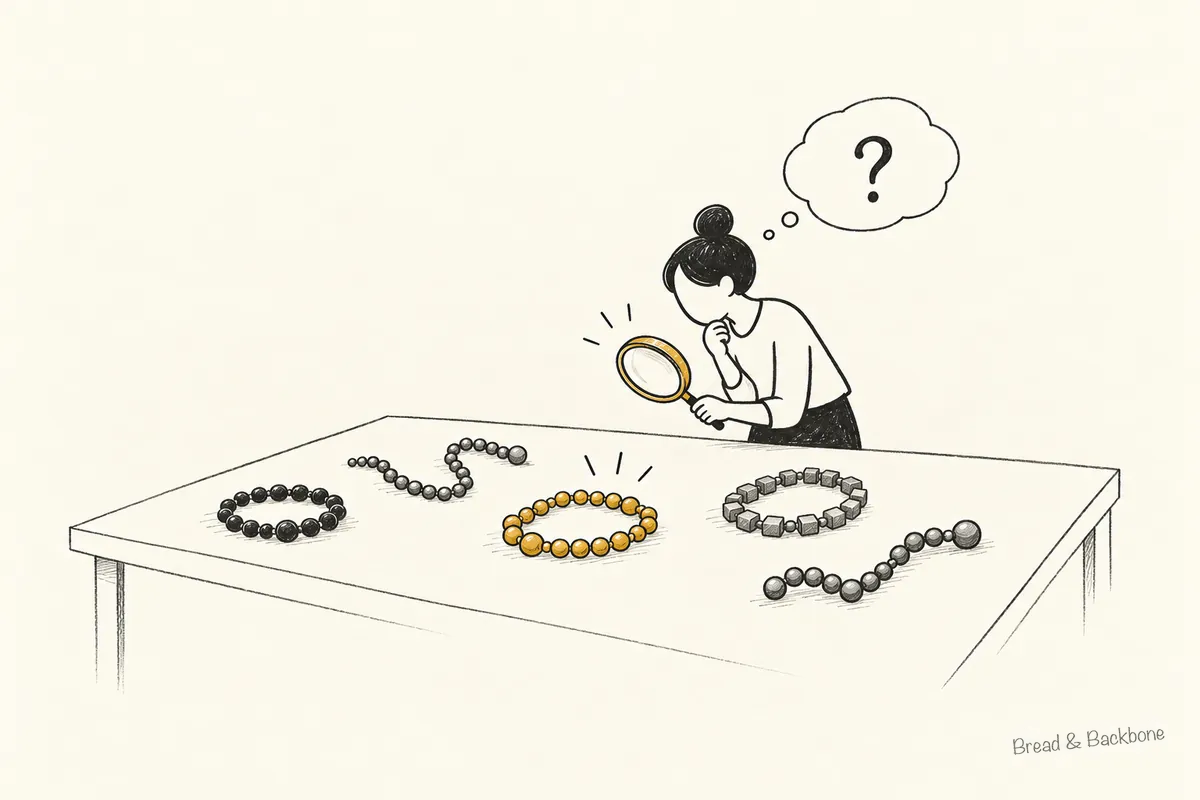
Notice the distance between the beginning and the end. A general observation about biology has become a recommendation about a specific product. The middle is missing.
Which molecule? What product? Studied in whom? For what outcome? Compared with what? What happened that the participants did not want to happen?
These are not questions designed to make someone fail a science exam. They are the bridge between an interesting explanation and a decision involving your body.
A mechanism can explain why researchers want to investigate something. It cannot, by itself, tell you how that investigation will turn out. FDA's explanation of clinical research makes the distinction clear: preclinical work is not a substitute for studies in people. Human trials ask defined questions about particular products, participants, benefits and harms.
Ask for the claim in an ordinary sentence
“Supports optimization” can sound impressive while leaving you almost nothing to evaluate. Try translating the claim into something a person could actually notice.
For example, “Adults with this specific condition had less difficulty doing this daily activity over this period” is a very different statement from “A laboratory marker changed.” Neither statement should quietly stand in for the other.
This is an evidence-reading exercise, not a judgment about a particular treatment. Before considering whether a claim is convincing, make sure you know what the claim is.
You might ask: “What did the study show people could do, feel or avoid that mattered to them?” If the answer concerns a test result rather than daily life, the next question is what that result has actually been shown to mean.
Then keep the boundaries of the answer intact. A finding about one condition does not automatically answer a question about another. A short study does not become a long-term result because the advertisement mentions longevity.
A personal story is a beginning, not the whole answer
A friend's experience can matter deeply to them and still leave your question unanswered.
Suppose, in a hypothetical conversation, a friend says they feel better after starting a product. You do not need to argue with how they feel. You can be glad for them while recognizing that the story does not establish what caused the change, how often other people benefit or what risks might apply to you.
Curiosity and caution can sit at the same table. Neither has to win by humiliating the other.
Keep the product question separate from the molecule question
Even evidence about a molecule does not remove the need to understand the actual product being offered. A shared ingredient name is not a complete description of a medicine.
For instance, FDA explains that compounded drugs are not FDA-approved. That is a different status from an approved drug product. Compounding can address particular patient needs, but the word itself is not evidence that a wellness claim has been established.
You do not have to master pharmaceutical regulation to ask a clinician or pharmacist to explain the distinction. “What exactly is this product, and what evidence applies to this use?” is a reasonable question, not an awkward one.
You are allowed to take your time
If a promise has caught your attention, save the exact claim and the research it points to. Bring both to a qualified clinician who can discuss your circumstances, other options and the uncertainties. That is more useful than bringing only a slogan.
You do not need to choose a treatment, reject an entire field or prove how open-minded you are today.
Sometimes the most confident next step is simply to ask for the missing middle.

Protein at Breakfast Without Turning It Into a Project
In this story
- Start with the morning you actually have
- Protein does not have one breakfast uniform
- Read the label without turning it into homework
- Make the backup easier than the abandoned plan
- Leave room for individual needs
- Sources and further reading
Some mornings have room for a pan. Others have room for finding your keys. A breakfast suggestion that cannot tell the difference is not much help.
If you want to include protein in your morning meal, you do not have to begin with a powder, a new appliance, or a number borrowed from someone else's training plan. You can start with a food you like and a breakfast you already know how to make.
Eggs, yogurt, tofu, beans, milk, nuts, and seeds offer different ways to include protein at breakfast. They are not nutritionally identical, and the amount you need is individual. The practical question here is how to make a workable meal, not how to win breakfast.
Start with the morning you actually have
Before changing the food, identify the problem. Are you short on time? Tired of your usual options? Looking for a plant-based choice? Trying to follow advice you received from a registered dietitian?
Those questions lead to different decisions. Adding a complicated recipe does little for someone whose main obstacle is getting out of the house. Buying a large tub of something you dislike is not a savings strategy if you never want to eat it.
It can help to choose a weekday default and a backup. The default is the meal you would willingly repeat. The backup is the one you can manage when the first plan falls apart.
This is a planning choice, not a commitment to eat the same breakfast forever.
Protein does not have one breakfast uniform
Health Canada's food guide includes both animal and plant sources of protein, including eggs, dairy foods, beans, lentils, nuts, seeds, and soy foods. That gives you more possibilities than the familiar eggs-or-shake choice.
Here are some ways to work those foods into a morning. These are flexible meal ideas, not prescribed portions or nutritionally equivalent swaps. Adapt them for allergies, preferences, and any individual dietary guidance.
| If you like... | One possibility | A practical question |
|---|---|---|
| A cold bowl | Plain yogurt with fruit and oats | Would a single serving or a larger container fit your budget and use? |
| Something savory | Eggs with toast and tomato | Do you have time to cook, or would a safely stored prepared option help? |
| A plant-based warm meal | Tofu with vegetables and bread, or beans with a familiar grain | Could this use ingredients you already buy for other meals? |
| Your usual cereal or oats | Include milk or a suitable soy beverage; add fruit if you like | What does the label say about the product you actually use? |
| Toast and very little preparation | Nut or seed butter with fruit alongside | Is this suitable for your allergies and enough food for your needs? |
Breakfast can also be food you would usually call lunch. A bean dish or tofu does not become less suitable because it appears before noon. Familiar food traditions can provide useful ideas without requiring a separate set of “fitness” groceries.
Read the label without turning it into homework
If protein content matters to your choice, check the product rather than guessing from its name or packaging. A plant-based yogurt alternative and a dairy yogurt, for example, should not be assumed to contain the same amount.
The FDA explains that nutrient amounts on the Nutrition Facts label refer to the listed serving. That serving is not a recommendation of how much you personally should eat. Compare similar amounts, and remember that the package may contain more than one serving.
There is no need to rank an entire breakfast by protein alone. The ingredients, other nutrients, price, taste, and how the food fits the rest of your eating all matter to the decision. A prominent number on the front cannot answer every question.
If you have a specific protein target from a qualified professional, use that guidance. This story is not assigning everyone the same breakfast quantity.
Make the backup easier than the abandoned plan
Here is an illustrative example. You like a cooked breakfast, but twice a week you leave earlier than usual. Rather than expecting the same routine on those mornings, you might keep yogurt and oats available, or choose a simple plant-based option you enjoy.
The useful change is not that one breakfast is superior. It is that the second plan acknowledges the clock.
Before stocking up, try a small amount. Notice whether the meal is appealing, manageable, and satisfying for you. That feedback can help you refine a routine, but it does not measure whether you have met every nutritional need.
If your breakfast travels with you, plan for storage as well as preparation. Foods that need refrigeration need to stay cold. Follow the package instructions and USDA guidance to use an insulated bag with at least two cold sources for perishable packed food; do not assume a food is safe simply because you packed it that morning.
Leave room for individual needs
If a clinician has advised you to limit or adjust protein, follow that advice rather than adding more because it is fashionable. A registered dietitian can help with needs that a general list of breakfast ideas cannot settle.
You also do not have to replace a breakfast you enjoy just to make it resemble a high-protein advertisement. Start with what you want the change to accomplish. Then choose one workable option, not a whole new morning personality.
Sources and further reading
- Health Canada: Eat protein foods
- FDA: How to Understand and Use the Nutrition Facts Label
- FDA: Are You Storing Food Safely?
- USDA: Make Food Safety a Priority This Fall