

In this story
You can want a decent dinner and have absolutely no interest in making one. Those two facts can coexist.
Perhaps the day ran long. Perhaps cooking is difficult in your current space, or standing at the counter takes more energy than you have. Perhaps you cooked yesterday and would quite like not to cook again tonight.
A meal does not have to be cooked from scratch to be thoughtfully put together. Ready-to-eat ingredients, a simple assembly, or a purchased meal can all be starting points. The useful question is what you can manage with the time, equipment, money, and food available.
First, decide what “no cooking” means tonight
There is a difference between not wanting to use the stove and having no reliable kitchen. Advice to “just batch-cook on Sunday” is not very helpful if Sunday is also full, you have no freezer space, or preparing food is physically difficult.
Choose the situation that actually applies:
- I can assemble: I have ready-to-eat ingredients and somewhere clean to put them together.
- I can heat: I have a microwave or other suitable appliance and can follow the food’s heating instructions.
- I need someone else to prepare it: A grocery prepared meal, takeout, or another available service is the workable option.
This is a practical distinction, not a ranking. Each option has different costs and requirements. Start there rather than judging tonight against a meal that would require a different evening.
Build from something you already want to eat
Health Canada’s cooking guidance includes no-cook preparation among its options. You can combine ingredients into a meal without turning on the stove.
A simple way to think about an assembly meal is to choose a starting food, then ask what would make it more varied and satisfying for you. That might include a protein food, a grain or other familiar staple, and vegetables or fruit. This is a menu-building prompt, not a fixed plate formula or a guarantee that the meal meets all your needs.
Here are several examples to adapt, not prescribed portions:
A plate instead of a recipe
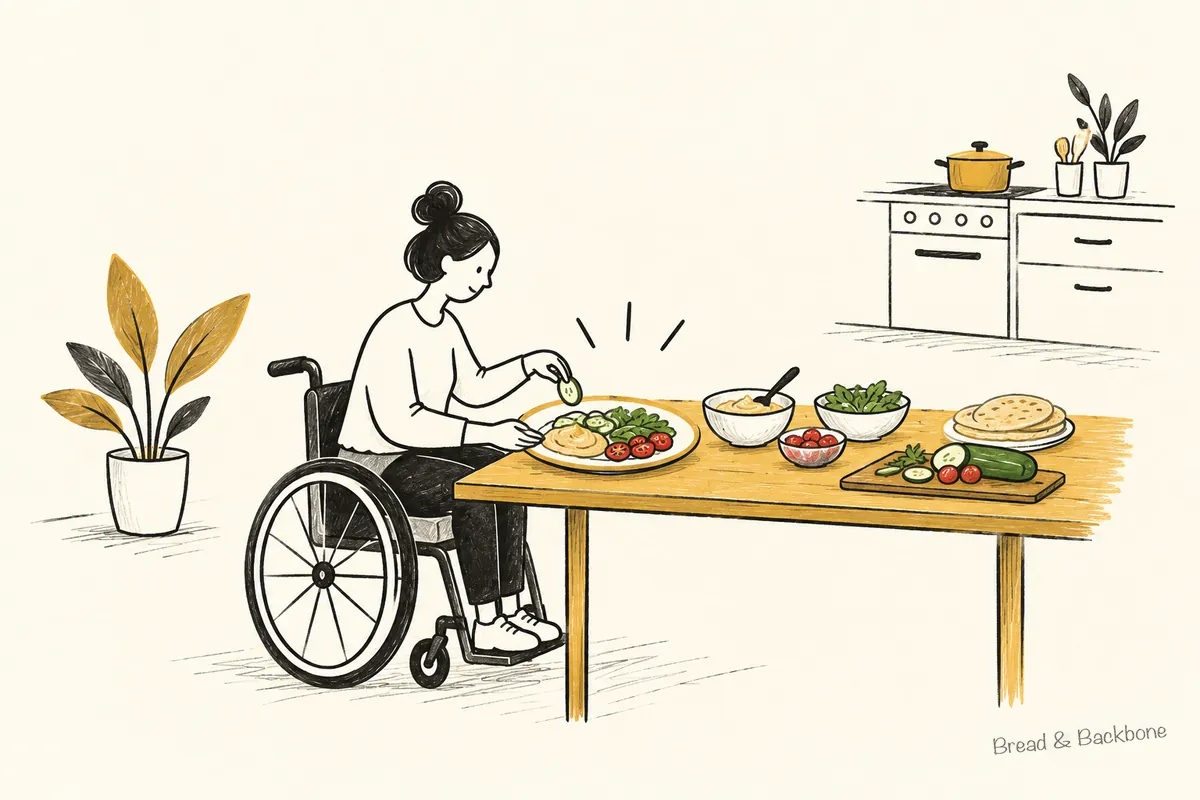
Hummus, whole-grain pita, ready-to-eat vegetables, and a piece of fruit. Add or change foods to suit your appetite, preferences, and dietary needs. A meal can have separate parts without needing a formal name.
A bean salad without a cooking step
Ready-to-eat canned beans, drained and rinsed, with prepared vegetables, a dressing you enjoy, and bread alongside. Use ingredients labeled and suitable for eating without further cooking.
A sandwich with useful company
A filling you enjoy, such as a suitable ready-to-eat bean spread, with bread and a side of vegetables or fruit. A sandwich does not need to be reinvented as a bowl to qualify as dinner.
A meal you can heat
A prepared bean or lentil dish with a grain and vegetables, heated according to the package directions. This is a low-cook option rather than a promise that every packaged ingredient can be eaten cold.
Use the foods that fit your culture and budget. These examples are not nutritionally interchangeable, and they are not a medical diet. If an ingredient does not suit your allergies or individual guidance, leave it out and choose an appropriate alternative.
Buying dinner is also a decision you can make thoughtfully
You do not have to earn a purchased meal by being exhausted enough.
Look at what is available and choose something you expect to enjoy. If you want more variety, consider whether a side or an ingredient you already have would complement it. That is often a smaller decision than finding an entirely different meal.
When choosing packaged food, the Nutrition Facts label can help you compare similar products. Check the serving size before comparing nutrient amounts, since a package may contain multiple servings. Use the information for the things that matter to your needs rather than trying to optimize every number.
There is also the practical price. Compare what you will actually use. A larger package is not necessarily the better purchase if you lack storage or will not finish it. A modest backup that gets eaten may serve your household better than an ambitious collection of ingredients waiting for a quiet week.
No cooking still needs food safety
A ready-to-eat meal may need refrigeration. “Ready” does not mean it can stay on a desk indefinitely.
FoodSafety.gov recommends clean hands, utensils, and surfaces, and keeping ready-to-eat foods separate from raw meat, poultry, seafood, and eggs. Wash produce under running water unless it is labeled prewashed. Follow package directions for foods that require cooking or heating.
The FDA advises refrigerating perishable food within two hours, or one hour when the temperature is above 90°F. Keep the refrigerator at 40°F or below and follow storage instructions. If you do not have reliable refrigeration, choose options that can be stored safely in your circumstances and buy perishable prepared food close to when you will eat it.
If you have been given special food-safety or dietary advice because of pregnancy, a medical condition, or treatment, follow that advice. A general menu idea cannot replace it.
Let the plan be small enough to use
It can help to keep one assembly option in mind before the next busy evening. Not a week of identical containers. Just a meal whose ingredients, storage, and preparation you understand.
The aim is not to avoid cooking forever or to become better at tolerating food you dislike. It is to make room for the nights when cooking is not a reasonable request. You still get to eat something you enjoy.
Try this today
Write down one no-cook meal you would willingly eat. Check which ingredients you already have and whether you can store them safely. If it fits your needs and budget, add only the missing item or two to your next shopping list.