

In this story
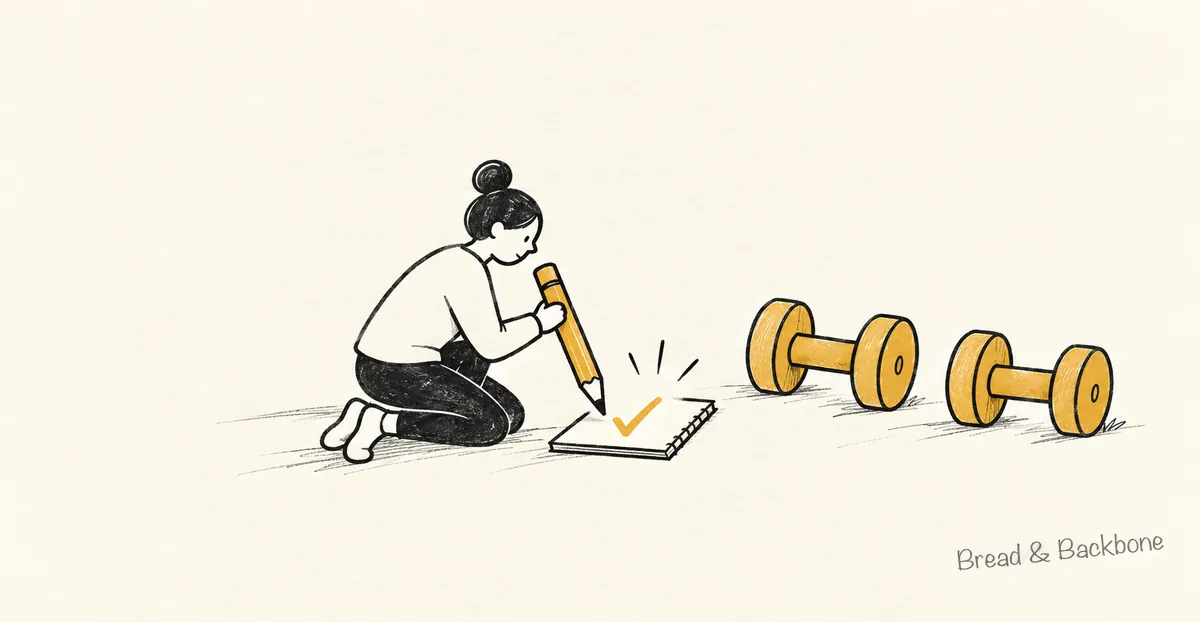
The weights are the same as last week. Does that mean nothing happened?
It is an understandable question. A heavier dumbbell makes a tidy announcement. Remembering how to adjust a seat or understanding a movement that previously felt confusing is less dramatic. Neither comes with a small brass band.
Those changes are worth noticing, but they are not all the same kind of progress. Learning a skill, establishing a routine and improving physical performance answer different questions. A useful training record makes room for the distinctions rather than treating everything as proof that you are stronger.
Separate learning from lifting more
Think about three things you might want to know after a few weeks.
First, are you more familiar with the session? You might know how to set up an exercise, understand the instructor’s explanation or feel able to ask for a different option. Those are learning observations. They do not need to be converted into a claim about muscle growth to matter.
Second, is the plan workable? A record of the sessions you attended can show whether the schedule fits. It cannot, on its own, tell you how much strength you gained.
Third, has performance changed? That needs a reasonably consistent comparison: what movement, what equipment, what load, how many repetitions and under what conditions? The more those details change at once, the harder it is to interpret the result.
This is not a request to keep a laboratory notebook. It is permission to stop asking a single number to explain your entire experience.
There is more than one way to change a training challenge
Adding weight is one approach to progression. It is not the only variable a training program can change.
In a small 2022 randomized study, 43 people with at least a year of lower-body strength-training experience were assigned to progress either the load or the number of repetitions over eight weeks. The researchers reported that both approaches were viable for improving muscular adaptations during that period, with mostly small differences between groups.
That does not mean adding repetitions and adding weight are interchangeable for every person or goal. The trial was short, involved experienced participants and studied a particular lower-body program. It does give us a reason not to define progression solely as moving to the next dumbbell.
The American College of Sports Medicine’s 2026 guidance for healthy adults also emphasizes regular participation and tailoring training to the person’s goals, rather than treating a complicated program as inherently better. Its advice is not a requirement to change something every time you train.
If you are following a program, discuss the next change with the person guiding it. More repetitions, more load and a different exercise are choices with different purposes, not points to collect all at once.
A record you can understand next week
You can make a useful note without scoring your body. This is an original reflection aid, not a validated fitness assessment. Choose one familiar exercise rather than trying to document everything.
| Record | What to include |
|---|---|
| The setup | Name of the movement, equipment and any settings you will need to remember. |
| The work | Load or resistance, repetitions and sets, if these are part of your program. |
| The experience | What felt manageable, what was unclear and whether you used a different option. |
| The next question | One thing to clarify before changing the exercise or its difficulty. |
Here is an illustrative note, not a report from a client: “Used the same machine and settings. Remembered the setup without help. The last repetitions still felt challenging. Ask whether to repeat this or change anything.”
That note does not announce a measurable strength gain. It records learning and gives the next conversation somewhere to start. A different note might record more repetitions at the same load under similar conditions. That is information about performance, though a single session is not a verdict on a longer trend.
Keep the record kind and accurate
There is no benefit in making the page look more impressive than the session. Note an altered setup, a longer rest or a different movement instead of comparing unlike attempts as if they were identical. You are collecting information for yourself, not submitting evidence for a prize.
Nor should the record become a reason to push through pain or an unfamiliar symptom. Those belong in a conversation about safety and appropriate support, not in a competition with last week’s entry. If you are unsure whether exercise is appropriate for a health concern, seek qualified clinical advice.
Sometimes the most useful conclusion is that the plan needs adjusting. Sometimes it is that you would like help understanding what the numbers mean. Neither requires pretending you have failed.
Try this today
If you already keep training notes, add one sentence about what you learned or want to ask. If you do not, write down one question you would like answered at your next session. You do not need an extra workout or a heavier weight to make the note useful.
Sources checked October 29, 2026. The research concerns training approaches, not validation of this reflection tool. This story offers general learning and recordkeeping guidance, not an individualized progression prescription.