

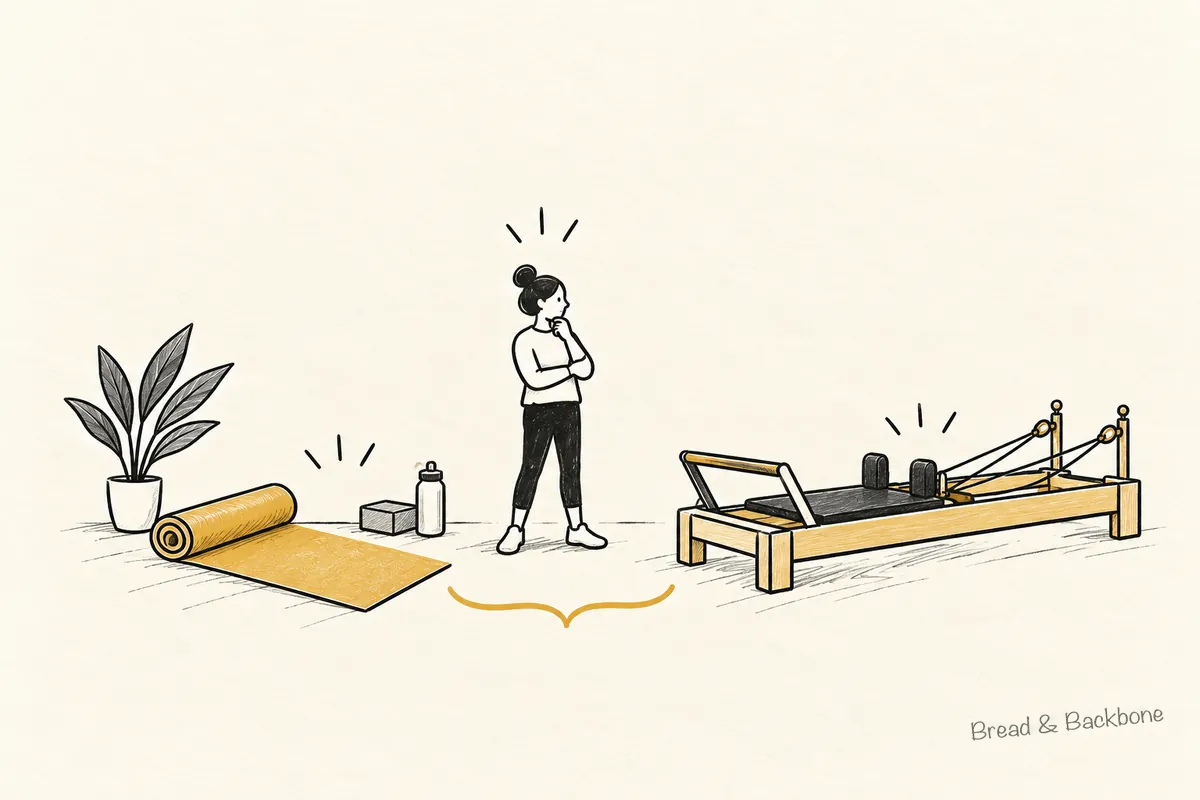
Mat Pilates or Reformer Pilates for a First Class?
In this story
- What changes when the equipment changes
- Compare the class you can actually attend
- Beginner is a useful question, not just a class name
- Leave the promises out of the decision
A mat is recognizable. A reformer, with its sliding platform, springs and straps, may require a second look. That can make the choice seem straightforward: start with the simple-looking thing, graduate to the complicated-looking thing.
But equipment is not a reliable difficulty label. A mat class is not automatically easier, and a reformer class is not automatically advanced. For a first visit, the more useful distinction is whether the actual session welcomes beginners and gives you the explanation and options you need.
You are choosing somewhere to learn. You do not have to settle the entire mat-versus-reformer debate before making a booking.
What changes when the equipment changes
Mat Pilates uses your body against gravity, sometimes with small props. A reformer adds a carriage that moves along a frame, with springs and other attachments that change how an exercise is supported or resisted. Equipment manufacturer Balanced Body describes those mechanical differences; its equipment descriptions are useful here, not proof that buying a machine produces better health outcomes.
On a mat, there is no spring-loaded carriage to become familiar with. On a reformer, learning the apparatus is part of the introduction. You should be shown how to use the equipment, rather than expected to work it out while everyone else gets moving.
One detail can be surprisingly helpful: more spring tension does not simply mean a harder exercise. As the teaching platform Pilates Anytime explains, springs can provide support as well as resistance, and their effect depends on the movement. Spring systems also vary between manufacturers. That is a reason to follow the instructor's setup guidance, not copy the person beside you or treat a spring color as a personal score.
Compare the class you can actually attend
The following guide focuses on practical differences, not a ranking of results.
| What matters to you? | Ask about mat classes | Ask about reformer classes |
|---|---|---|
| Getting into position | How much of the session takes place on the floor, and what alternatives are available? | How do participants get on and off this model of reformer, and can the teacher help with access needs? |
| Learning the setup | Is equipment supplied, and will the teacher explain any props? | Is there an introduction to the carriage, springs, straps and safe setup? |
| Receiving attention | How many people attend, and how are options explained? | How many people attend, and who checks unfamiliar equipment adjustments? |
| Returning next week | What are the actual price, timetable and booking terms? | What are the actual price, timetable and booking terms? |
That last row is deliberately the same. A format can sound ideal and still be a poor fit for a journey you cannot make or a price you do not want to commit to. Compare the real offers, not an assumption that all mat sessions or all reformer studios work alike.
Beginner is a useful question, not just a class name
“Suitable for beginners” is a starting point. Ask what happens when someone is completely new. Is there time to explain an unfamiliar movement? Can you pause and ask? Are there alternatives when the proposed position does not suit you?
Here is a hypothetical example. One person chooses a mat introduction because the location is convenient and the teacher has explained the floor-based work clearly. Another chooses a reformer introduction because it includes an equipment orientation and individual attention. Neither choice establishes that one format is better. Each person has obtained information that matters to their first experience.
If you are unsure how a health condition, injury, pregnancy or recent health event affects your participation, seek appropriate healthcare advice rather than asking a general class to double as treatment. The NHS beginner Pilates guidance makes that distinction: its general exercises are not intended to treat a specific condition. It also advises stopping if exercise causes pain or makes you feel unwell. Let the teacher know about relevant needs before the session; a welcoming response should still be honest about the limits of the class.
Leave the promises out of the decision
A comparison of equipment cannot establish which class will change your body fastest, treat pain or help you live longer. Those are separate claims requiring appropriate evidence. A first-class choice does not need them.
What it does need is enough clarity to begin. Look for a teacher who can explain the session, a format you are interested in exploring and terms you understand. Afterward, you can ask a modest question: did this give me a workable place to learn?
You are allowed to choose an introduction, rather than a new identity.
Sources checked October 29, 2026. Equipment and teaching-provider sources are used for mechanical and instructional descriptions, not comparative health claims. This story is general class-selection guidance.

Can Walking Do the Whole Job?
In this story
- Give the walk credit for the work it does
- The other parts have their own purpose
- Why a step total cannot answer every question
- A small map of the week you actually have
A walk can be a valuable part of your week. Understanding what it does, and what deserves its own attention, can help you build around a habit you already enjoy.
If walking is the movement you can reliably make room for, being told to add something else may sound like moving the finish line. You found an activity that fits. Now apparently it needs colleagues.
There is a more useful way to look at it. Walking does not have to meet every physical need to be worth doing. A brisk walk can contribute to aerobic activity, the kind that raises your breathing and heart rate. Strength and balance deserve attention too, particularly as we age. The question is what your walks already offer, and what you might want alongside them.
Give the walk credit for the work it does
“I walk” can mean a relaxed trip around the block, a purposeful commute or a sustained uphill effort. Those are different experiences, even if a phone records each one as steps.
The CDC describes intensity in relation to effort, not just the name of the activity. Its practical rule of thumb for moderate aerobic effort is being able to converse but finding singing difficult. That is a rough guide, not a medical assessment or a reason to push beyond what is appropriate for you.
A slower outing does not need to be relabeled a failure. Perhaps its purpose is company, fresh air or getting somewhere. You can value that experience while being honest about whether it contributes much moderate-intensity activity. There is no need to make every walk apply for the same job.
The other parts have their own purpose
For adults 65 and older, CDC guidance includes at least 150 minutes of moderate aerobic activity per week, or 75 minutes of vigorous activity, or an equivalent combination, plus muscle-strengthening activity on at least two days and activities that improve balance. Strength work should involve the major muscle groups, not only the legs.
Those recommendations describe a mix. Completing the walking portion does not automatically complete the others. A step total cannot tell you whether you have challenged your upper-body muscles or practiced balance in an appropriate way.
This is not a demand to become three different kinds of athlete. It is a reason to ask a more specific question about your week: which needs are already represented, and which have not had much attention?
Why a step total cannot answer every question
A step counter can help you notice how much walking is in a day. It does not describe the whole day. Two identical totals could come from very different outings, and neither tells you what happened in a strength session.
That is a limitation of the question, not a criticism of the device. “How much did I walk?” and “Does my week include different kinds of movement?” need different information. The public activity recommendations separate those categories for a reason; there is no step-count shortcut in them that replaces attention to strength and balance.
There is also no need to translate every walk into a prediction about added years. For planning your week, identifying the kind of activity you are doing is more useful than attaching an unearned longevity promise to it.
A small map of the week you actually have
Rather than replacing a walking habit, try looking at its surroundings. The following questions are a planning aid, not a fitness test.
What do my walks usually feel like?
Notice the difference between a leisurely outing and a more sustained effort. Record an ordinary week rather than the unusually energetic one you wish happened more often.
Where does strength fit?
Identify any current strength sessions. If there are none, a useful conversation with an instructor can begin with what you would like help learning, not a commitment to an elaborate program.
Have I made room for balance?
Ask what suitable, supported balance practice would look like for you. Do not turn an uneven sidewalk into an improvised challenge.
What could I keep doing?
Consider access, time, company and enjoyment. Adding a session that you cannot reach is a scheduling problem, not a character flaw.
If walking is difficult or unavailable to you, it is not an entry requirement for caring about your health. CDC advises being active within your abilities and conditions when the full recommendations are not possible. A qualified professional can help you discuss suitable activities and adaptations; new limitations or concerns about safety deserve appropriate clinical advice.
You do not have to demote the walk you love. Let it remain part of your life, then decide what would make the rest of your movement week more complete. For the broader picture, explore strength and balance as we age.
Sources checked October 29, 2026. This story explains general activity guidance, not an individualized exercise prescription.
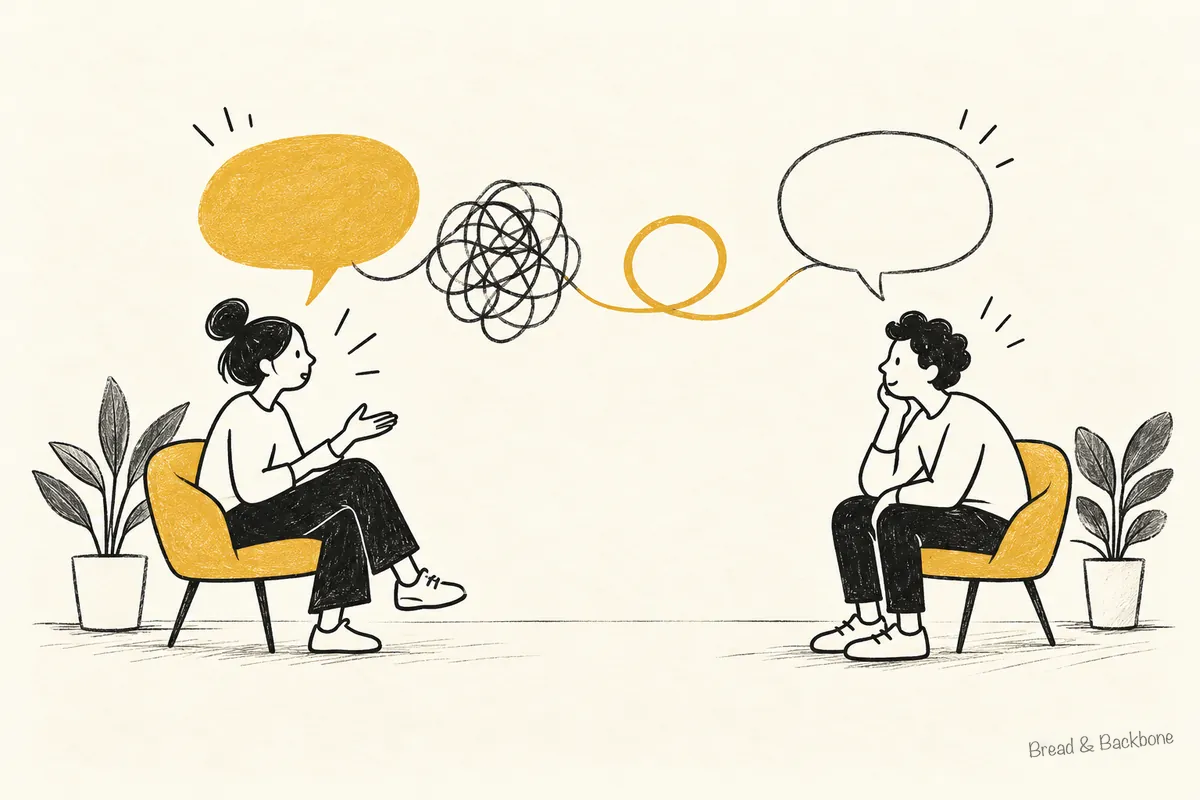
What Does a Good Coaching Conversation Actually Sound Like?
In this story
- Start with the person’s agenda
- Find out what happens before the plan falls apart
- Make the next step something the client chooses
- Agree what the follow-up is for
- Does a coach ever share information?
- A question to take into your own week
“I know what I should do. I just don’t seem to do it.”
It is easy to hear that sentence and reach for a suggestion. A reminder, perhaps. An earlier start. Another plan.
Sometimes a practical suggestion is welcome. But before adding one, it helps to understand what the person has already tried, what matters to them, and what their week actually looks like.
A health coaching session can make room for that conversation. The coach and client explore the client’s goals, circumstances and possible next steps together. The National Board for Health & Wellness Coaching describes this as a client-centered process, with the client’s own goals guiding the work.
Here is how that conversation might unfold.
The following conversation is a fictional teaching example.
Start with the person’s agenda
Sam has enjoyed attending a weekly gym class but has missed several recently. Work is busy, and Sam has started describing the missed classes as a lack of discipline.
Coach: What would make this conversation useful for you today?
Sam: I want to get back to my class. I keep saying I’ll go, then I don’t.
Coach: What do you miss about it?
Sam: Seeing people, mostly. I work from home. Going gets me out of the house.
What to notice: The coach does not assume that Sam’s goal is weight loss, a different body shape or a harder workout. Sam names connection as an important part of the experience. That gives the conversation a more accurate starting point.
Find out what happens before the plan falls apart
Coach: Could we look at the last day you intended to go? What happened?
Sam: A meeting ran late. By the time I finished, I had to rush. I decided it wasn’t worth it.
Coach: Was that unusual, or does that time of day often get crowded?
Sam: Most Tuesdays are like that now. I keep planning around the schedule I had six months ago.
Coach: What options do you see with the schedule you have now?
Sam: There’s a Saturday class. I’ve never tried it because Tuesday used to be my thing.
What to notice: Here, the conversation uncovers a scheduling mismatch. It would be a leap to decide that every missed workout has the same explanation. Another person might identify cost, access, caring responsibilities, discomfort, or a goal they no longer want. The point is to ask rather than supply the explanation in advance.
Make the next step something the client chooses
Coach: Would you like to explore Saturday, or is there another option you’d rather consider?
Sam: Saturday. I could check the class time and ask my friend whether she wants to come.
Coach: What would you like to commit to before we speak again?
Sam: Checking the schedule tonight and deciding whether this Saturday works. I don’t want to promise every Saturday yet.
Coach: How would you like to remember that?
Sam: I’ll put a reminder on my phone after dinner.
What to notice: Sam chooses a modest, specific next step. The coach does not turn it into an ambitious attendance target. Checking a schedule is not a complete fitness plan; in this conversation, it is the action Sam is ready to take.
Agree what the follow-up is for
Coach: When we next speak, what would you like us to review?
Sam: Whether I checked it, and what I decided. If I didn’t, I’d like to understand why rather than feel as if I failed again.
Coach: That sounds useful. Is there anything you want to change about the plan before we finish?
What to notice: There is something concrete to return to. A follow-up might reveal that Saturday works, that it does not, or that a different goal matters more.
Does a coach ever share information?
Yes. Coaching does not require withholding every useful resource. NBHWC’s scope allows appropriate evidence-based information from recognized authorities. What matters is whether the information fits the coach’s role and the client’s needs. Coaching alone does not authorize diagnosis, medical-data interpretation, prescribing, or psychological treatment; separate qualifications carry their own responsibilities. Read the scope guidance.
In Sam’s example, there was no need for a new protocol. A calendar question was more useful. In another conversation, a qualified professional might be needed to answer the question safely.
A question to take into your own week
Think of one thing you keep meaning to do. Before making the plan bigger, ask:
“What is happening around this goal that I haven’t made room for?”
You may find a practical obstacle, a competing priority, or a reason to choose a different goal. You do not have to turn that reflection into another test of willpower.
For a related perspective, explore caring for ourselves with more compassion. If you are considering coach training, look for opportunities to practice conversations and receive useful feedback, as well as learn the subject matter.
Explore more from Bread & Backbone →
Source and illustration note
Professional role information was checked against the NBHWC Health & Wellness Coach Scope of Practice on October 29, 2026. The Sam dialogue and annotations are original teaching illustrations.
A Sleep Routine That Leaves Room for Real Life
In this story
- Make room before adding steps
- Choose the transition, not the performance
- Give the late evening its own plan
- Notice whether the plan helps your life, too
- When a routine is not the answer
- Sources and context
The evening you can repeat may look very different from the one you saved on your phone. Here is how to make a little more room for sleep without adding another demanding ritual.
Imagine it is late, the kitchen is still untidy, and you have just remembered the thing you meant to do after dinner. Somewhere on your phone is a beautifully organized bedtime routine. It appears to require an earlier version of tonight.
You could begin its seven steps now. You could also ask whether completing a routine is about to use up the time you wanted to spend sleeping.
A useful sleep routine helps you make room for rest. It does not need to look impressive, and it cannot guarantee that sleep will arrive on command. The starting point is the evening you actually have, including the responsibilities, comforts and interruptions that belong to it.
Make room before adding steps
The National Heart, Lung, and Blood Institute’s sleep guidance starts with allowing enough time for sleep. It also suggests a reasonably consistent schedule, quiet time before bed, and a sleeping space that is dark, quiet and cool.
Those are useful directions, but they are not all equally available to everyone. A person working rotating shifts has a different problem from someone who keeps starting another episode. A parent attending to a child may have very little say over uninterrupted time. A shared room does not become silent because a checklist says it should.
Before choosing a habit, separate what you can change alone from what needs cooperation or resources. Perhaps you can close the laptop earlier. Perhaps you need a conversation about household tasks. Perhaps the apartment noise is beyond your control, and the most useful next step is finding out what practical help is available rather than buying another bedside product.
This does not make sleep less important. It makes the plan more honest.
Choose the transition, not the performance
Some people enjoy a bath, reading or quiet music before bed. Others would rather have less to do. A routine can be a short transition: finish what must be finished, set aside what can wait, and stop adding new tasks to the evening.
It helps to name the actual friction. “I need a perfect wind-down” is difficult to act on. “I start answering work messages after I brush my teeth” is more specific. You might decide when messages stop, while keeping essential contacts reachable. That is a boundary you can consider, not a claim that everyone can put their phone in another room.
The physical setting matters too. NHLBI recommends reducing bright artificial light before bed and keeping the room comfortable for sleep. Caffeine can interfere with sleep, so its place in your day is worth noticing. You do not need to replace all your habits at once or adopt someone else’s precise cutoff as a universal rule. See the general guidance.
If the quietest part of your day is the hour after everyone else is asleep, there may be a real tradeoff here. That time can be valuable. Rather than treating it as a character flaw, ask whether some of what you enjoy about it could happen earlier, or whether a shorter version would still feel like time that belongs to you. The answer might require more than rearranging a lamp.
Give the late evening its own plan
Consider these two fictional versions of an evening. They are planning examples, not a tested sleep treatment or a recommended schedule.
On an ordinary evening: After the essential household jobs, a person puts tomorrow’s bag by the door, switches off work notifications and reads for a while in a comfortable space. They have chosen those actions because they enjoy reading and otherwise tend to return to work.
On a complicated evening: Dinner runs late and a family conversation takes longer than expected. The same person skips the optional reading, leaves a nonurgent chore for tomorrow and keeps only the work-message boundary. They do not stay up to complete every part of the ordinary version.
The difference is intentional. The shorter evening preserves a little space rather than becoming an attempt to catch up with a missed ritual. Neither version tells us whether the person slept well. A plan describes an opportunity; it does not prove an outcome.
Your two versions might have almost nothing in common with these. You may work at night, share a bedroom, or need to remain available to someone. Start with your own nonnegotiable responsibilities. Then identify one optional activity you can shorten or move, and one transition you would genuinely like to keep.
Notice whether the plan helps your life, too
For a few evenings, you could note what you intended to do, what actually happened, and whether you made more room for sleep. A few words are enough. This is a planning reflection, not a scorecard for judging your body or a way to diagnose a sleep disorder.
If the plan keeps failing at the same point, that detail is useful. You might be asking too much of the final part of the day. You might need another person’s help. Or the obstacle may have little to do with your chosen routine.
Sleep also involves more than time on a schedule. CDC notes that quality matters as well as duration. Most adults aged 18 to 60 need at least seven hours a night, with recommendations varying by age. Making time is important, but it does not explain every experience of poor sleep.
When a routine is not the answer
If you regularly struggle to sleep, or sleepiness is affecting daily life, speak with a healthcare professional rather than repeatedly making the routine stricter. General habits are not a substitute for assessing or treating a sleep disorder.
For long-term insomnia, NHLBI describes cognitive behavioral therapy for insomnia, or CBT-I, as a usual first treatment option. That is a structured treatment, not simply a longer list of bedtime tips. Read NHLBI’s treatment overview.
For tonight, you might leave the ideal routine where it is and look at one smaller decision: What can wait, so I can leave a little more room for sleep?
You do not have to finish the whole day before you are allowed to rest.
Sources and context
Guidance checked October 29, 2026. The two evening plans are original fictional illustrations.
Which Health Headlines Deserve a Second Look?
In this story
- A real result, with its boundaries left on
- Look for the noun after “improves”
- A percentage needs somewhere to stand
- Notice when a finding becomes a shopping instruction
- You can leave a question open
- Sources and context
A real vitamin D study offers a useful way to read past the headline without turning every health decision into a research project.
Imagine opening a message from a friend. It contains a health headline and four words: “Should we be worried?”
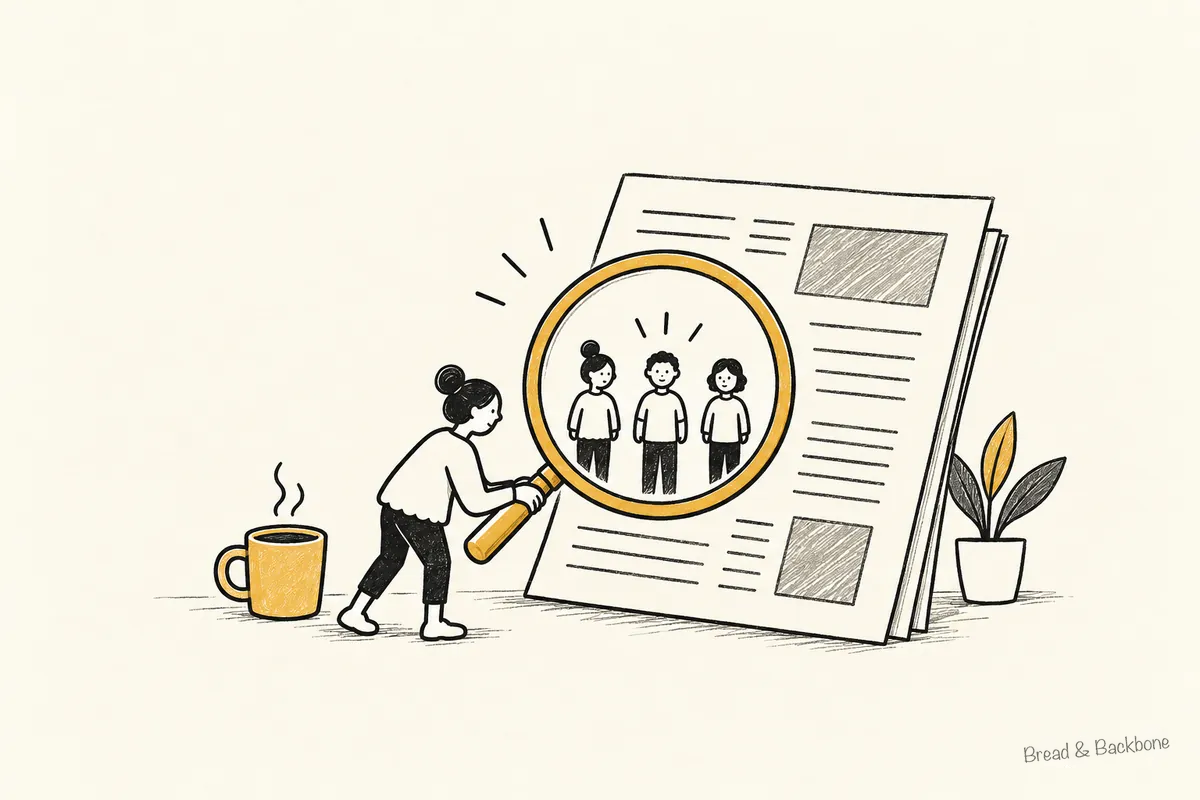
You were not planning to evaluate a clinical trial over breakfast. You also do not want to dismiss something that might matter. Somewhere between forwarding it immediately and closing the tab in defeat, there is a more useful option: work out exactly what the researchers found, and whether the question they studied is the question you need answered.
A headline deserves a second look when it could change what you buy, what you stop doing, or how you feel about your health. That includes the reassuring headlines. A claim that tells us what we hoped to hear still needs evidence.
A real result, with its boundaries left on
Consider a 2022 finding from the VITAL trial. Researchers randomly assigned participants to supplemental vitamin D or placebo and followed fractures in 25,871 US adults for a median of 5.3 years. Men were at least 50 and women at least 55. The study did not find a statistically significant reduction in fractures from the supplement. Participants were not recruited because they had vitamin D deficiency, low bone mass or osteoporosis. Those details belong alongside the result, not in the fine print. Read the study.
Here is an example headline that keeps that boundary visible: “Vitamin D supplement did not reduce fractures in a large trial of generally healthy midlife and older adults.”
Compare that with an invented, overbroad version: “Vitamin D does nothing.”
The second version is shorter. It also changes the question. One supplement trial cannot settle every use of an essential nutrient. NIH’s vitamin D information explains its role in health and the circumstances that can affect someone’s needs. A headline about fracture prevention is not an instruction to stop a clinician-recommended supplement.
Neither example above is a quotation from a news outlet. The contrast shows how much meaning can disappear when the population and outcome disappear.
Look for the noun after “improves”
“Improves health” is a remarkably roomy phrase. Did people have fewer fractures? Did a blood marker change? Did participants say they felt better? Were researchers studying people at all?
These are different findings. A biological measurement can be useful without proving a benefit that someone would notice in daily life. NIH’s science-communication guidance asks communicators to identify what a study actually measured and explain the limitations of substitute markers. Readers can borrow that question.
Try finishing this sentence in ordinary language: “The researchers measured ______.” If the article does not let you fill in the blank, the headline is asking you to accept more than it explains.
A percentage needs somewhere to stand
A relative percentage describes a comparison. It does not, by itself, tell you how frequently something happened.
For a deliberately hypothetical example, imagine an outcome occurring in 2 of every 100 people in one group and 1 of every 100 in another over the same period. That is a 50% relative reduction, but an absolute difference of 1 percentage point: one fewer person per 100. Both descriptions are mathematically correct. They answer different questions. This is why NIH recommends reporting absolute and relative risk together.
In the actual vitamin D trial, 769 of 12,927 supplement participants and 782 of 12,944 placebo participants experienced a fracture, roughly 6% in each group. The adjusted hazard ratio was 0.98, with a 95% confidence interval of 0.89 to 1.08. That interval includes no difference, so the small numerical gap should not be sold as a demonstrated benefit. The raw proportions and the time-to-event estimate are different summaries, not interchangeable calculations. See the trial’s results.
You do not need to perform the statistical analysis yourself. You can reasonably expect the writer to explain the size of the result and its uncertainty.
Notice when a finding becomes a shopping instruction
A research article, a news report and a product page may discuss the same topic while serving different purposes. That does not automatically make one dishonest. It does make the transition worth noticing.
If the story ends with a product, ask whether that exact product was studied. If a person’s experience is offered as proof, ask what else could explain it. If the page cites research, follow at least one link and check whether it supports the promise beside it.
For instance, a study about an ingredient is not automatically a study of a blend containing that ingredient. A coach’s account of one client can help you understand an experience without showing what will happen to you. These distinctions let you stay interested without borrowing someone else’s certainty.
You can leave a question open
Reading carefully does not require reaching a verdict on every headline. Sometimes the appropriate conclusion is simply, “Interesting, but not enough to change my plans.” Sometimes it is a question to take to a qualified professional who knows your situation.
The useful habit is to pause before the finding becomes a rule for your own life. Who was studied? What changed? How much? Does that match the decision in front of me?
For the next health story someone sends you, try writing one sentence that includes the people, the outcome and the main limitation. If that sentence sounds less dramatic than the headline, it may also be more useful to the friend who sent it.
Sources and context
Sources checked October 29, 2026. The VITAL analysis was published in 2022 and is used here as a worked example, not presented as a new finding or a complete review of vitamin D treatment. The two sample headlines and the 2-in-100 illustration are original educational examples. No supplement change is recommended.
- LeBoff and colleagues: Supplemental Vitamin D and Incident Fractures in Midlife and Older Adults, New England Journal of Medicine.
- NIH Office of Dietary Supplements: Vitamin D, consumer information.
- NIH: A Checklist for Communicating Science & Health Research to the Public.
What Happens in a First Yoga Class?
In this story
- Choose a class, not just a time slot
- Yoga is bigger than the shapes
- Before the class begins
- A possible shape of the session
- Your preferences still count
- A few questions before you begin
- Afterward, ask a different question
- Try this today
- Sources and further reading
Before a first yoga class, the questions can be surprisingly practical. Do you bring a mat? Where do your shoes go? What if the teacher says a word you don't know and everyone else starts moving?
These are sensible questions. A room can feel unfamiliar even when the activity interests you. Knowing a little about the setting can leave more attention for the experience itself.
A first yoga class may include guided movement, attention to breathing, and a period of rest or meditation. The pace, practices, and atmosphere vary by teacher, tradition, and class. Your most useful preparation is to find out what this particular class involves, rather than learn an imagined universal routine.
Choose a class, not just a time slot
The convenient evening opening might be a beginner course, a vigorous flow, or a heated class. Those are different invitations.
Start with the description, then ask about anything it leaves unclear. “All levels” does not tell you how much instruction a newcomer receives. “Gentle” may describe the pace, but it does not answer whether the class involves getting down to the floor. The teacher or studio can give you the missing detail.
A short message can do more than a long search through pictures. You could write:
“I'm new to yoga and interested in this class. Is it a good place to start? What should I bring, and are there alternatives if a movement doesn't work for me?”
If access matters, name the practical question: stairs, seating, floor transitions, hearing instructions, or space for a mobility aid. You do not need to guess whether a welcoming description covers the thing you actually need.
Yoga is bigger than the shapes
Yoga has roots in Indian philosophy and encompasses more than physical exercise. As the National Center for Complementary and Integrative Health explains, many US classes emphasize postures, breathing practices, and meditation, while styles range from gentle to demanding.
A class may introduce philosophical ideas or traditional terminology alongside movement. Another may give those elements less time. Neither a photograph of a flexible person nor one studio visit captures the whole tradition.
You might hear a familiar movement described in an unfamiliar way. You can ask what a term means. Learning the language of a practice is part of learning it, not an entrance requirement you forgot to complete.
Before the class begins
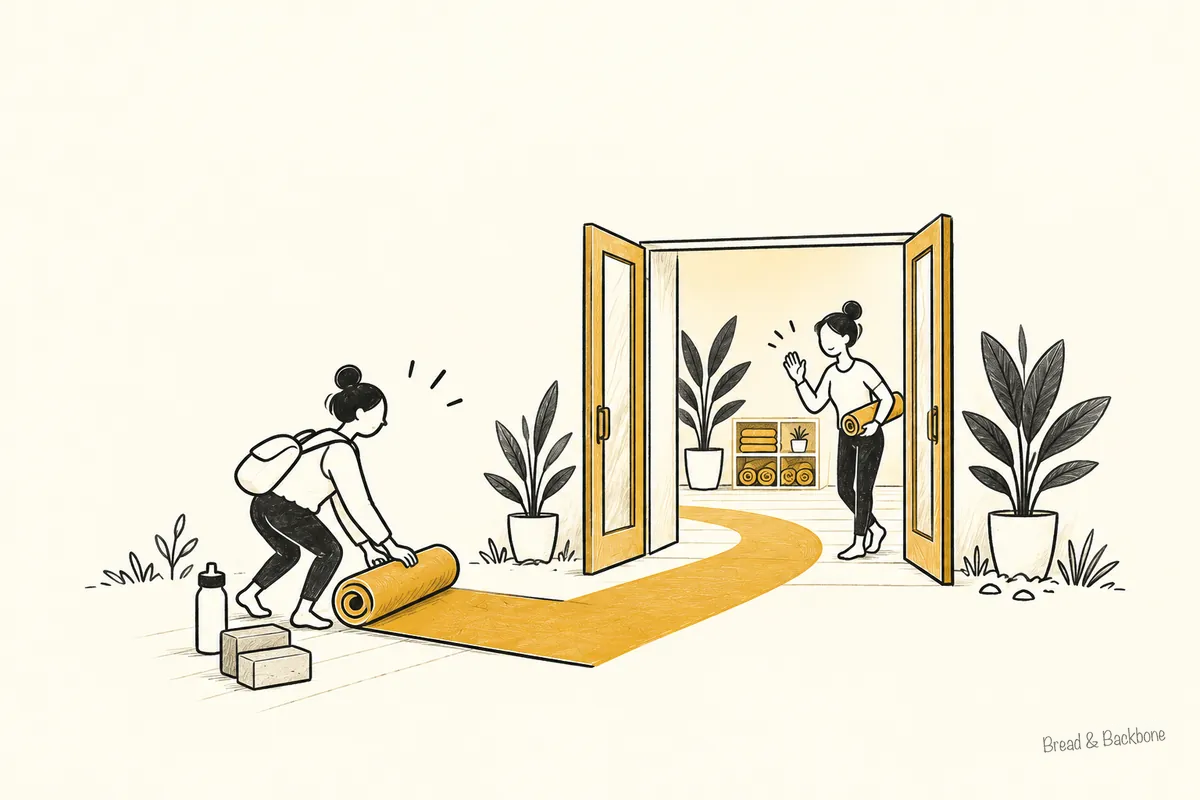
Leave a little time for the ordinary logistics. Find out whether you need to reserve a place, whether a mat is available or costs extra, and where belongings go. Wear clothing you can move in comfortably. Ask what equipment is provided before buying anything specifically for the class.
Introduce yourself to the teacher and mention that this is your first visit. A quiet conversation before class is also a chance to explain a relevant limitation or preference without making an announcement to the whole room.
“I'd like to stay near a chair,” “I may need to step out,” or “I'd prefer verbal guidance rather than hands-on help” are useful things to say. They give the teacher something concrete to respond to.
Choose a place where you can hear and see instructions. The back of the room can feel less conspicuous, but it is not automatically the easiest place to follow a demonstration. You can ask the teacher where a newcomer would have a clear view.
A possible shape of the session
Think of this as a rough orientation, not a script every class follows. Yoga.org's first-class overview describes a common pattern of settling attention, guided postures, and closing relaxation. Your class may organize those elements differently.
Arriving in the practice. The teacher may begin by inviting attention to how you are sitting, standing, or breathing. You do not have to arrive feeling peaceful. Ask for clarification if an instruction is unfamiliar, and let the teacher know if a practice is uncomfortable.
Moving and learning. You may hear verbal cues, see demonstrations, and be offered equipment such as blocks or straps. Instead of trying to make your body look exactly like the demonstration, ask what the teacher wants you to notice and what other options are available.
Pausing. It is reasonable to stop and ask for another option. You can watch a movement before trying it. If something hurts, stop rather than forcing your way through to keep pace.
Closing. Some classes finish with quiet rest, often called savasana, or another reflective practice. If a suggested position is uncomfortable, ask about an alternative. There is no requirement to manufacture a profound feeling at the end.
The first visit may involve more listening and looking around than you expected. That gives you information about the class. It is not a score for how well you belong there.
Your preferences still count
Hands-on adjustments are not something you have to accept. Ask how the teacher approaches them, and say clearly if you prefer not to be touched.
Yoga Alliance's code for its members requires explicit, informed consent before physical adjustments. It also makes clear that previous consent is not permanent permission. That is a professional standard for members, not a claim that every teacher follows the same system.
You can change your mind. A simple “No hands-on adjustments today, please” is enough to communicate your preference.
A few questions before you begin
NCCIH advises beginners to avoid advanced practices such as headstands and forceful breathing, and notes the particular overheating and dehydration risks of hot yoga. If you are pregnant, have a health condition or injury, or have concerns about suitable activity, discuss your needs with your healthcare professional and the instructor before choosing a class. Yoga should not delay medical care.
Afterward, ask a different question
Rather than “Was I good at yoga?”, try “What did I learn about this class?”
Could you follow enough of the instruction to participate? Were your questions welcomed? Did you feel able to pause or choose an alternative? Was the setting workable for you, including the cost, timing, and journey there?
Perhaps you will want to return to the same teacher. Perhaps you will want a slower introduction, a different format, or more explanation. A first class gives you a place to begin making that choice. It does not have to decide whether yoga is for you forever.
Try this today
Choose one question that would make attending easier, and send it to the teacher or studio before booking. You could use: “Does this class offer alternatives for movements I'm not comfortable with?” No pose to master first. Just one useful answer.
Sources and further reading
- NCCIH: Yoga, Effectiveness and Safety
- Yoga.org: What should I expect in my first yoga class?
- Yoga Alliance: Code of Conduct
Personal Trainer, Health Coach or Performance Coach: Who Helps With What?
In this story
- Start with the help you want, not the most impressive title
- What a personal trainer does
- What a health coach does
- What “performance coach” tells you, and what it doesn’t
- One person, three different questions
- Can one person be both a trainer and a health coach?
- Five questions worth taking to a first conversation
- Sources and reading notes
Perhaps you want to feel stronger, but you keep finding yourself back at the beginning. Someone suggests a personal trainer. Another person recommends a health coach. Then you see an ad for a performance coach promising a more complete approach.
How do you work out which kind of help would fit?
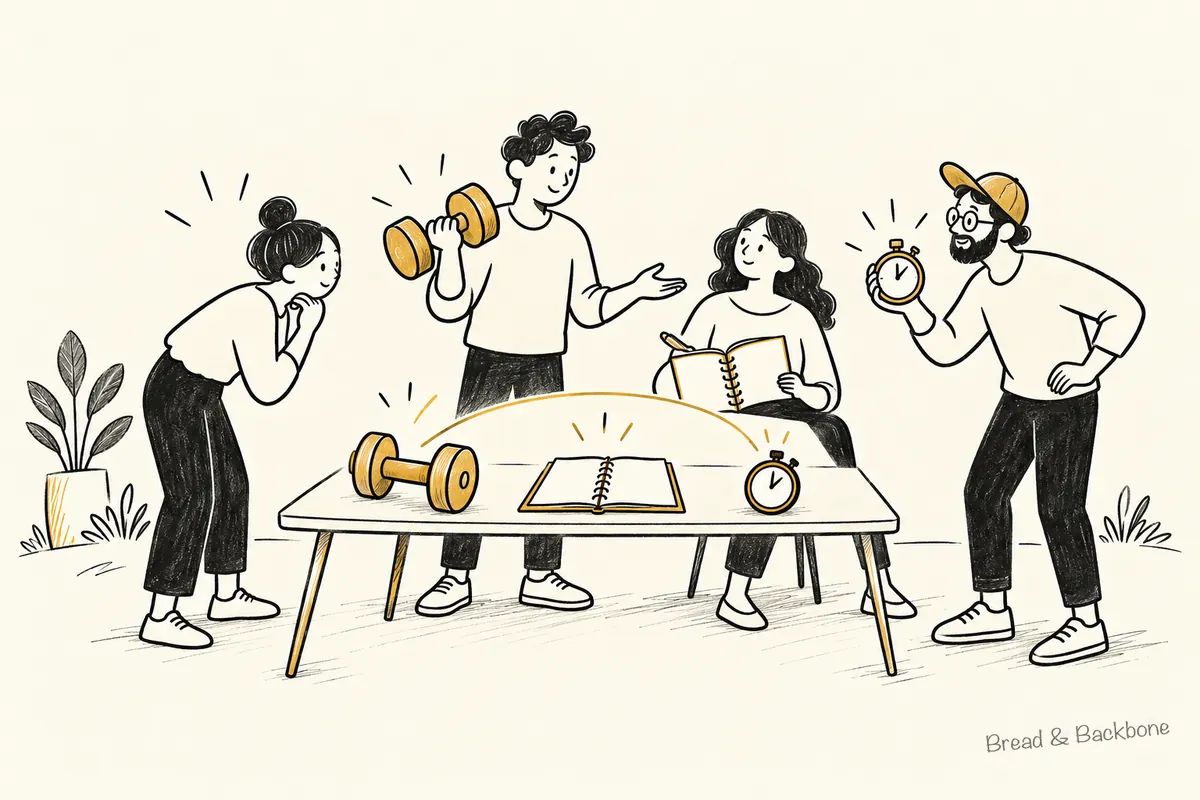
A personal trainer can help you build and carry out an exercise program. A health coach can help you work through the everyday decisions and obstacles around goals you choose. “Performance coach” needs a closer look: ask what kind of performance, what qualifications, and what the service includes. These roles can complement each other. None of the titles, on its own, tells you everything about the person behind it.
Start with the help you want, not the most impressive title
Try finishing this sentence: “I would feel less stuck if someone helped me with…”
- Learning how to lift, choosing exercises, or progressing a workout.
- Making room for habits when work, family, and energy compete for attention.
- Preparing for a particular sport or physical challenge.
- Understanding a symptom, injury, medication, or medical test.
Those are different requests. The last belongs with an appropriately qualified healthcare professional. The others help narrow the kind of support worth exploring.
| Role | A useful reason to seek it | What to check before booking |
|---|---|---|
| Personal trainer | You want an exercise plan and help carrying it out. | Current credential, experience with your circumstances, screening process, and how progress is reviewed. |
| Health coach | You want structured conversations about making a health-related change fit your life. | Specific training, how sessions work, boundaries, and whether the approach leaves room for your priorities. |
| Performance coach | You have a defined performance goal and want relevant specialist support. | The exact service, relevant credentials, experience, and the limits of the role. Do not judge by the title alone. |
What a personal trainer does
The American College of Sports Medicine describes its certified personal trainers as qualified to plan and deliver exercise programs for healthy people or those medically cleared to exercise. Its role definition also includes motivation and adherence. That matters: good personal training is not simply a workout sheet or someone counting repetitions. ACSM’s personal trainer role outline sets out that combination.
If your question is “How should I get started with strength training?” a trainer is a sensible person to interview. Ask how they would adapt a session to your starting point, how they decide when to progress, and what they do when a client needs help outside their expertise.
You should also feel comfortable saying that something is confusing, uncomfortable, or unrealistic. A program can be technically thoughtful and still need adjustment to fit the person doing it.
For a broader view of why strength matters beyond the weight room, read our guide to building strength and balance as we age.
What a health coach does
Health coaching often starts with a goal the client wants to explore, then examines what makes it meaningful and workable. NASM describes wellness coaching as support for sustainable habits, with communication and accountability alongside topics such as movement, sleep, and recovery. Its description emphasizes helping clients make their own decisions. NASM’s wellness coaching overview explains this approach.
Picture someone who already has a workout they like but keeps losing the space for it. The useful conversation might be about the crowded hour after work, a caregiving responsibility, or whether the goal still feels like their own. Another exercise variation may not answer that question.
There are important limits. Under the National Board for Health & Wellness Coaching’s scope, coaching alone does not authorize diagnosis, interpretation of medical data, prescribing, meal planning, exercise prescription, or psychological treatment. A separate professional credential may allow a different service within its own boundaries.
Someone offering coaching should be able to explain what they can help with and when they would suggest another professional. You should be able to ask about those limits comfortably, before you commit.
What “performance coach” tells you, and what it doesn’t
In a sports setting, performance coaching can involve strength and conditioning. The National Strength and Conditioning Association lists performance coach among roles associated with its CSCS credential. Its description connects that work to exercise science, program design, and testing.
But when you encounter the title elsewhere, ask the provider to define it. Are you discussing athletic preparation, daily habits, workplace performance, or something else? What are they actually qualified to deliver?
A useful answer sounds specific: who the service is for, what happens in a session, how goals are reviewed, and where the provider refers out. “Optimization” is not a sufficient explanation. Neither is a promise to solve every issue affecting your health.
One person, three different questions
Imagine Alex, who wants to feel confident on a weekend hiking trip. There are three separate questions:
- “What should I do in the gym?” A suitably qualified trainer can assess the exercise question and develop an appropriate program.
- “Why does my plan disappear every busy week?” A coaching conversation could explore the schedule, competing priorities, and a smaller commitment Alex actually wants to try.
- “Why am I having this new pain?” That calls for assessment by an appropriate healthcare professional, not a more ambitious coaching package.
Alex may need more than one kind of help. Or one professional may hold relevant qualifications for more than one role. The point is to match the help to the question rather than make every question fit the service being sold.
Can one person be both a trainer and a health coach?
Yes. The important part is knowing which service you are receiving. NBHWC’s scope calls for professionals in dual roles to discuss and document their roles and boundaries with clients. A second qualification should make the relationship clearer, not blur who is responsible for what.
For example, you might book exercise sessions and separate coaching conversations with the same person. Before committing, ask how the two are distinguished, what each costs, and whether you can use one without buying the other.
Five questions worth taking to a first conversation
- What would we actually do together? Ask for a plain-English description of a typical session.
- What qualifications support that work? Get the credential names and check them with the issuing organization.
- Have you worked with needs like mine? Relevant experience is more helpful than a generic transformation promise.
- How would we know this is useful? Discuss a review point and measures connected to your own goal.
- What happens if I need another kind of help? Listen for a clear referral process rather than a claim to do everything.
You do not need to arrive with the perfect goal. You do deserve a conversation that makes the next step easier to understand.
Sources and reading notes
Sources checked October 29, 2026: ACSM’s Certified Personal Trainer Exam Content Outline; NASM’s wellness coaching overview; NBHWC’s Scope of Practice; and NSCA’s CSCS overview, linked above. These organizations define their own credentials and standards. This guide is not an exhaustive statement of professional licensing rules, which depend on the service and location.
What a Longevity Diet Can and Cannot Promise
In this story
- What researchers actually compare
- “Healthy” does not require one identical plate
- Three promises worth separating
- A useful plan has to survive your kitchen
- Where general guidance reaches its limit
- Sources and further reading
A grocery list can turn into a referendum on your future remarkably quickly. One headline says to eat like the people who live longest. Another recommends a tightly timed routine. Somewhere between the beans and the checkout, dinner starts to feel like a test.
It is reasonable to want your food choices to support a longer, healthier life. It is also reasonable to want lunch without conducting a literature review.
Research on eating patterns can help us make informed choices. It cannot tell an individual how many extra years a particular menu will deliver. That distinction leaves room for useful guidance without asking you to believe in a magic food or adopt someone else's entire life.
What researchers actually compare
A 2023 study in JAMA Internal Medicine followed more than 119,000 US nurses and other health professionals for up to 36 years. Researchers compared four dietary scores, including a Mediterranean-style score and a healthful plant-based score. Higher adherence to each pattern was associated with lower risk of death during follow-up.
This was an observational study, not a trial assigning people to menus. Food intake was self-reported, and unmeasured differences between people could still influence the results. The participants were predominantly White health professionals, which also limits how confidently the findings transfer to other populations.
The finding supports looking at overall eating patterns. It does not establish that one food, branded plan, or precise eating schedule caused extra years of life.
That is a less dramatic conclusion than a headline promising to add a decade. It is also a more usable one. You can consider the direction of your eating without treating every meal as a deposit into a lifespan account.
“Healthy” does not require one identical plate
The World Health Organization's healthy-diet guidance emphasizes adequacy, balance, moderation, and diversity. It also recognizes that a suitable diet depends on individual needs, cultural context, available foods, and dietary customs. Its guidance includes whole grains, vegetables, fruit, and pulses such as lentils and beans; fresh produce is not the only option, with suitable frozen and canned choices included.
There is a practical difference between that guidance and the impression that healthy eating requires a very particular shopping basket.
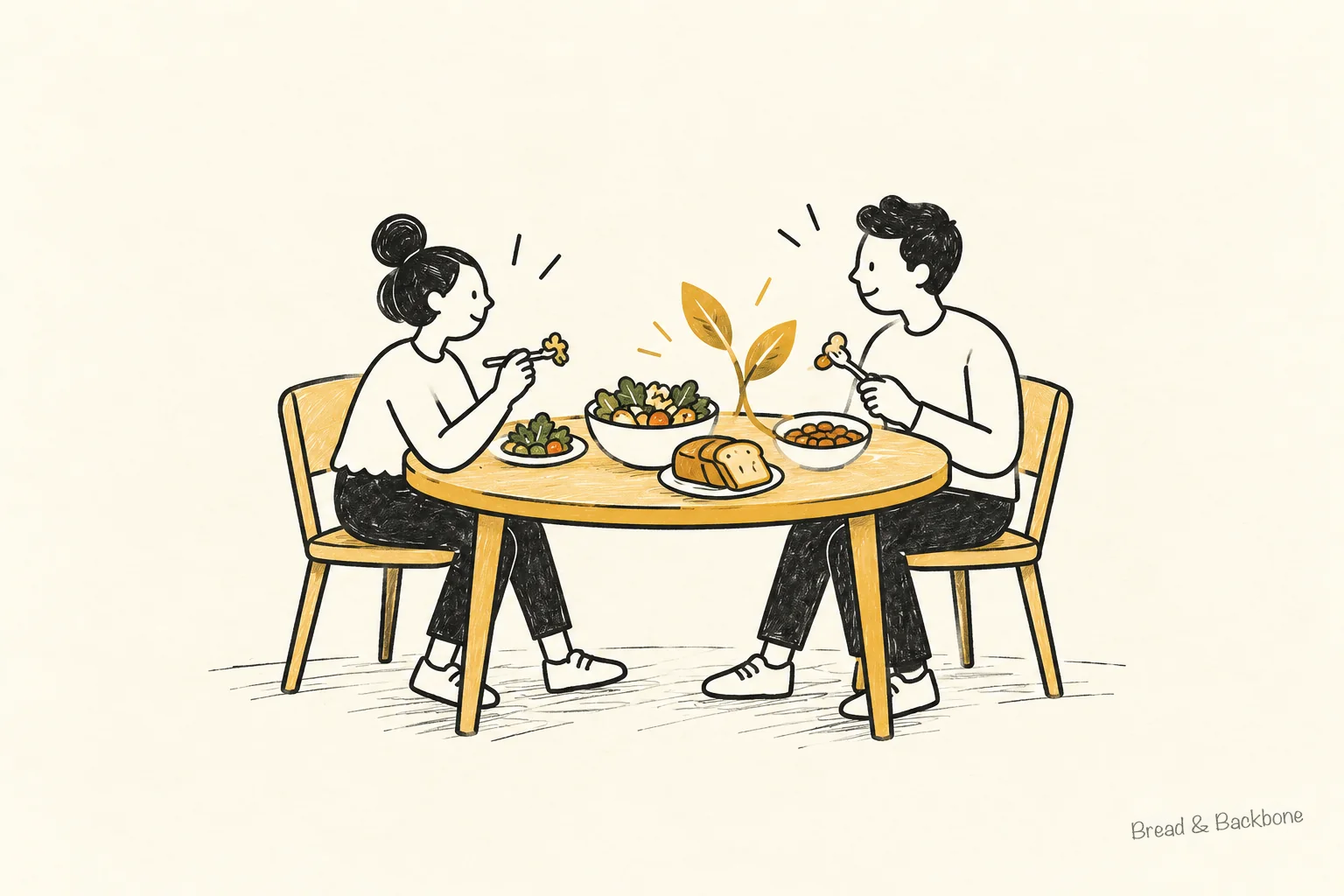
You might enjoy lentil soup. Someone else might prefer chickpeas in a familiar stew, or beans alongside rice and vegetables. These are examples of ways to work with foods you know, not interchangeable prescriptions or a promise that every meal meets every nutritional need.
Before replacing a meal you like, ask what you are trying to improve. Is there a food group you rarely include? Is the suggested change affordable? Does it solve a real problem, or just make the meal look more like a photograph you have seen?
Three promises worth separating
When a plan calls itself a “longevity diet,” pause long enough to identify the claim. The phrase alone does not tell you what was studied.
“This follows established healthy-eating principles.”
Look for a clear explanation and a relevant source. The next question is how those principles fit your needs and circumstances.
“People eating this way had better outcomes in a study.”
Ask who those people were, what the outcome was, and how the study was designed. An association can be informative without proving that the diet caused the difference.
“This will make you live a certain number of years longer.”
That is a much larger promise. A population finding is not an individual forecast. Ask what evidence justifies that leap before allowing it to shape your spending or your sense of security.
Also notice when a study of a dietary pattern is used to sell something narrower. If researchers studied people's overall food intake, that does not automatically establish the value of a supplement, meal subscription, or fasting plan mentioned beside the finding. The product needs evidence for its own claim.
A useful plan has to survive your kitchen
Here is an illustrative decision, not a reported success story. Imagine you want to include vegetables at dinner more often. You buy several fresh varieties, but the week becomes busy and some go unused.
There are at least two ways to interpret that. One is that you lack commitment. Another is that your plan depended on preparation time you did not have.
The second explanation gives you something to change. Perhaps keeping a frozen option would make the decision easier. Perhaps the evening you eat out is the wrong place to start. Perhaps someone else in the household could help choose an option you both enjoy.
None of this predicts a health outcome. It helps you investigate whether an idea is workable before making it bigger.
Try a small “keep, change, check” note when evaluating a food plan:
- Keep: What already works, tastes good, and matters to you?
- Change: What is one realistic adjustment, rather than a replacement of everything?
- Check: What would you need to know before trying it, including cost, ingredients, preparation, or individual dietary advice?
This is an editorial planning tool, not a nutritional assessment. Its purpose is to make the decision visible. You can use it to bring better questions to a registered dietitian, rather than arriving with the feeling that you need a completely different relationship with food by Monday.
Where general guidance reaches its limit
A story cannot determine an appropriate diet for your medical history, allergies, medications, or nutritional needs. If you have been given a therapeutic diet, do not replace it with a general longevity plan without discussing it with your clinician or dietitian.
Be equally cautious about plans that make eating increasingly restrictive. If food rules are creating distress or crowding out daily life, individualized support is more useful than another set of rules from an online story.
There is no need to choose between caring about the evidence and caring about the pleasure of a meal. You can ask demanding questions of a health claim while leaving space for family traditions, convenience, taste, and the foods you simply like.
A worthwhile next decision might be smaller than the promise that brought you here: a familiar meal made a little more varied, a question answered properly, or an expensive claim left on the shelf. Dinner can support the life you want without having to guarantee its length.
Sources and further reading
- Shan and colleagues: Healthy Eating Patterns and Risk of Total and Cause-Specific Mortality, JAMA Internal Medicine, 2023
- World Health Organization: Healthy diet
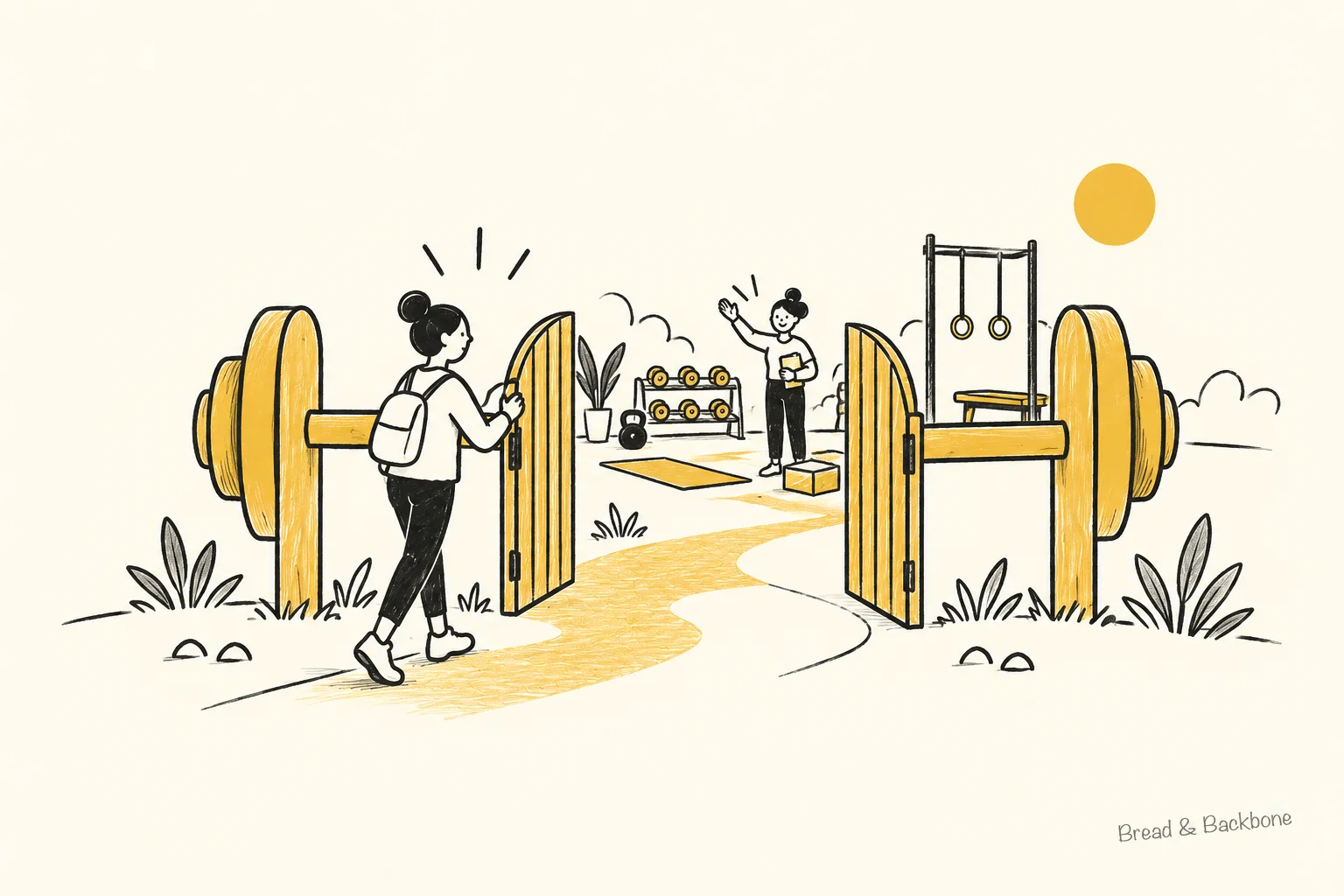
Your First Strength Session Does Not Need to Be a Test
In this story
- Decide what you want to leave knowing
- You do not have to arrive strong to learn about strength
- Ask for the setup, not just the demonstration
- A first-visit decision card
- Speak up while there is still time to adjust
- Make a small record, not a report card
- Try this today
- Sources and reading notes
The seat moves. The handle moves. Something has a pin in it. The small diagram on the machine appears to assume you've already taken a course in the machine.
If the unfamiliarity is part of what has kept you away from strength training, you do not need another speech about motivation. You need a way to begin without having to know everything first.
A useful first strength session can be about learning: finding appropriate support, understanding a few movements and equipment settings, and leaving with a clear next step. You do not have to demonstrate your maximum strength or finish every exercise you've seen online.
This is a guide to that first visit, not a workout prescription. The exercises, starting load, and amount of work should fit the person doing them.
Decide what you want to leave knowing
“Get through a workout” is one possible goal. For a first visit, you might choose something more specific:
- I want to understand how to set up a few exercises.
- I want to know whom to ask when I'm unsure.
- I want a starting plan that fits the time I actually have.
That gives the session a purpose without making exhaustion the evidence that it counted.
Before you go, ask the facility what beginner support is available, whether an orientation needs booking, and what is included or costs extra. You can also ask about access, quieter times, changing facilities, or anything else that would make the visit easier. Asking in advance is useful information gathering, not an audition for membership.
If you have a medical condition, a recent injury or procedure, or symptoms that leave you uncertain about activity, get appropriate guidance rather than expecting a general gym introduction to settle a clinical question. Bring relevant instructions to the person helping you.
You do not have to arrive strong to learn about strength
A historical study offers some perspective. In a 1994 randomized trial, researchers enrolled 100 frail nursing-home residents, with an average age of 87, into groups receiving progressive strength training, a nutritional supplement, both, or control activities and a placebo supplement.
After 10 weeks, the exercise groups had greater improvements in measured strength and walking speed than the nonexercise groups. This was individually supervised training in screened volunteers, not an unsupervised beginner workout. Pain required changes for some participants, and one stopped training because of generalized musculoskeletal pain.
The result does not tell you which weight to pick up today or promise the same outcome for you. It shows why starting capacity should not be mistaken for a final verdict on someone's ability to improve. The work was repeated over weeks, with support and adjustments. There was no requirement to prove the result on day one.
Ask for the setup, not just the demonstration
Watching someone perform an exercise and knowing how to prepare it yourself are different tasks. A useful introduction makes space for both.
You could ask: “Could you show me how to adjust this for me, then watch while I set it up myself?”
You can ask which parts should move, how to get into and out of position, and how to stop or put the equipment down. If you cannot reach an adjustment or do not feel secure in the setup, say so before beginning.
The National Institutes of Health's physical wellness guidance recommends starting gradually, learning form, and asking for help. There is no benefit to pretending a demonstration made sense when it didn't.
Nor does the first session have to involve every kind of equipment. You can learn a few things well enough to ask better questions next time.
A first-visit decision card
Save this in your notes or take whichever questions you need. It is an original learning checklist, not a test of exercise readiness.
| If you're wondering… | Ask… | Leave with… |
|---|---|---|
| How does this fit me? | “Which settings do I change, and can you check my setup?” | The equipment name and relevant settings, if appropriate to record. |
| How much should I do? | “Can you help me choose a manageable start and explain when to stop the set?” | Individual guidance rather than a number borrowed from another person. |
| This movement doesn't seem suitable. | “Can we pause and look at another option?” | A changed plan or referral when needed, not an instruction to push through. |
| What happens next time? | “What should I repeat, and what should I check with you first?” | A short plan and a way to ask follow-up questions. |
A trainer should be able to explain the exercise in language you understand. If a term is new, ask. A repetition is one complete performance of a movement; a set is a group of repetitions. You are allowed to learn the vocabulary while you learn the activity.
Speak up while there is still time to adjust
It can be tempting to finish first and mention the problem afterward. Try to make the conversation part of the session instead.
“I don't understand where my feet go” is useful feedback. So is “I can't reach that handle,” “I need a pause,” or “This hurts.” You do not need a perfect technical explanation to stop and ask for help.
The National Institute on Aging's strength guidance advises learning proper form and seeking guidance when unsure about a movement. It also advises breathing during strength exercises rather than holding your breath.
Do not push through pain, dizziness, or concerning breathlessness. Stop and seek appropriate help. Chest pain during or after exercise needs urgent medical attention, not a form correction. NIH's activity safety guidance explains why symptoms are a reason to stop.
That safety boundary does not mean every unfamiliar movement is dangerous. It means you can be curious without agreeing to ignore what is happening.
Make a small record, not a report card
At the end, write down what you learned while it is still fresh. A few lines can do:
- The exercise or equipment names and any settings you were shown.
- The starting plan agreed with the person helping you.
- One thing that remains unclear or needs an alternative.
You might also note whether the support worked for you. Was there time to ask questions? Were explanations clear? Would another format, appointment time, or instructor make the next visit more useful?
This is different from rating your body or comparing yourself with the person beside you. It gives the next session somewhere sensible to start.
If you want the larger context, our story on strength and balance as we age looks beyond the first visit. For now, leaving with less uncertainty is a perfectly reasonable aim.
Try this today
Write down one question you would like answered before your first strength session. It can be as simple as “Who can show me how this adjusts?” Keep it for when you need it. No booking or workout required today.
Sources and reading notes
Research checked October 29, 2026. Sources linked above include Fiatarone and colleagues' 1994 trial in the New England Journal of Medicine and public guidance from NIH, the National Institute on Aging, and the National Institute of Diabetes and Digestive and Kidney Diseases. The decision card and sample language are editorial teaching tools, not a tested intervention or a report of an actual gym session. This story does not replace individualized exercise or medical guidance.
Healthspan and Lifespan Are Different Questions
In this story
- The definition has a loose edge
- A real result, with walking at its center
- Your life is bigger than a research category
- A small map for a large question
- Keep the measure close to the reason
- Sources and reading notes
Ask someone how long they would like to live, and you may get a number. Ask what they would like those years to hold, and the conversation gets more interesting.
Perhaps it's traveling without organizing the whole day around exhaustion. Perhaps it's continuing to work at something absorbing, seeing friends, or being able to get out into the garden. There may be things you hope to keep doing and things you haven't had the chance to try yet.
That second question helps explain the appeal of healthspan. Lifespan is how long a person lives. Healthspan generally refers to the time spent in good health, although researchers do not all define or measure “good health” in the same way. The distinction is useful. It also deserves more care than a promise to add healthy years to your life.
The definition has a loose edge
In 2025, a systematic review of healthspan definitions found considerable variation. Some definitions centered on the absence of disease, others on disability or performance limitations. The review concluded that the definitions and measurements were not standardized.
So when a headline says something improves healthspan, a reasonable next question is: What did the researchers actually measure?
Living longer, developing a disease later, and finding it easier to do a daily task are related concerns. They are not interchangeable results. A study can tell us something valuable about one without answering all three.
That is not a reason to stop caring about longevity. It is a reason to be precise about what we are hoping for.
A real result, with walking at its center
The LIFE randomized trial studied 1,635 sedentary adults aged 70 to 89 with physical limitations. All could initially complete a 400-meter walking test. They were assigned either structured activity, including walking and strength work, or health education.
Over an average 2.6 years, major mobility disability occurred in 30.1% of the activity group and 35.5% of the education group: an absolute difference of 5.4 percentage points, about five fewer people per hundred. The primary test assessed whether someone could walk 400 meters within 15 minutes without sitting or help from another person or walker. A cane was allowed. It did not measure added years of life.
Serious adverse events occurred in 49.4% and 45.7%, respectively; the comparison's uncertainty included no difference. These were medically screened volunteers in a supported program, not a guarantee for everyone.
A measured mobility benefit is a narrower claim than “exercise reverses aging.” It gives us something concrete to consider without promising what the study did not establish.
Your life is bigger than a research category
There is a difficulty with language that divides life neatly into healthy years and everything after them. A person can live with a chronic condition and still have a meaningful, active life. Needing support does not make the years less valuable.
The World Health Organization's approach to healthy aging puts functional ability at the center: the capacity to do things a person values, supported by their surroundings. It explicitly does not require being free of disease. Housing, relationships, services, and accessible environments matter alongside individual capacity.
That changes the conversation. If the aim is to keep seeing friends, the answer might involve physical activity. It might also involve a more accessible meeting place or reliable transportation. Those are not lesser solutions because they don't look impressive in a workout log.
Supporting health should help make life more possible, rather than become an entrance requirement for enjoying it.
A small map for a large question
“Improve my healthspan” is a difficult instruction to put on next week's calendar. You can make it more useful by separating what you value from what you need to investigate.
The following is a reflection tool, not a health assessment or a validated measure of aging. Start with one thing that matters to you.
| Write down | What it helps you notice |
|---|---|
| An activity or relationship I want room for | A concrete reason to care about the goal, beyond an age or a score. |
| What makes it difficult right now | Whether the barrier seems to be capacity, symptoms, access, time, cost, confidence, or something still unclear. |
| The next question I need answered | Which conversation, practical change, or source of support could help you decide what to do. |
Imagine this: Someone wants to join a friend at a weekly class. The first obstacle is that the class description gives no clue about how movements can be adapted. Their next step could be asking the instructor what options are available. They do not need to prove how many years the class might add before making that inquiry.
Someone else might write down a new symptom that has begun interfering with the same outing. That is a different question, one to take to an appropriate healthcare professional rather than solve with an online routine.
The tool is useful partly because it leaves room for different answers. It does not quietly assume that every barrier is a lack of effort.
Keep the measure close to the reason
Once you choose a goal, think about what would tell you that the next step was useful. If you wanted a clearer plan, did the conversation give you one? If you wanted a welcoming place to practice, did you find a setting you would choose to return to?
Those observations do not measure lifespan. They do not prove that a disease has been prevented. They can still help you decide where to spend your attention, time, and money.
Our story on building strength and balance as we age explores one part of that larger picture. You can be interested in the long view while choosing a next step that matters now.
There is room to hope for more years. There is also something grounding about asking what you want to make room for in the years you are living.
Sources and reading notes
Research checked October 29, 2026. Sources linked above: the 2025 review “Definitions of healthspan”; Pahor and colleagues' 2014 LIFE randomized trial in JAMA; and WHO's explanation of healthy aging and functional ability. The reflection tool and illustrative example are original editorial material, not tested interventions. This story distinguishes research outcomes from personal planning; it does not estimate an individual's lifespan or prescribe exercise for a medical condition.