


When a Coaching Question Needs a Clinician
In this story
- What does “scope of practice” mean here?
- Three examples of a useful boundary
- What happens after a referral?
- Sharing information should be deliberate
- What if your coach is also a clinician or trainer?
- Three questions worth asking before you begin
Imagine a client bringing a blood-test report to a coaching session and asking, “What should I do about this number?”
It is understandable to want a clear answer from someone you trust. It can also be tempting for a coach to offer one, especially after studying the topic or hearing a similar question before.
The question deserves care, even when the coach cannot answer it. A useful response can acknowledge the concern, explain who is qualified to answer, and help the client take the next step toward that support.
What does “scope of practice” mean here?
Scope describes the work a professional is qualified and authorized to do in a particular role. A title alone does not tell you everything about that person’s training or responsibilities.
Under the NBHWC Health & Wellness Coach Scope of Practice, coaching supports client-led goals and behavior change. The coaching credential alone does not authorize diagnosing, interpreting medical data, prescribing or changing treatment, recommending supplements, or providing psychological treatment. A person with another active professional qualification may have additional responsibilities, but the roles and boundaries need to be made clear.
These are professional standards, not a complete explanation of every jurisdiction’s laws. Readers should check the individual’s qualifications and the requirements that apply where services are provided.
Three examples of a useful boundary
The following exchanges are fictional teaching examples.
“Can you interpret my lab results?”
Client: This result is outside the range on the report. Do I need to change what I eat or take something?
Coach: I can’t interpret that result or recommend treatment. The clinician who ordered the test is the right person to discuss what it means for you. Would it help to write down the questions you want to ask?
The coach has not decided what the result means. The offer is practical: help the client prepare for a conversation with the appropriate professional.
Questions the client might choose to bring include what the result means in context and what follow-up the clinician recommends. The coach should not answer those clinical questions on the clinician’s behalf.
“Should I change this medication?”
Client: I’m wondering whether I still need this prescription. What do you think?
Coach: That decision belongs with your prescribing clinician. I can help you think through how you want to raise the question, but I can’t recommend changing the prescription.
A coaching session should not become a workaround for a prescribing discussion. The immediate task in this example is helping the client communicate their question, not settling it through internet research or personal experience.
“Can we use our sessions to work through past trauma?”
Client: I think I need help processing something that happened years ago. Can we do that here?
Coach: That kind of work needs a qualified mental health professional. We can talk about how you would like to find that support and what, if any, coaching goals still make sense alongside it.
A referral conversation can be respectful and direct without attempting a diagnosis. The International Coaching Federation’s referral resource emphasizes recognizing when a client’s needs fall outside the coach’s expertise and discussing appropriate support openly.
What happens after a referral?
“Ask someone else” can feel like a dead end. A more useful conversation might ask whether the person knows whom to contact, what they would like to say, and whether practical barriers are making that step difficult.
The client may want help finding a provider directory, organizing questions, or planning when to make a call. Those tasks are different from selecting a treatment or deciding which clinical interpretation is correct.
Coaching may continue on appropriate goals, or it may need to pause. That decision should reflect the person’s needs and the professionals’ roles, rather than an assumption that every situation can stay within a coaching relationship. ICF’s referral guidance is a useful starting point for coaches developing that judgment. It does not replace professional training or an organization’s procedures. Explore the referral resource.
Sharing information should be deliberate
If a coach and clinician need to communicate, the client should understand what information is being shared, with whom, and why. The NBHWC Code of Ethics and Professional Conduct addresses confidentiality, clear agreements, applicable legal requirements, and support for clients seeking other professionals.
A casual introduction is not blanket permission to send someone’s records or session notes. Discuss the arrangement and follow the consent, privacy and legal requirements that apply. Avoid promising absolute confidentiality without explaining its limits.
This story concerns ordinary professional-boundary decisions. It is not guidance for assessing an emergency or managing a crisis; those situations require appropriate emergency services and established professional procedures, rather than a routine coaching referral.
What if your coach is also a clinician or trainer?
Some professionals hold more than one qualification. The useful question is, “Which role are we working in right now?”
Ask what services are included, which qualification supports them, and how the roles are explained in your agreement. The NBHWC scope calls for clear discussion and documentation of dual roles and their boundaries. A coaching certificate should not be presented as the source of clinical authority that actually belongs to a separate license. See the dual-role guidance.
Three questions worth asking before you begin
- What are you qualified to help me with, and what falls outside your role?
- How do you handle a question that needs another professional?
- How will you protect my information if we involve someone else?
Clear answers are part of a good working relationship. You deserve to know what kind of support you are receiving, and to be directed toward the right expertise when your needs go beyond it.
For anyone considering coach training, these are useful questions to ask the program too. Ask how students practice recognizing boundaries and discussing referrals. A topic on the syllabus should lead to a skill they can demonstrate.
Explore more from Strength for Life →
Sources and review date
Professional guidance checked October 29, 2026:
- NBHWC: Health & Wellness Coach Scope of Practice
- NBHWC: Code of Ethics and Professional Conduct
- International Coaching Federation: One-Page Client Referral Overview


A Biological Age Number Is Not Your Future
In this story
- Ask what kind of “age” is being estimated
- A repeat measurement can change without your whole body changing
- A moving score is not yet a longer life
- What would you do differently with the answer?
- Leave room for a less dramatic answer
- Sources and context
Imagine receiving a report that says your biological age is several years older than the age on your birthday cake. Before you have read the explanation, the number may already feel like feedback on how you have been living.
Now imagine the opposite result. Several years younger. It would be tempting to frame it.
Both reactions are understandable. Neither tells you what the test actually measured. A biological age score is an estimate produced by a particular method, not a new date of birth, a diagnosis of your whole body, or a forecast of the years you have left.
Ask what kind of “age” is being estimated
There is no single agreed-upon measurement of biological age. Some approaches use patterns of DNA methylation, chemical marks associated with gene regulation. Others use blood proteins or clinical measurements. They may be designed to estimate chronological age, aspects of disease risk, or the pace of biological change. These are related questions, but they are not interchangeable. Stanford researchers explain the differences.
The familiar unit, years, can conceal those differences. A bathroom scale and a tape measure do not become equivalent because both describe your body. Likewise, two aging reports should not be compared simply because their results both look like ages.
Before interpreting the score, look for the name of the model, the type of sample, and what it was designed to estimate. “Our advanced algorithm” is not much of an answer. You are allowed to ask for a clearer one.
A repeat measurement can change without your whole body changing
Any useful test needs to address repeatability. If the same material is measured again, how similar are the answers?
In a 2022 Nature Aging study, researchers examined technical variation in prominent DNA-methylation clocks and developed a computational approach to improve reliability. Their work found substantial differences between some repeated measurements and showed that changing the method could reduce this noise. This was a study of particular clocks and datasets, not proof that every current consumer test has the same error. Read the primary study.
For a consumer, the useful question is practical: how much change would this particular test need to show before its developers could distinguish that change from measurement variation?
If you buy two tests and receive different results, that difference needs an explanation before it becomes a success story or a reason for alarm. The method, sample conditions and ordinary variability all deserve attention. A report should help you understand those limits rather than leave you to supply a hopeful explanation.
A moving score is not yet a longer life
Researchers are interested in aging measurements partly because waiting decades for every outcome makes studies difficult. A measure that changes sooner could be useful. The harder question is what that change means.
A 2023 analysis of the two-year CALERIE trial illustrates the distinction. It found a change in a DNA-methylation measure called DunedinPACE, but not significant changes in the biological-age estimates PhenoAge and GrimAge. The authors said longer follow-up was needed to learn whether the observed change would translate into disease prevention or a longer healthy lifespan. Read the study summary.
The finding is scientifically interesting. It is not a reason to turn a consumer score into a target for unsupervised dieting, supplements or treatment.
When a program says it made participants younger, ask whether it means a test score changed or whether people experienced a meaningful health benefit. If the answer is only the score, that distinction should travel with the claim.
What would you do differently with the answer?
That is a reasonable question before spending money on a test, and it is still useful after you have bought one.
Perhaps you are curious about the research. Perhaps you want a reason to take your health seriously. Perhaps you are hoping for reassurance. Those are different reasons, and a test may not serve all of them equally well.
Consider a fictional example: a person receives a younger-looking score and decides a persistent symptom can wait. Another receives an older-looking score and starts a costly regimen without discussing it with a clinician. In both cases, the number has been asked to do work it has not established it can do. A consumer aging score should not replace assessment of a concern or a decision grounded in appropriate medical advice.
If you already have a report, you can bring it to a qualified healthcare professional with a specific question: “Does this add anything useful to the information we already use to look after my health?” You can also ask the provider what evidence shows that acting on its score improves outcomes for people like you.
Leave room for a less dramatic answer
Aging research is worth following without asking each new test to settle your relationship with getting older. It is possible to find a measurement interesting and decide that it does not currently help you make a better decision.
For now, read the explanation before accepting the label. Look for uncertainty, repeatability and evidence of useful outcomes. If those are missing, the confident-looking number has not filled the gap.
You remain a person with a history, a present life and choices ahead of you. A report can offer information. It does not get the final word.
Sources and context
Sources checked October 29, 2026. Examples involving individual reports are fictional.
- Stanford Report: What biological age tests can and cannot tell you.
- Higgins-Chen and colleagues, 2022: reliability of epigenetic clocks.
- Waziry and colleagues, 2023: DNA-methylation measures of aging in CALERIE.
The Late Workout Is Not Automatically the Villain
If training leaves you wide awake, consider the whole evening before declaring that exercise has a curfew.
In this story
The day has finally stopped asking questions. Work is finished, dinner is handled, and a workout is possible. Unfortunately, the internet would like to inform you that you have chosen the wrong hour.
This is not especially helpful to people with actual schedules.
Rather than ban evening exercise, a better question is whether the session you are doing leaves enough room for the night you want afterward.
A large study, with an important boundary
A 2025 study in Nature Communications analyzed more than four million nights of wearable data from 14,689 physically active adults. Later, more strenuous exercise was associated with later sleep onset, shorter sleep, and higher overnight resting heart rate and lower heart rate variability. Sessions ending at least four hours before sleep were not associated with those changes.
That is an association, not a randomized test of a four-hour rule. Participants were WHOOP users, roughly three-quarters were men, and wearable estimates are not the same as laboratory sleep measurements. Several authors were affiliated with WHOOP. The study cannot establish that shifting your workout will produce a particular sleep benefit.
It offers a useful question to investigate, not a universal curfew to obey.
Start with your actual evening
If you train late and sleep comfortably, do not invent a problem simply because a headline found one.
If you regularly finish a demanding session feeling too wired for bed, look at the sequence. When did exercise end? When did you intend to sleep? Was the evening also crowded with caffeine, work, a late meal, or a long journey home?
You do not need to identify a single villain on the first attempt. You are looking for a pattern you can work with.
Our practical suggestion is to change one feasible part of the routine and observe what happens over several ordinary evenings. Perhaps the hardest session moves to an earlier opening. Perhaps the late slot becomes easier movement. Perhaps the useful change is simply leaving more unhurried time before bed.
This is a personal experiment, not a diagnosis or a reproduction of the study. A few notes about how you feel may be enough; a new device is not required.
Avoid a new kind of perfectionism
There is something faintly comic about rushing through dinner, worrying about your recovery score, and then wondering why bedtime does not feel restful.
The aim is not to optimize every minute. It is to find a relationship between training and sleep that works within your life. A theoretically beautiful schedule that requires someone else's job, commute, and childcare arrangement is not your schedule.
Persistent sleep difficulty deserves attention beyond workout timing, especially if it affects daytime functioning. A clinician can help assess the bigger picture.
For everyone else, consider this permission to be curious rather than rigid. Keep the movement. Notice the landing. Your evening does not need to end with a personal best in either squats or self-monitoring.
Sources
Leota and colleagues, 2025: evening exercise and sleep in a wearable cohort. Read the full paper.
Exercise Snacks Need More Than a Catchy Name
Short movement breaks can be a useful beginning. Whether they change fitness depends on what actually happens during them.
In this story
“Exercise snacks” is an excellent phrase. It sounds friendly. It fits between appointments. Unlike most fitness terminology, it leaves room for lunch.
The appealing idea is to scatter very short bouts of exercise through the day instead of waiting for a large, uninterrupted training window. But a good name can hide a complicated question: what kind of movement, for whom, and compared with what?
Recent research makes that question much more interesting than a simple yes or no.
Two studies, different stories
A 2025 randomized trial assigned 77 inactive adults, averaging 54 years old, to remotely delivered bodyweight exercise snacks or brief stretching sessions for 12 weeks. Participants were encouraged to complete at least three bouts per day, each a minute or less, on at least three days weekly. People generally managed the program, but the snacks did not produce a clear advantage in measured cardiorespiratory fitness or blood biomarkers over stretching. Feasibility did not establish a fitness benefit over that comparison program.
Contrast that with an October 2026 trial involving 27 younger women with overweight or obesity. Its six-week program used supervised, vigorous stair climbing, jump squats, and high knees. The researchers reported improvements in estimated fitness and strength, but metabolic measurements did not change. Twenty-four women completed the study; fitness was predicted from a submaximal test, not directly measured at maximum effort.
These are not interchangeable recipes. One comparison involved stretching; the other, no exercise. Supervision, intensity, participants, and measurements differed.
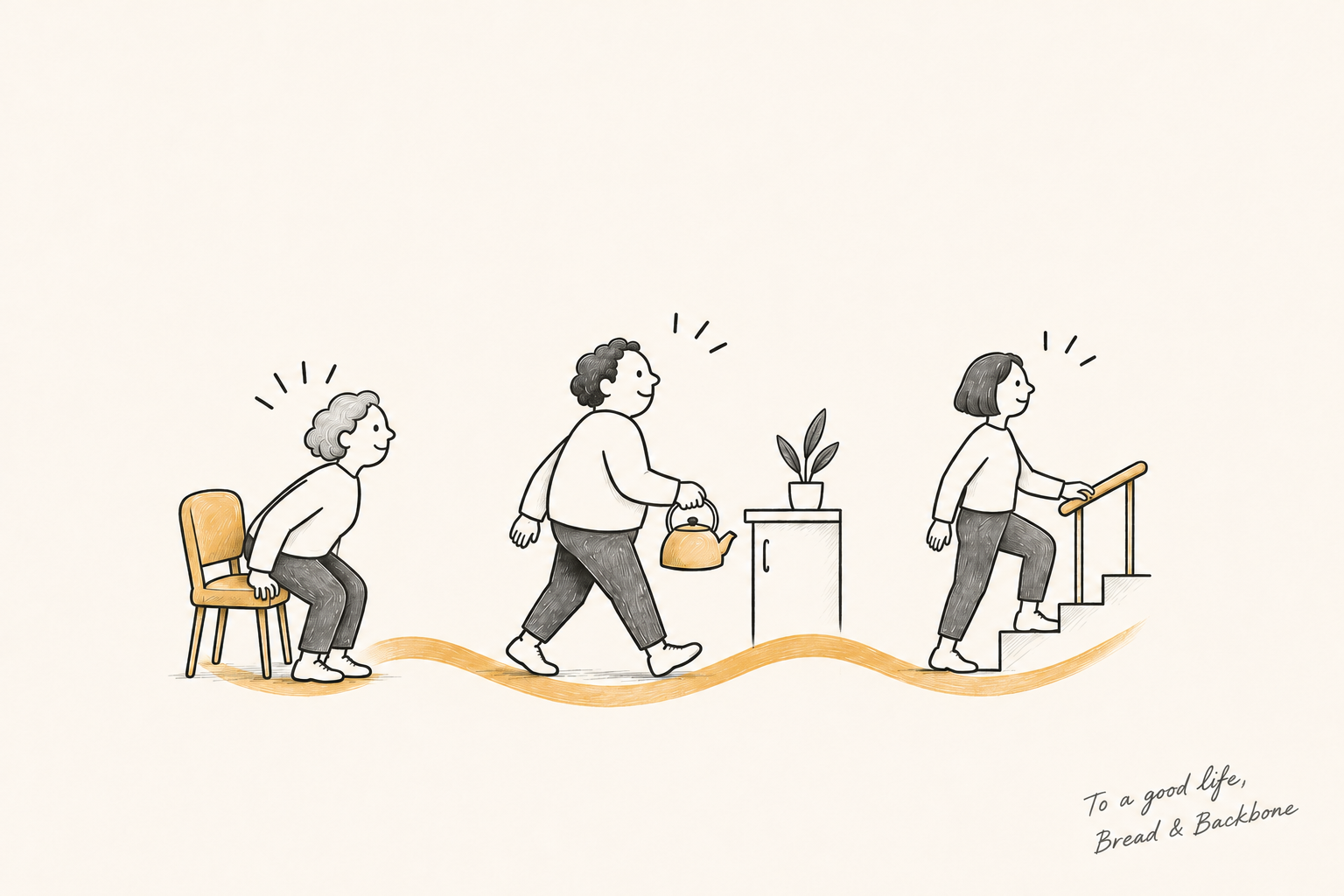
A doorway is not the whole house
We would rather treat a manageable movement break as a doorway than sell it as a shortcut to everything.
If you have been struggling to begin, a small commitment may be an appealing place to start. That is a practical choice about your routine, not a promise that one minute will deliver a particular laboratory result.
Try separating two questions in your own planning:
- Can I do this consistently? Consider time, space, confidence, comfort, and whether you actually like it.
- Is it serving the goal I chose? A habit that helps you interrupt desk time is not automatically a complete strength or endurance program.
Answering the first question is worthwhile. It simply does not answer the second on your behalf.
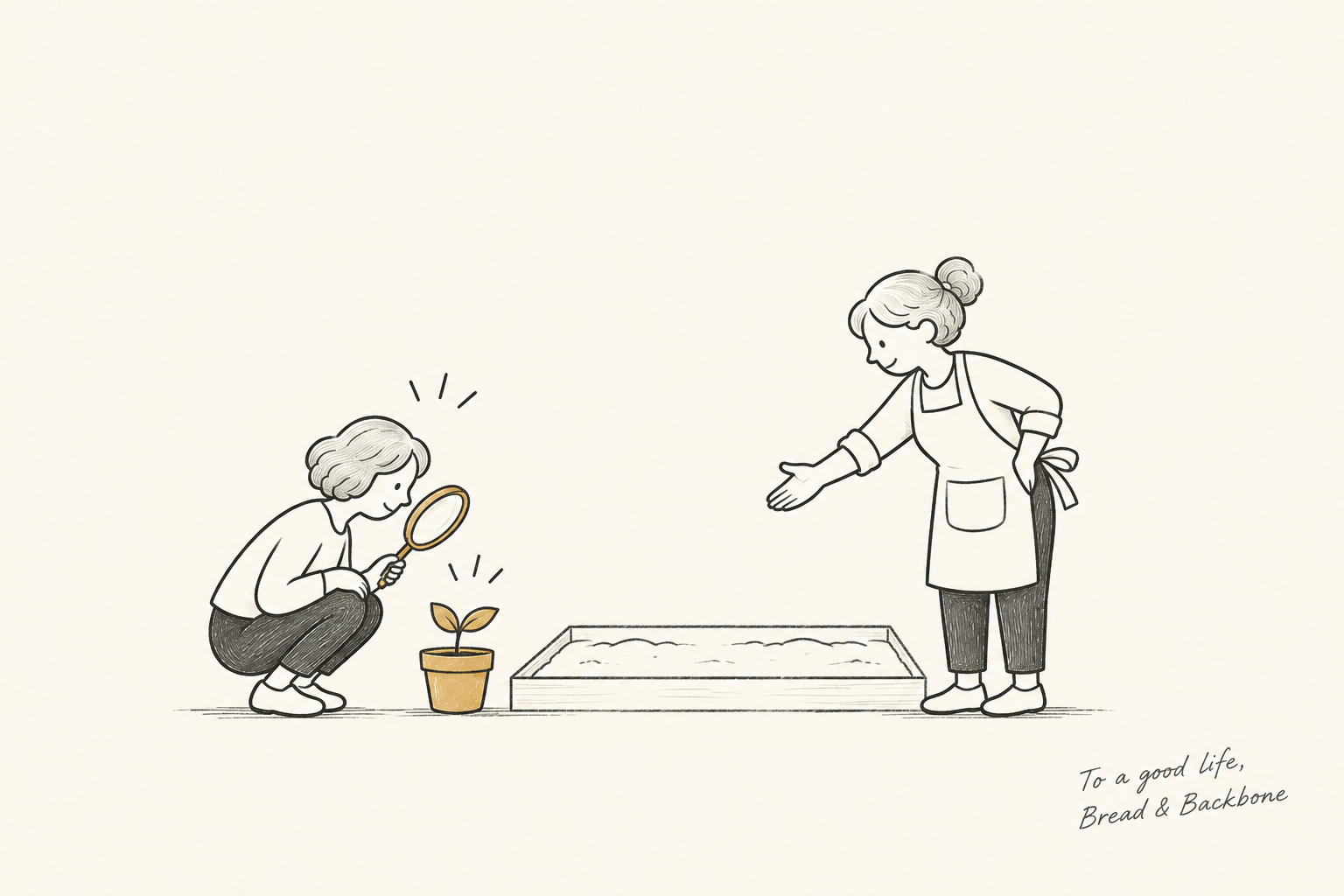
Keep the ambition. Lose the miracle
There is no need to leap from sitting all afternoon to vigorous stair sprints because a study used them. An exercise description is not personal clearance, and jumping exercises are not suitable for everybody. Start with activity appropriate to your ability; seek professional guidance if symptoms, a medical condition, or uncertainty make harder exercise a question.
You can also reject the idea that every available minute must become productive. A quiet cup of coffee is allowed to remain a quiet cup of coffee.
The useful promise here is smaller and more humane: training does not always need an elaborate entrance. But if you want a specific result, the details still matter. Tiny can be a starting point. It does not need a superhero cape.
Sources
Babir and colleagues, 2025: real-world exercise-snack randomized trial. Full text.
Park and colleagues, October 2026: supervised exercise-snack randomized trial.
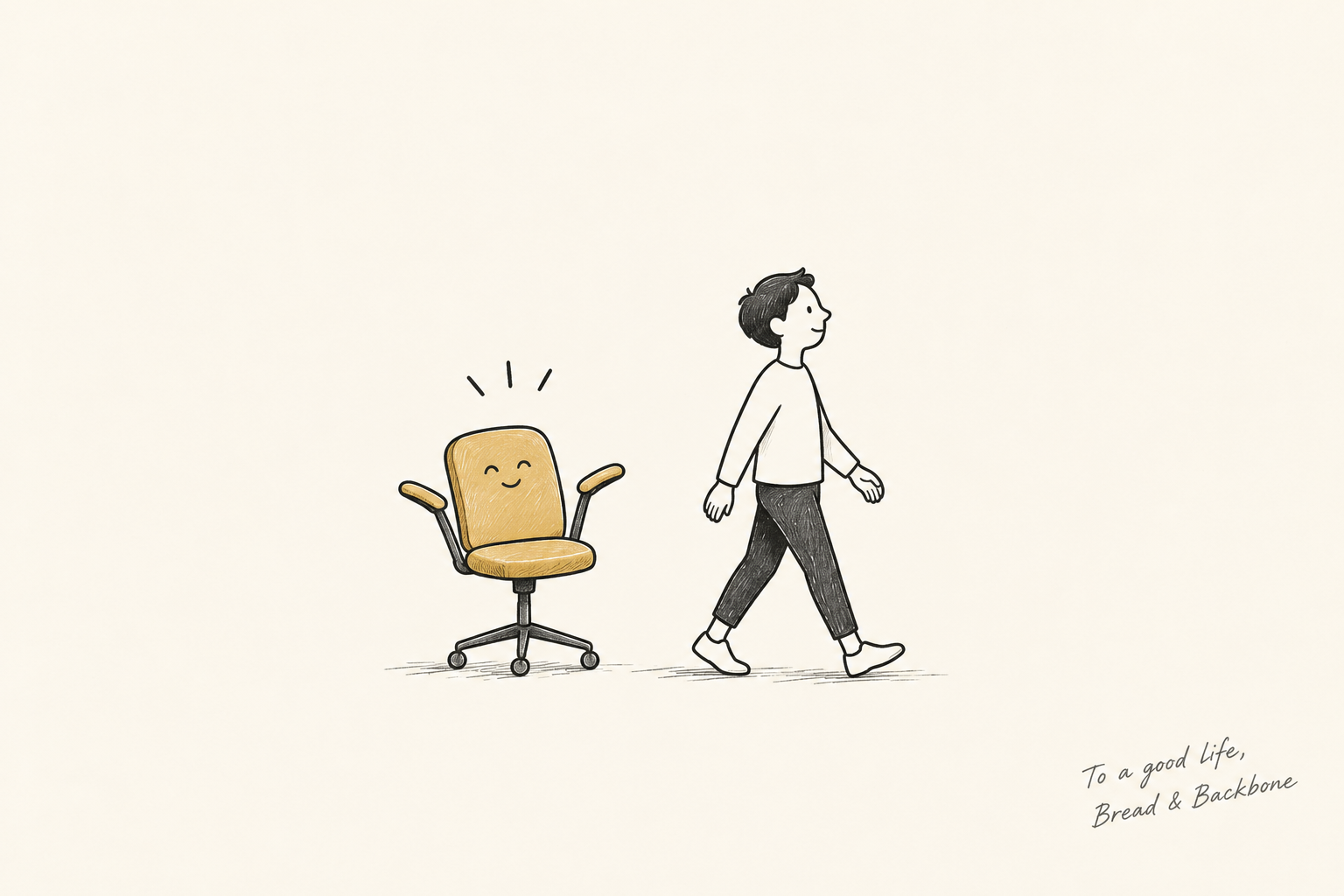
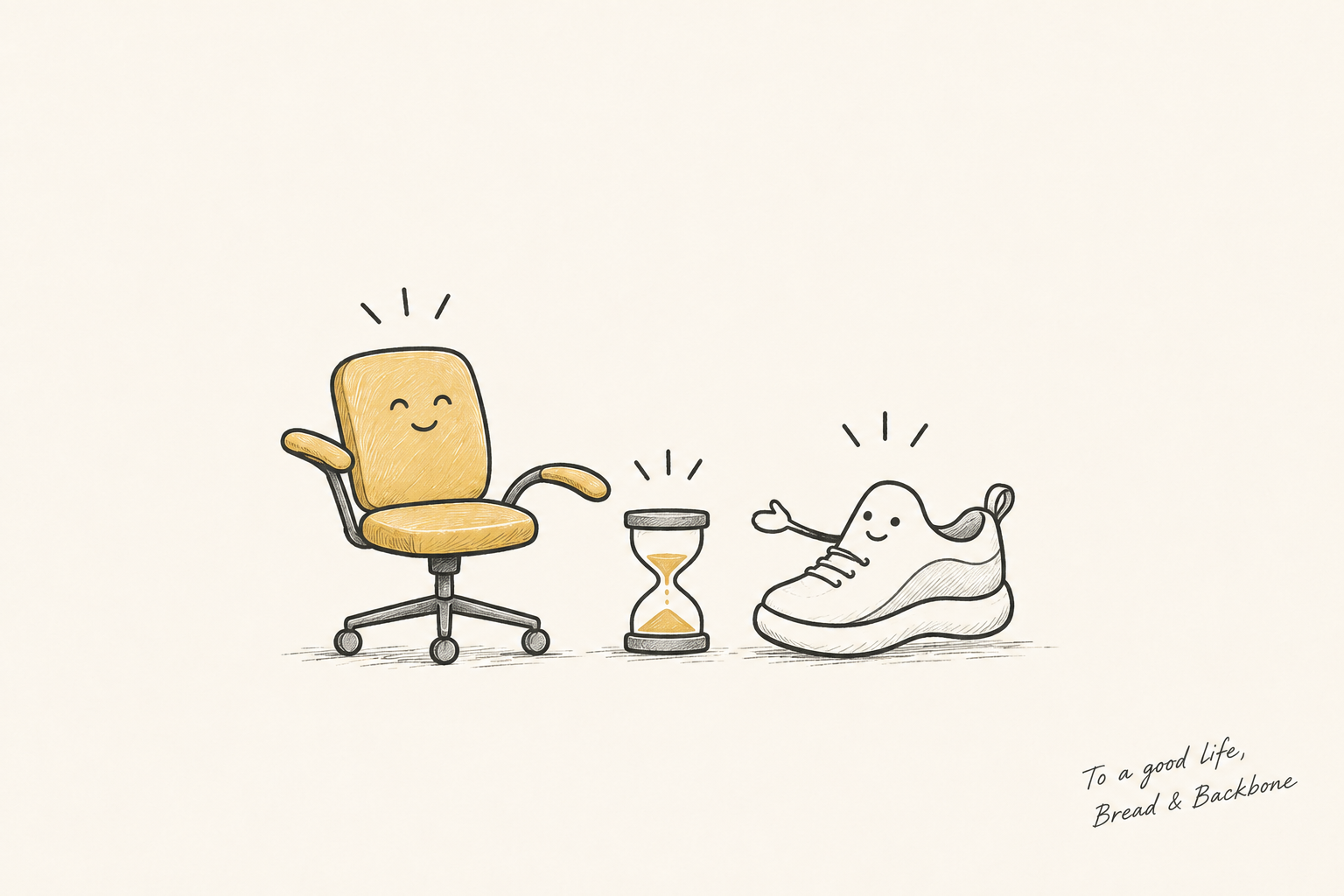
Your Chair Could Use a Break From You
Sometimes the most useful movement plan is not another workout. It is a little less uninterrupted sitting.
In this story
There is a particular kind of afternoon that disappears into a chair. One email becomes twelve. Lunch happens beside the keyboard. Suddenly the light has changed, and your legs would like to speak to management.
The usual response is to promise a magnificent workout later. But there is another question worth asking: could the hours before that workout contain a little more movement?
Not a transformation. Not a sweat challenge in office clothes. Just a break.
What the research actually measured
A 2026 systematic review in Obesity Reviews examined 53 short laboratory studies, with 39 included in its pooled analysis. Adults completed both prolonged-sitting conditions and conditions interrupted by activity. On average, breaks reduced the measured glucose and insulin response after meals. Walking was a promising option.
These were experiments lasting less than 24 hours, not demonstrations that desk breaks prevent diabetes or extend life. Participants and protocols varied. The review also had no preregistered protocol, and its search ended in October 2024 despite its 2026 publication.
The practical distinction is between a modest short-term physiological finding and a sweeping health promise. This evidence supports taking movement breaks seriously. It does not turn your calendar into a medical prescription.
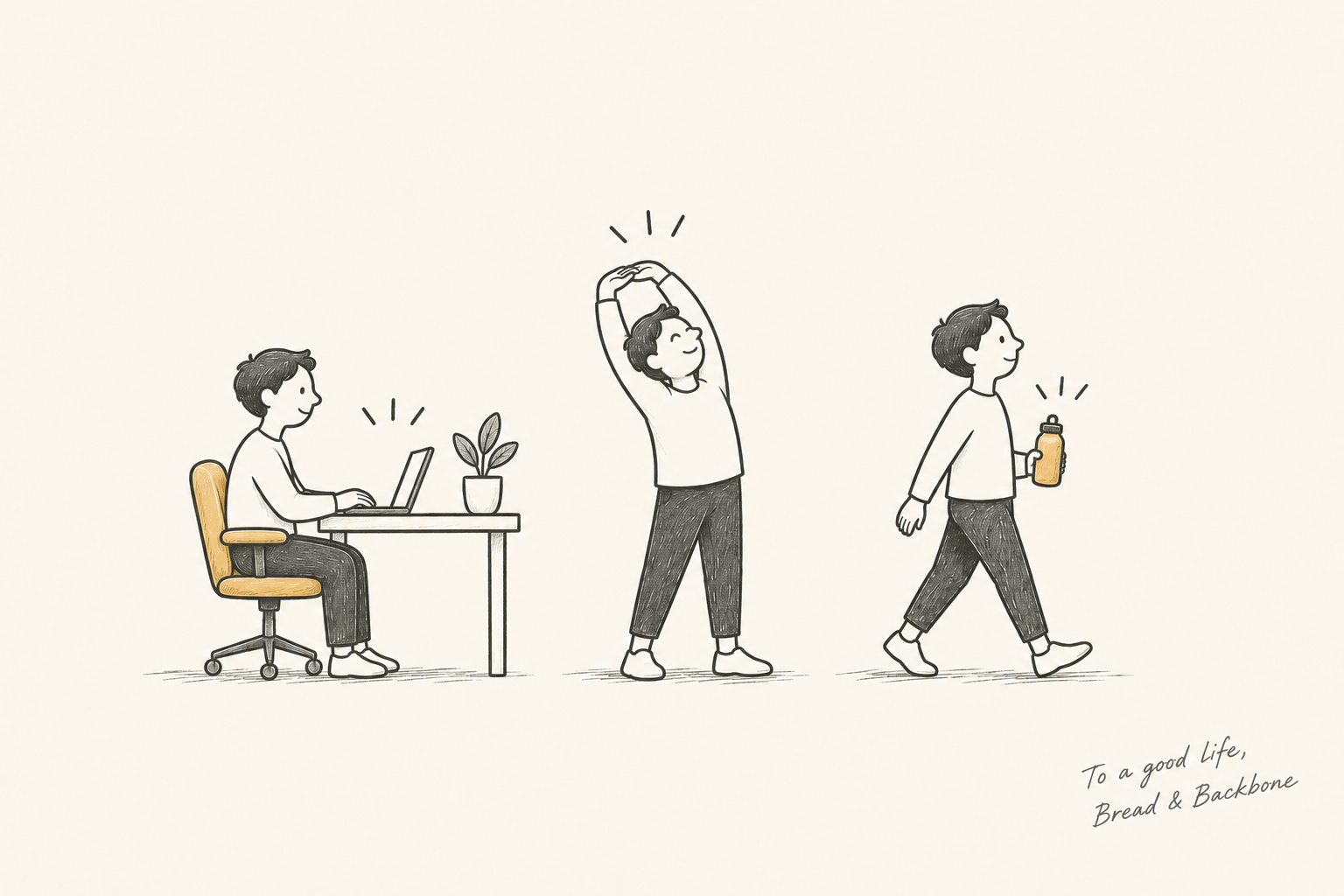
Make room, not rules
Our suggestion is deliberately ordinary: look for one stretch of your day in which you tend to stay planted, then design a break you can actually take.
Perhaps you walk to fill your glass between calls. Perhaps you finish lunch away from the desk and take the longer route back. Perhaps a recurring meeting becomes audio-only while you move somewhere safe and quiet.
Choose a cue that belongs to your life. A finished task can be a cue. So can a natural pause in a conversation. If a timer helps, use it. If it becomes another tiny supervisor demanding perfect compliance, try something gentler.
This is an invitation to experiment with your routine, not the precise intervention tested in every study. Nor does a walking example fit everyone. If walking is uncomfortable or inaccessible, discuss suitable movement options with a clinician or physical therapist rather than treating someone else's routine as a requirement.
Leave the guilt at the desk
Some work is genuinely difficult to interrupt. Some days are organized around caregiving, pain, transportation, or meetings you did not choose. A useful suggestion should acknowledge that rather than announce that everyone has the same twenty minutes.
Ask a smaller question: where is there one opening?
You do not need a wearable to answer it. You do not need to earn lunch, cancel out lunch, or analyze lunch as though it were a suspicious transaction. The point is simply to make your day a little less motionless when circumstances allow.
Your workout can remain your workout. Your walk can remain a walk. And your chair can enjoy a brief, well-deserved moment alone.
Sources
Gale and colleagues, 2026: systematic review of activity breaks and post-meal glucose and insulin. Read the full paper.
You Do Not Need to Become a Pianist to Begin
In this story
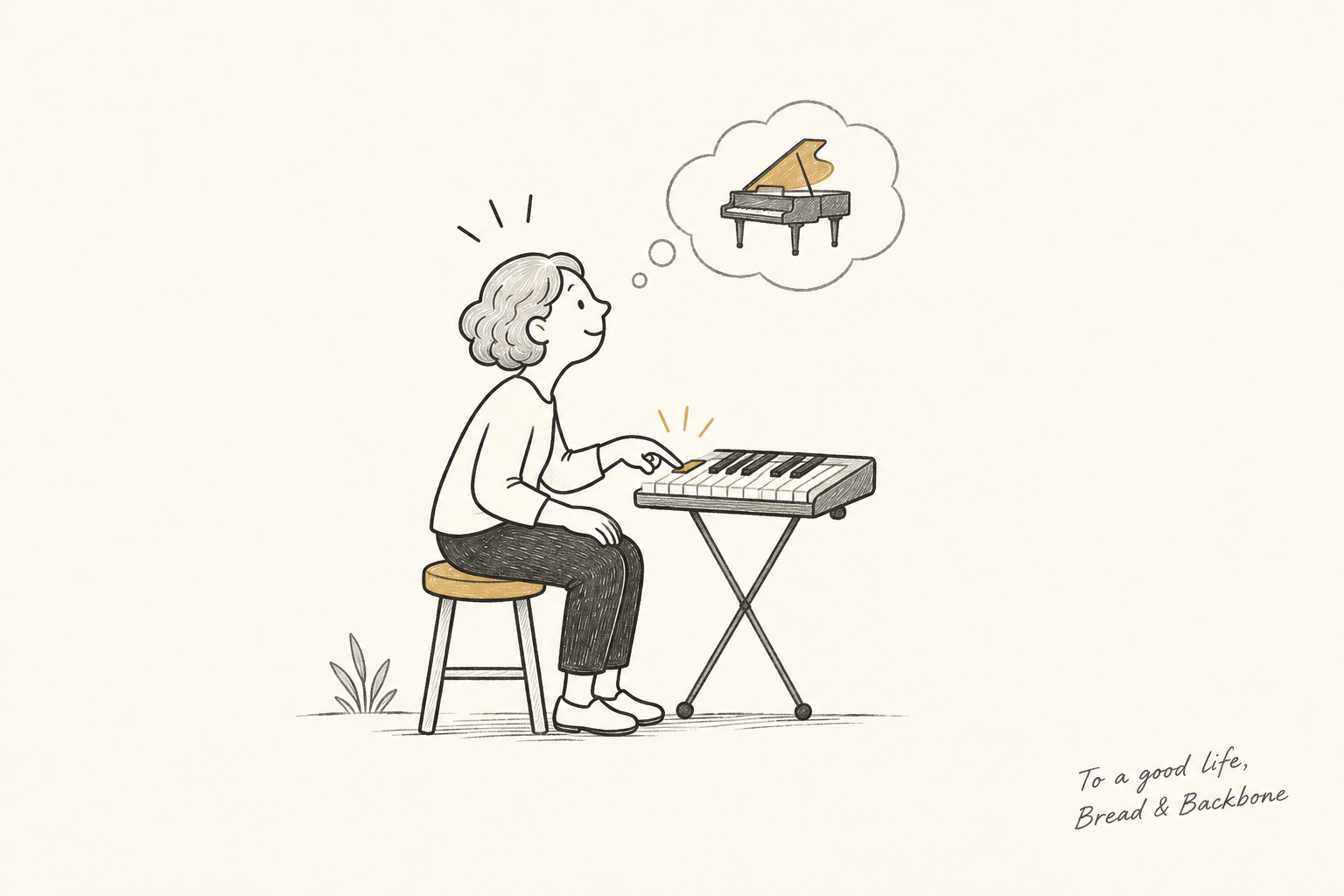
There is a strangely strict rule we sometimes apply to adult hobbies: before starting, we should already show signs of being good at them.
Children are allowed to make an uncertain noise. Adults apparently need a five-year plan and a promising audition.
A 2025 piano study offers a different reason to begin. Its interesting question was not whether older beginners could become concert performers. It was whether learning could make everyday life feel better.
What the researchers did
The randomized trial involved 156 healthy older adults. Participants attended weekly hour-long piano or music-listening/culture lessons for a year. During the first six months, the piano group fared better than the music-culture group on psychological, physical, and environmental quality-of-life measures. This mainly reflected maintaining quality of life or slowing a decline, rather than a statistically clear improvement from participants’ own starting scores. There was no clear between-group benefit for social quality of life. PubMed record.
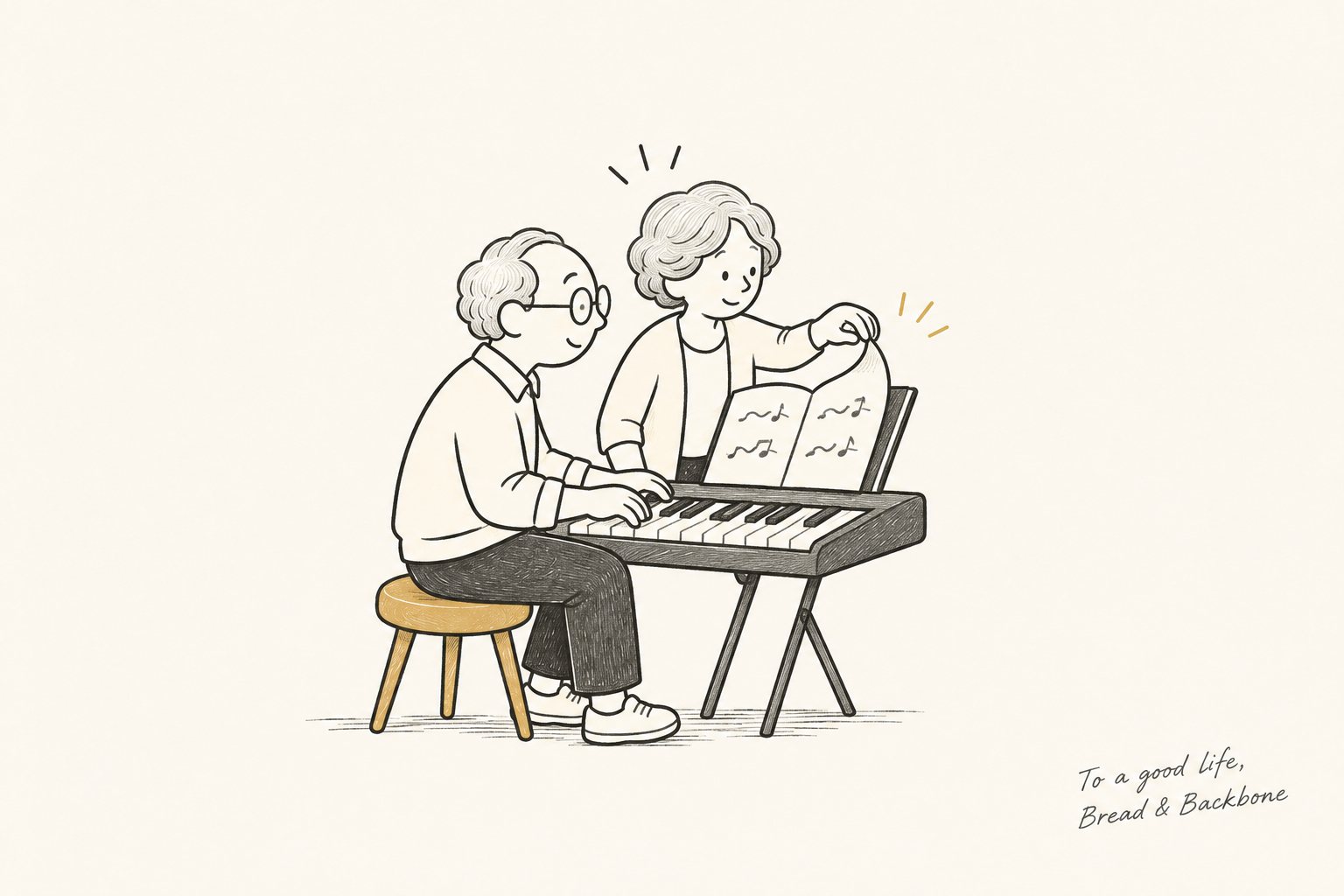
The full paper adds important context: participants were retired beginners aged 62–78, and the comparison group also received teaching and musical engagement. Both groups had homework. The piano group received an electronic keyboard and equipment for practice. This was not a test of buying an instrument and leaving it in the corner. Full study.
Quality of life is a worthwhile outcome
We do not need to translate every enjoyable activity into a claim about living longer. Feeling more satisfied with parts of everyday life is worth investigating on its own terms.
It is also worth being precise. A quality-of-life questionnaire is not the same as diagnosing disease, measuring independence directly, or proving dementia prevention. The study reported associations with some brain-volume changes, but those do not establish a protective mechanism or promise a younger brain.
The participants were a selected, healthy group. The results do not automatically tell us what would happen for every age, health condition, instrument, or teaching format.
Make beginning easier, not more impressive
If you are curious about learning, a useful first question is not “Could I ever be good?” It is “What would make this enjoyable enough to explore?”
That might mean a teacher comfortable with adult beginners, an accessible instrument, an introductory session, or permission to start with music you actually like. Consider the practical details too: cost, space, physical comfort, hearing needs, and whether you have a realistic way to practice.
These are editorial suggestions, not a substitute for the study's program and not a guarantee of its results. There is no need to buy an expensive piano to prove that you are taking curiosity seriously.
Before committing, ask a teacher how lessons are adapted for beginners and what equipment is genuinely needed. A borrowed keyboard and a sensible conversation may be a better opening than an elaborate shopping cart.
Let the hobby remain a hobby
You can notice progress without turning every practice into a health score. You can enjoy a piece before playing it perfectly. You can decide another activity suits you better without treating that as a failure to age correctly.
The most humane reading of this research is not an instruction that everybody should learn piano. It is permission to take the experience of learning seriously at an age when people are too often encouraged only to maintain what they already have.
A beginner is not a failed expert. A beginner is someone who has started.
Keep exploring healthy aging, or read how to look past a health headline before turning an enjoyable activity into a promise.
Was It the Music, the Movement, or the Whole Experience?
In this story
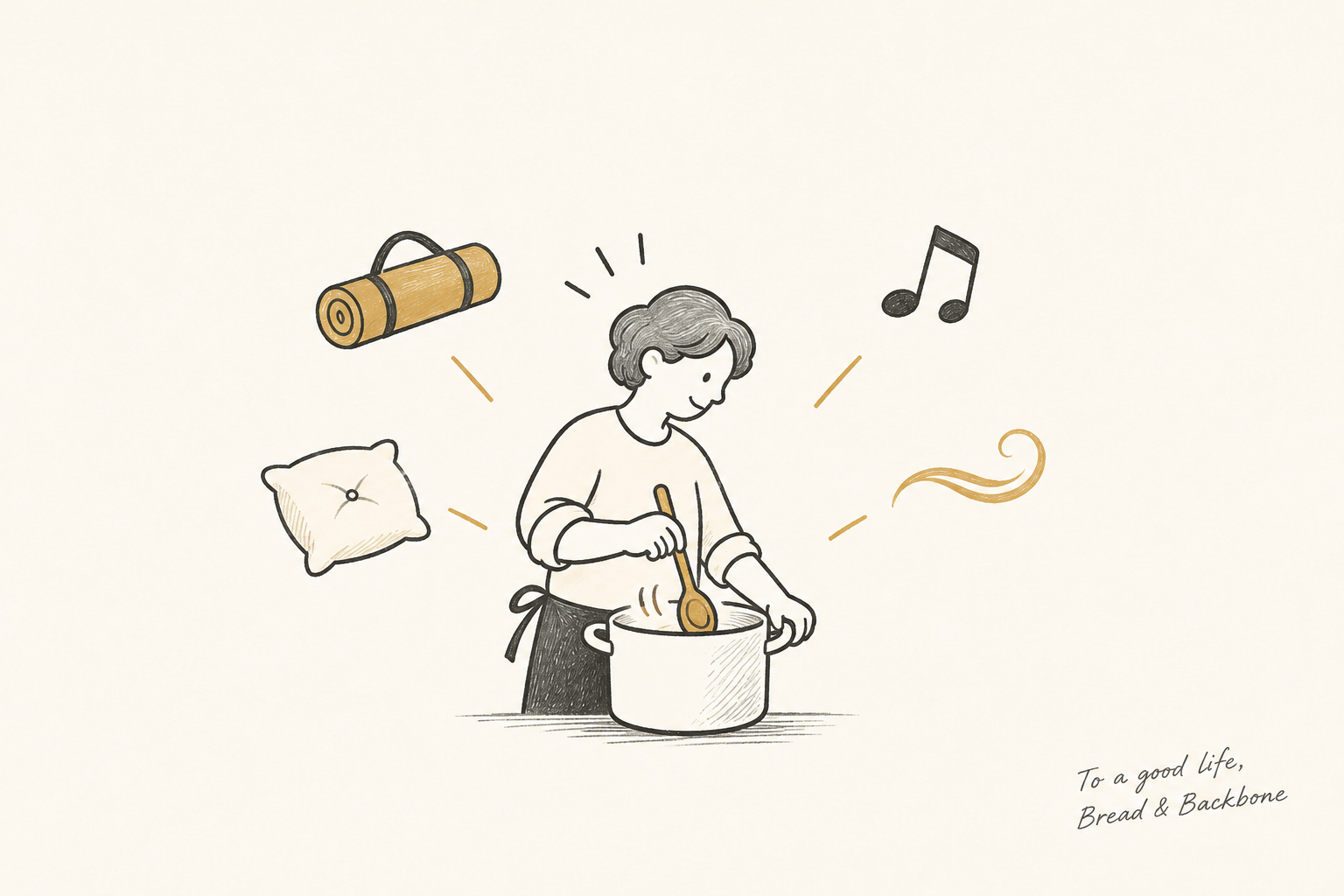
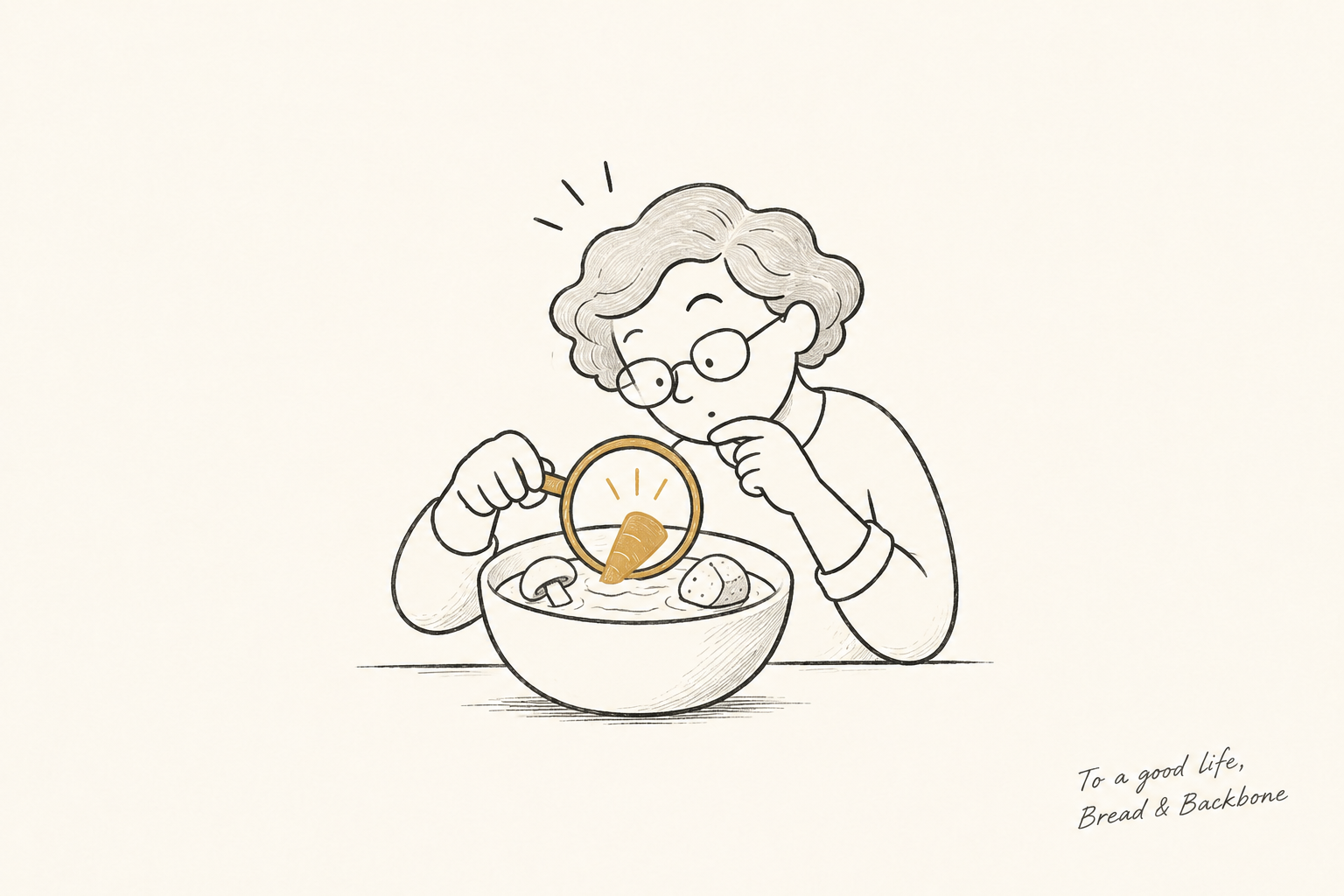
Imagine enjoying an excellent soup and then declaring that the carrot did it.
The carrot may have been wonderful. But there was also broth, seasoning, time, and someone paying attention to the pot. Giving one ingredient the whole review would be a little unfair to dinner.
Something similar happens when a health headline pulls one appealing ingredient out of a much larger program.
The program, not just the playlist
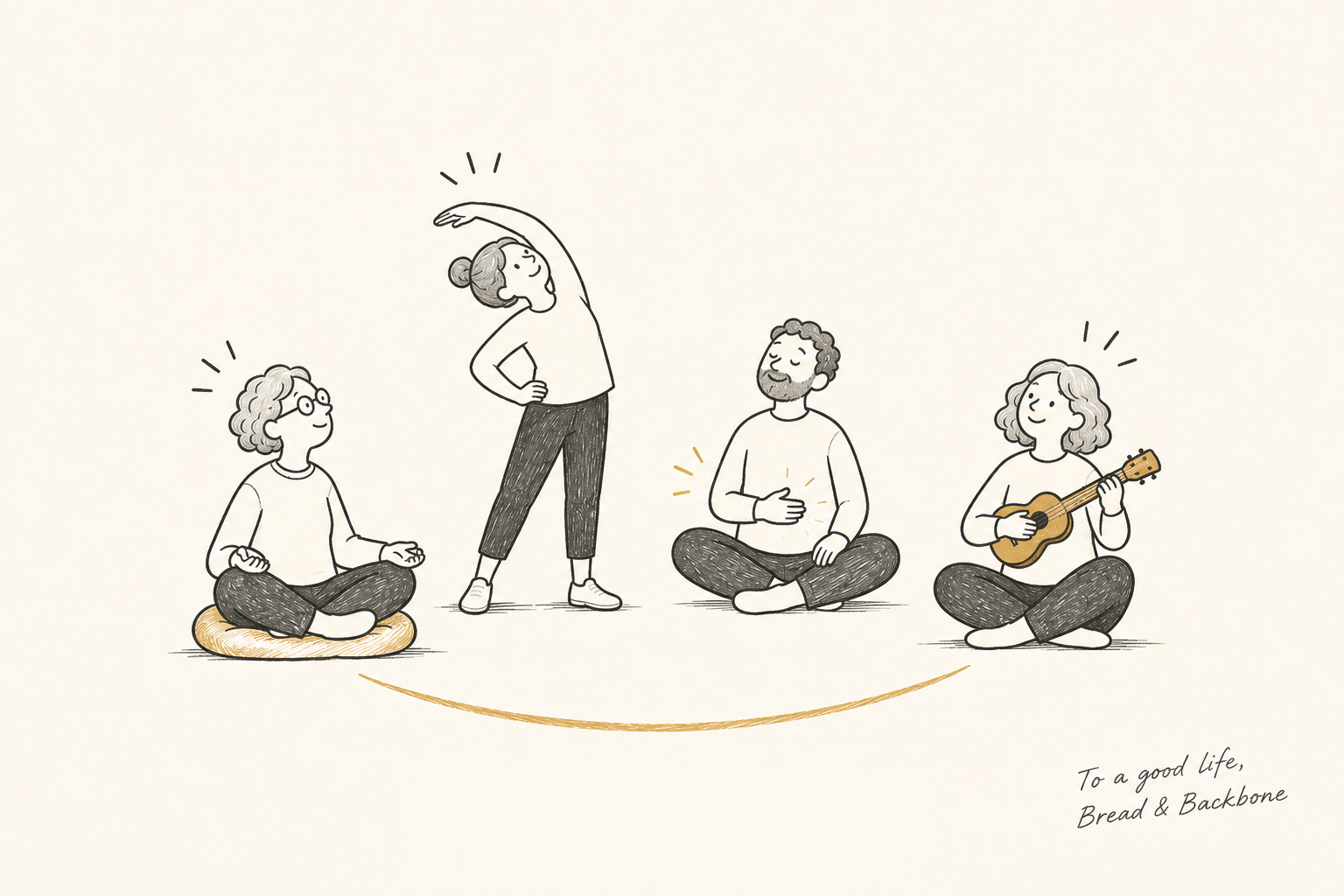
An October 2026 randomized trial assigned 80 university students to a 12-week program or a waitlist. The program combined progressive core exercise, diaphragmatic breathing, relaxation, and slow-tempo music, with physiotherapist supervision four times a week. Compared with the waitlist, it improved reported stress and state anxiety, plus some trunk-endurance measures. The back-muscle endurance test did not show a statistically clear advantage for the program. The people measuring outcomes knew which group participants were in. Read the PubMed abstract.
The important limitation is built into the comparison: the study did not test the same exercise program with and without music. It cannot isolate what music contributed. Nor does a student trial establish a treatment for an anxiety disorder. These findings concern a particular combined program and measured outcomes, not every calming playlist. Full study.
Why the comparison changes the meaning
When a study compares a full program with waiting, it can help answer whether the package is useful. It cannot necessarily answer whether a particular ingredient is necessary.
An active comparison might involve similar movement, supervision, and time, with only one ingredient changed. That asks a narrower question. Neither design is automatically pointless; they simply support different conclusions.
This distinction is useful far beyond music. It applies when a retreat includes meals, exercise, rest, company, and time away from work, or when a new routine changes five things at once. A better experience is real to the person having it. Explaining exactly what caused it requires another step.
What a reader can reasonably take away
You do not need to dismantle every enjoyable activity into a laboratory experiment. If a familiar movement class feels welcoming and you like its music, that can be enough reason to return.
But be more demanding when someone converts a pleasant experience into a specific medical promise or an expensive purchase.
Ask: What exactly was tested? Who took part? Compared with what? Was the benefit measured in a way that matters to me? And did the advertisement quietly drop three ingredients from the recipe?
Those questions are not cynicism. They are a way of keeping enthusiasm attached to the evidence.
A combination can still be worthwhile
The lesson is not that music is irrelevant or that a mixed program is somehow cheating. Real life is full of combinations. The lesson is to describe the result at the same level the study tested it.
For everyday exercise, choose an appropriate activity, a manageable level of effort, and an environment in which you can hear instructions and move safely. If music makes that experience more inviting, enjoy it. If stress or anxiety is persistent or disruptive, seek qualified care rather than treating a playlist as treatment.
Sometimes the whole experience is the point. We can appreciate the soup without awarding the carrot a medical degree.
A useful next question: which health headlines deserve a second look?
Can Yoga Help You Sleep? A New Pilot Study Gives a Careful Answer
In this story
If you have ever been awake at 3 a.m., the phrase “promising sleep intervention” has a particular appeal. At that hour, even the refrigerator seems to be sleeping more successfully than you are.
Yoga is an understandable place to look for help. But a new study is worth reading carefully rather than turning into another bedtime promise.
What was tested
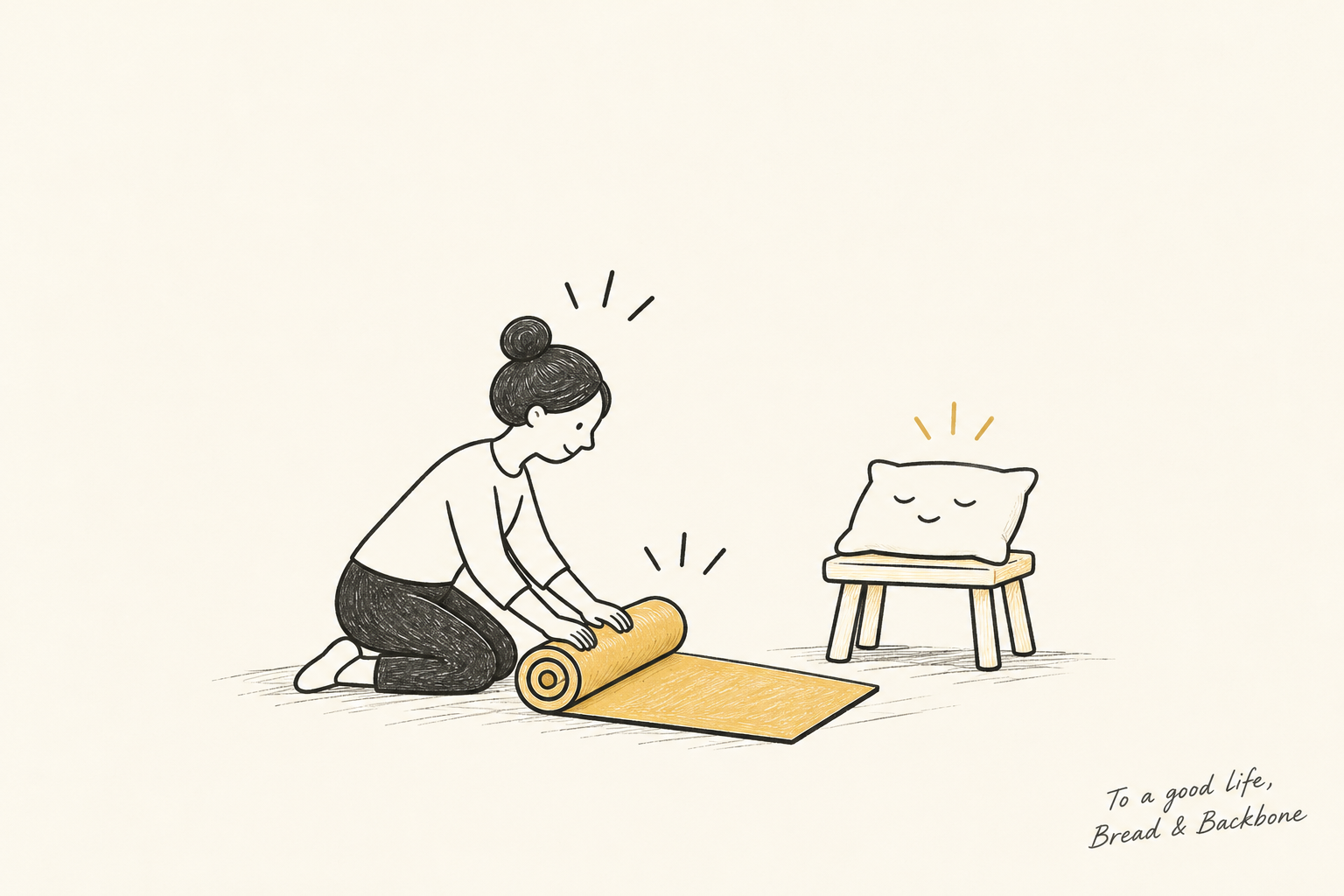
In an October 2026 pilot trial, 33 insufficiently active adults with insomnia symptoms were assigned to four weeks of video-based vinyasa yoga or a control group that continued its usual lifestyle. The yoga schedule was three 60-minute sessions each week. Most participants were women, and most were White. PubMed study record.
The main comparisons did not find significant differences between groups in changes in insomnia severity, sleep diaries, or activity-monitor sleep measurements. Resting heart rate changed favorably with yoga. A separate analysis of highly adherent participants found a greater reduction in insomnia symptoms. Full paper.
Those findings belong together. Reporting only the favorable subgroup would leave out the central result.
Why “among people who stuck with it” needs care
Random assignment is valuable because it helps make groups comparable at the beginning. Looking afterward only at people who followed a program especially closely asks a different question.
People may find it easier to stick with something for many reasons. They may have more time, fewer obstacles, or a better early experience. An adherent subgroup can offer a useful clue, but it cannot automatically tell us what would happen if everybody simply tried harder.
That is a general research-reading principle, not a judgment about these participants. It also matters emotionally. A person who still cannot sleep should not be handed the implication that they failed to practice enthusiastically enough.
A pilot is an invitation to learn more
This was a small, short study, not a verdict on every style of yoga or every person with sleep problems. It compared the intervention with usual lifestyle, not another equally engaging exercise program. It does not establish yoga as a cure for insomnia or show that a particular evening sequence will work for you. Study details.
Think of a pilot as a sketch rather than the finished building. A sketch can be useful without being ready to hold up the roof.
What to do with the information
If you enjoy yoga, you do not need this study to guarantee better sleep before valuing your practice. You might appreciate the movement, the time away from your phone, or the simple fact of doing something you have chosen.
Keep those benefits separate from a medical promise. If sleep difficulties persist or affect daytime life, discuss them with a qualified clinician rather than replacing care with a video routine. Choose a practice appropriate to your experience and physical needs, not the most demanding class because it sounds more likely to “work.”
The useful takeaway is not “yoga fixes sleep” or “yoga does nothing.” It is that this particular experiment left important questions open.
Good evidence sometimes asks us to stay curious without rushing to certainty. That may be less catchy than a miracle. It is also considerably more trustworthy.
New to the mat? Start with what happens in a first yoga class. For a broader perspective, explore a sleep routine that leaves room for real life.
Your Playlist May Change How Hard a Workout Feels
In this story
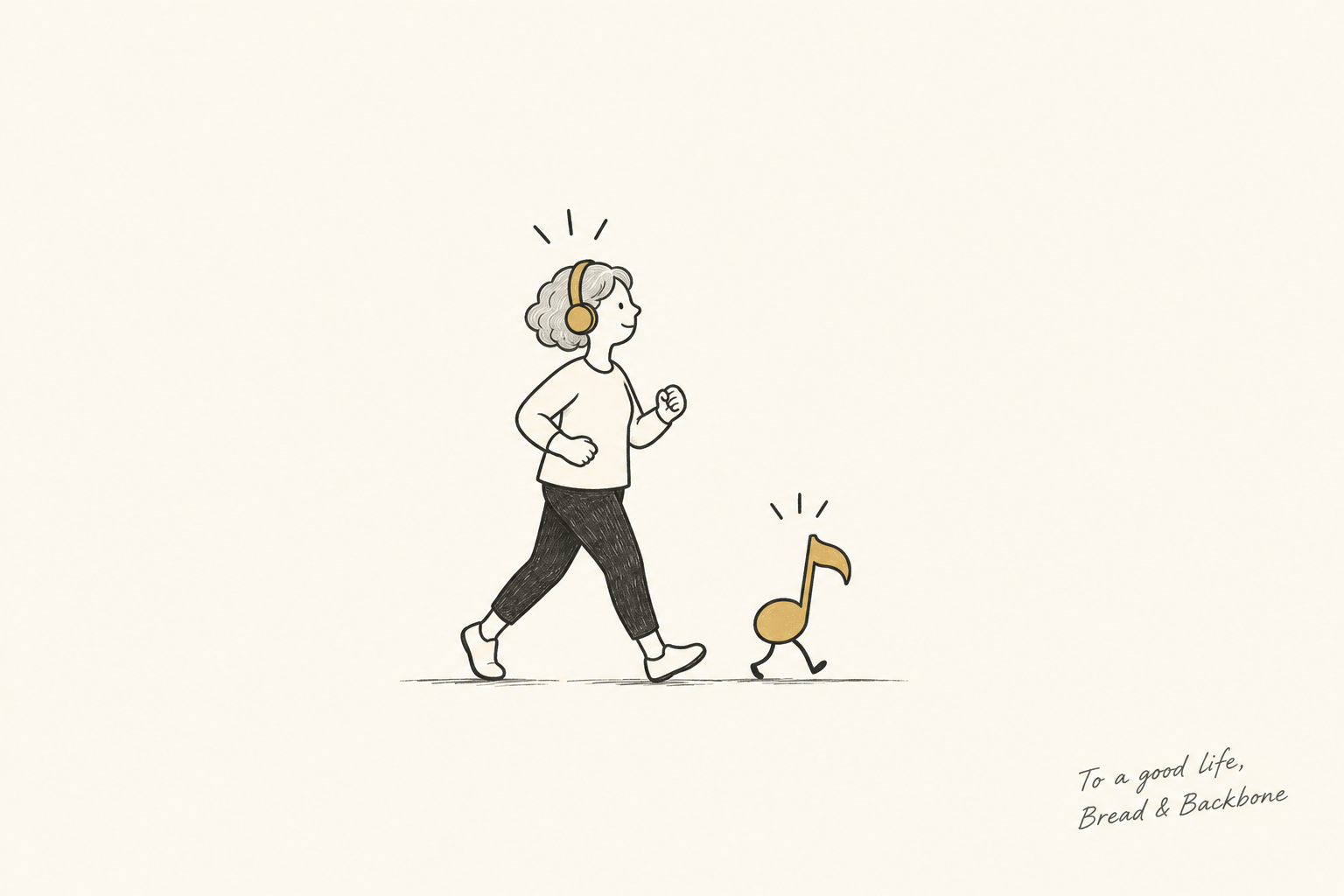
Some songs make a familiar walk feel like the opening scene of a film. Others make the gym feel briefly less like the gym. Music is good at atmosphere. What it does to exercise performance is a more specific question.
A 2026 review offers a helpful distinction: feeling less effort and producing more performance are related ideas, but they are not the same result.
The clearest finding
The August review combined 15 studies involving 339 physically active adults. It found lower ratings of perceived exertion with music, with the authors judging that evidence to be of moderate certainty. Evidence for improved fixed-duration performance was rated low certainty; evidence about time to exhaustion was very low certainty. Heart rate did not change significantly overall. PubMed record.
The studies differed in participants, music, exercise tasks, and how music was used. This was a synthesis of existing experiments, not one new workout trial. The authors caution against treating all the results as equally dependable. Full review.
The plain-English version: the strongest message is about how hard the exercise felt. It is not a universal promise of faster times or extra endurance.
Let music support the plan, not rewrite it
There is an everyday decision hiding in that distinction. If your intention is an easy session, a thrilling chorus does not get to promote it to an interval workout without consulting you.
Choose the session first. Then choose the soundtrack.
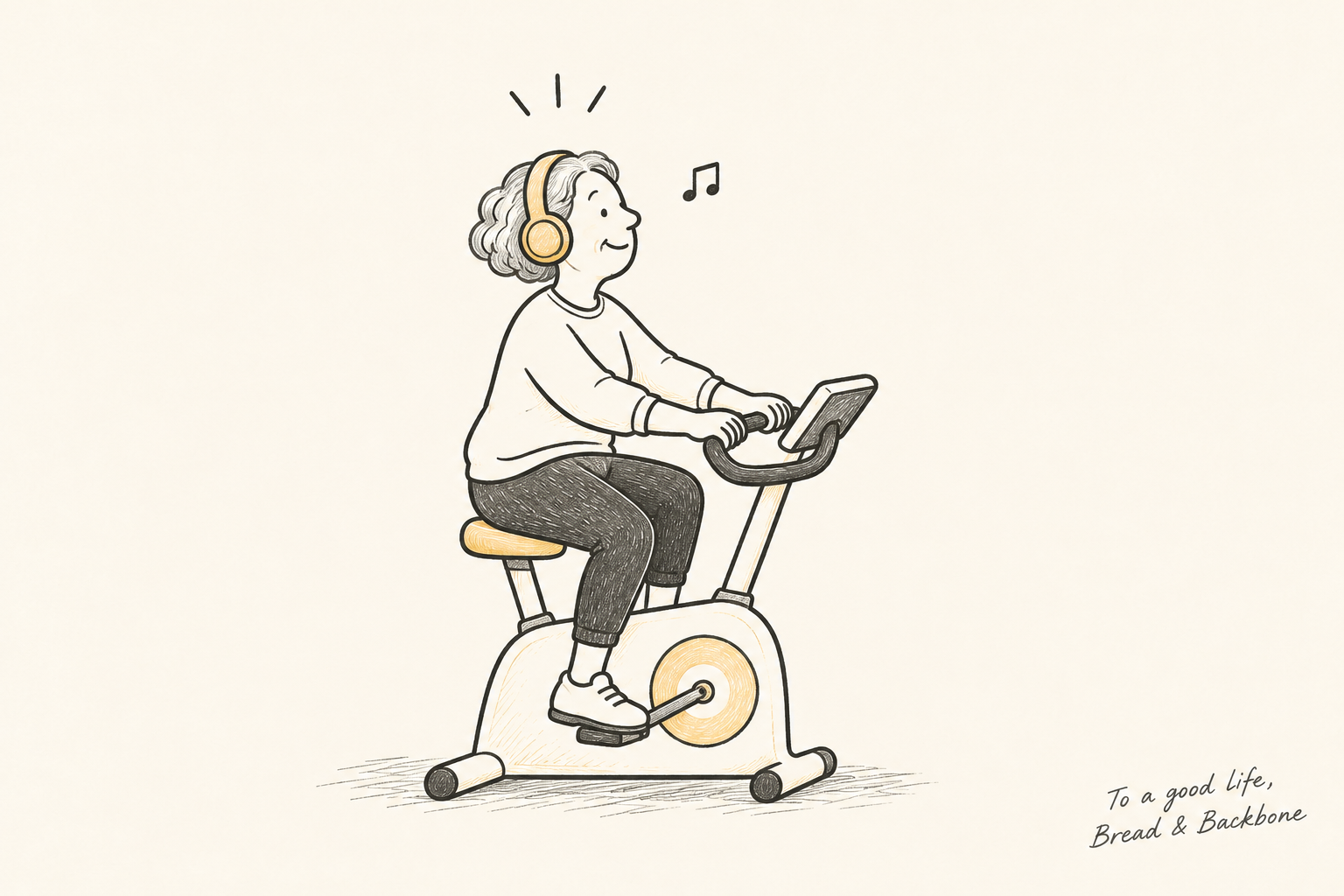
For a familiar indoor workout, try music you enjoy and notice whether you can still pay attention to technique and effort. When learning a movement or listening to coaching, lower the music or leave it off. These are practical editorial suggestions, not a tested prescription from the review.
There is also no need to optimize every track. If choosing the scientifically perfect playlist takes longer than the walk, the project may have wandered off course.
Notice enjoyment without chasing a number
After your next familiar session, ask whether the music helped you enjoy it, whether it competed with useful information, and whether you stayed with the effort you intended.
That is not a controlled experiment. Your sleep, mood, surroundings, and company can all change the experience. It is simply a way to make an ordinary choice more deliberate.
Silence remains an option. You are allowed to prefer hearing your footsteps without losing points for failing to adopt a performance tool.
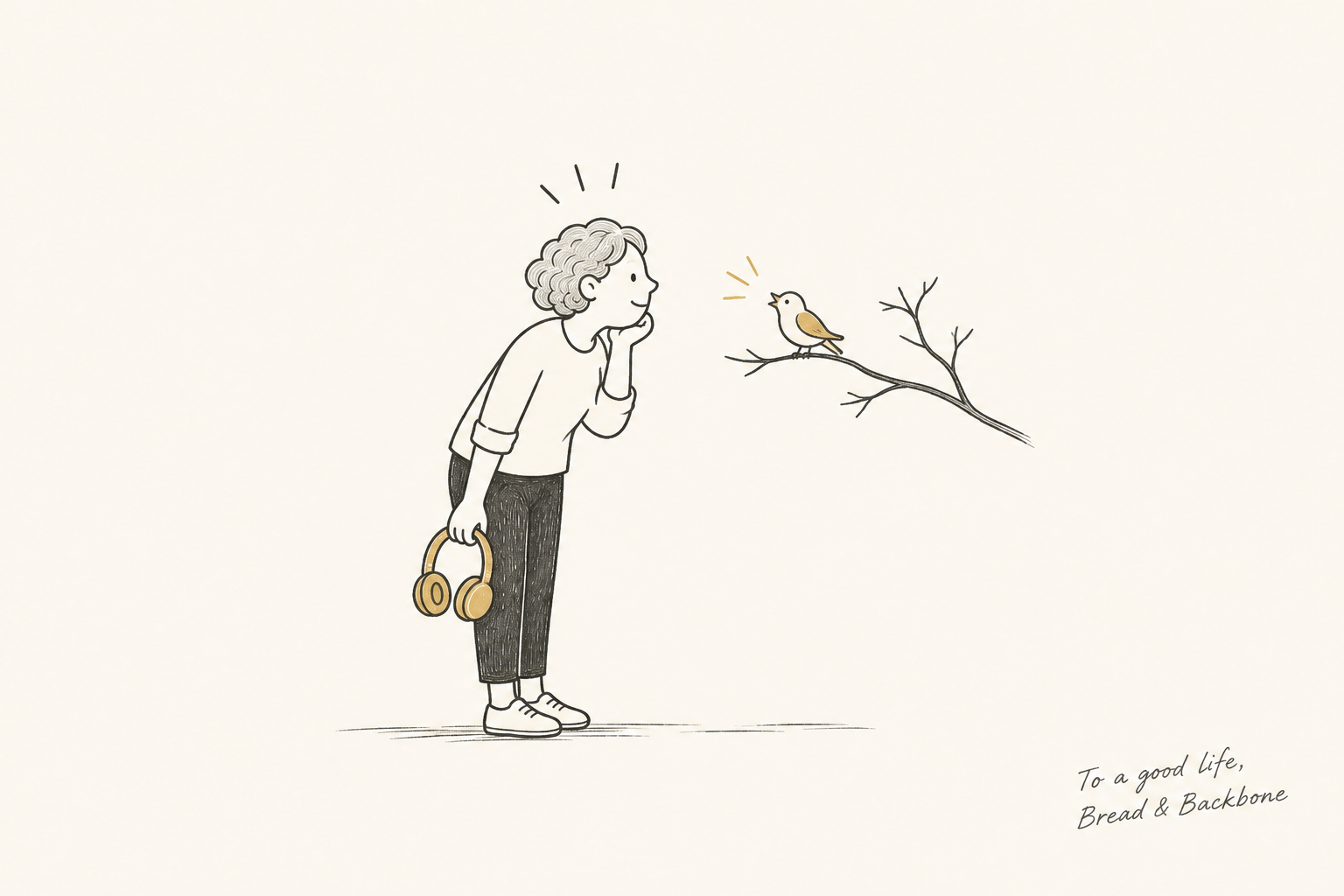
Keep your ears in the picture
Loudness and listening duration both matter for hearing risk. WHO advises lower listening levels, breaks from loud sound, and monitoring exposure where possible. Persistent ringing or difficulty hearing warrants professional attention. Safe-listening guidance.
Outside, preserve awareness of traffic and people. A soundtrack should not make the route less safe.
The research does not require us to make music grander than it is. Helping a workout feel a little more manageable is already useful. Let the song set the atmosphere. Keep the decisions for yourself.
Keep the session in perspective: explore progress before adding more weight, or consider what walking can and cannot do on its own.
What Progress Looks Like Before You Add More Weight
In this story
- Separate learning from lifting more
- There is more than one way to change a training challenge
- A record you can understand next week
- Keep the record kind and accurate
- Try this today
The weights are the same as last week. Does that mean nothing happened?
It is an understandable question. A heavier dumbbell makes a tidy announcement. Remembering how to adjust a seat or understanding a movement that previously felt confusing is less dramatic. Neither comes with a small brass band.
Those changes are worth noticing, but they are not all the same kind of progress. Learning a skill, establishing a routine and improving physical performance answer different questions. A useful training record makes room for the distinctions rather than treating everything as proof that you are stronger.
Separate learning from lifting more
Think about three things you might want to know after a few weeks.
First, are you more familiar with the session? You might know how to set up an exercise, understand the instructor's explanation or feel able to ask for a different option. Those are learning observations. They do not need to be converted into a claim about muscle growth to matter.
Second, is the plan workable? A record of the sessions you attended can show whether the schedule fits. It cannot, on its own, tell you how much strength you gained.
Third, has performance changed? That needs a reasonably consistent comparison: what movement, what equipment, what load, how many repetitions and under what conditions? The more those details change at once, the harder it is to interpret the result.
This is not a request to keep a laboratory notebook. It is permission to stop asking a single number to explain your entire experience.
There is more than one way to change a training challenge
Adding weight is one approach to progression. It is not the only variable a training program can change.
In a small 2022 randomized study, 43 people with at least a year of lower-body strength-training experience were assigned to progress either the load or the number of repetitions over eight weeks. The researchers reported that both approaches were viable for improving muscular adaptations during that period, with mostly small differences between groups.
That does not mean adding repetitions and adding weight are interchangeable for every person or goal. The trial was short, involved experienced participants and studied a particular lower-body program. It does give us a reason not to define progression solely as moving to the next dumbbell.
The American College of Sports Medicine's 2026 guidance for healthy adults also emphasizes regular participation and tailoring training to the person's goals, rather than treating a complicated program as inherently better. Its advice is not a requirement to change something every time you train.
If you are following a program, discuss the next change with the person guiding it. More repetitions, more load and a different exercise are choices with different purposes, not points to collect all at once.
A record you can understand next week
You can make a useful note without scoring your body. This is an original reflection aid, not a validated fitness assessment. Choose one familiar exercise rather than trying to document everything.
| Record | What to include |
|---|---|
| The setup | Name of the movement, equipment and any settings you will need to remember. |
| The work | Load or resistance, repetitions and sets, if these are part of your program. |
| The experience | What felt manageable, what was unclear and whether you used a different option. |
| The next question | One thing to clarify before changing the exercise or its difficulty. |
Here is an illustrative note, not a report from a client: “Used the same machine and settings. Remembered the setup without help. The last repetitions still felt challenging. Ask whether to repeat this or change anything.”
That note does not announce a measurable strength gain. It records learning and gives the next conversation somewhere to start. A different note might record more repetitions at the same load under similar conditions. That is information about performance, though a single session is not a verdict on a longer trend.
Keep the record kind and accurate
There is no benefit in making the page look more impressive than the session. Note an altered setup, a longer rest or a different movement instead of comparing unlike attempts as if they were identical. You are collecting information for yourself, not submitting evidence for a prize.
Nor should the record become a reason to push through pain or an unfamiliar symptom. Those belong in a conversation about safety and appropriate support, not in a competition with last week's entry. If you are unsure whether exercise is appropriate for a health concern, seek qualified clinical advice.
Sometimes the most useful conclusion is that the plan needs adjusting. Sometimes it is that you would like help understanding what the numbers mean. Neither requires pretending you have failed.
Try this today
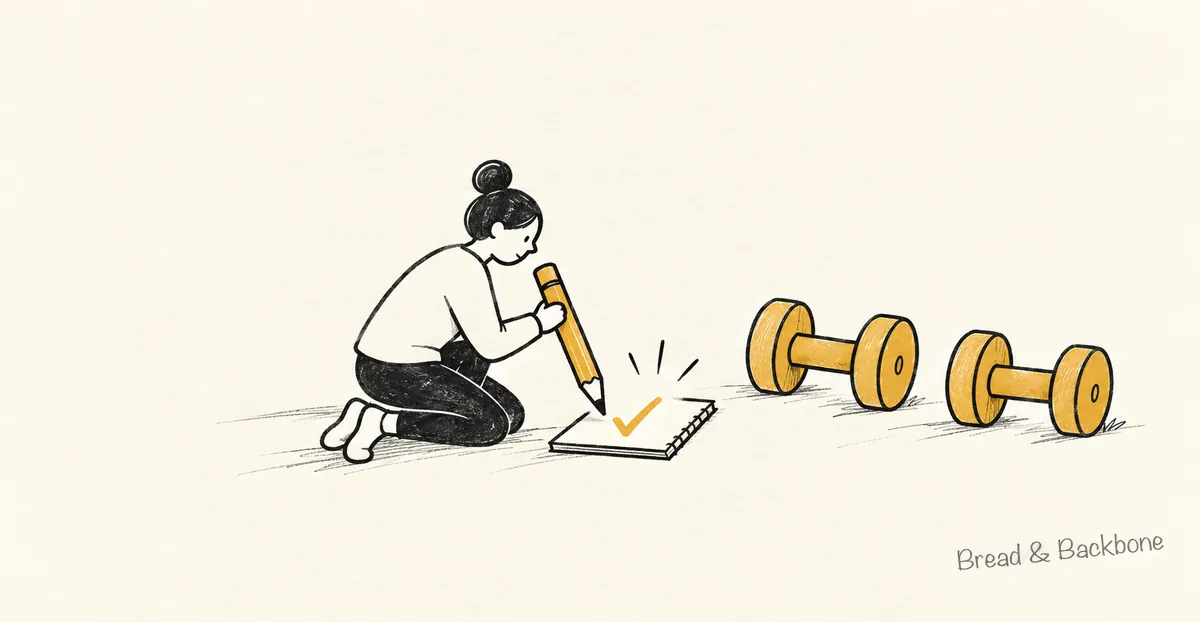
If you already keep training notes, add one sentence about what you learned or want to ask. If you do not, write down one question you would like answered at your next session. You do not need an extra workout or a heavier weight to make the note useful.
Sources checked October 29, 2026. The research concerns training approaches, not validation of this reflection tool. This story offers general learning and recordkeeping guidance, not an individualized progression prescription.