

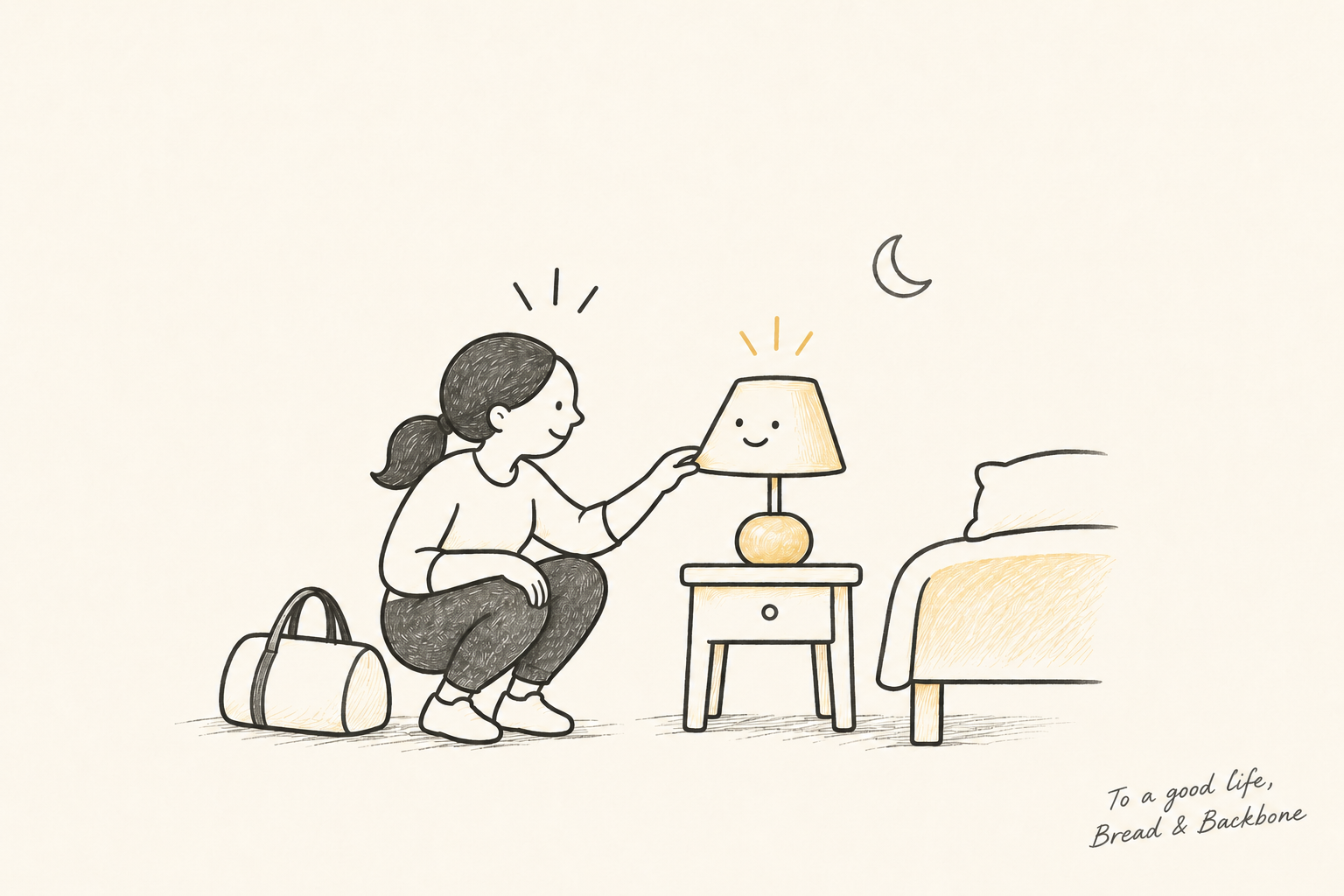
If training leaves you wide awake, consider the whole evening before declaring that exercise has a curfew.
In this story
The day has finally stopped asking questions. Work is finished, dinner is handled, and a workout is possible. Unfortunately, the internet would like to inform you that you have chosen the wrong hour.
This is not especially helpful to people with actual schedules.
Rather than ban evening exercise, a better question is whether the session you are doing leaves enough room for the night you want afterward.
A large study, with an important boundary
A 2025 study in Nature Communications analyzed more than four million nights of wearable data from 14,689 physically active adults. Later, more strenuous exercise was associated with later sleep onset, shorter sleep, and higher overnight resting heart rate and lower heart rate variability. Sessions ending at least four hours before sleep were not associated with those changes.
That is an association, not a randomized test of a four-hour rule. Participants were WHOOP users, roughly three-quarters were men, and wearable estimates are not the same as laboratory sleep measurements. Several authors were affiliated with WHOOP. The study cannot establish that shifting your workout will produce a particular sleep benefit.
It offers a useful question to investigate, not a universal curfew to obey.
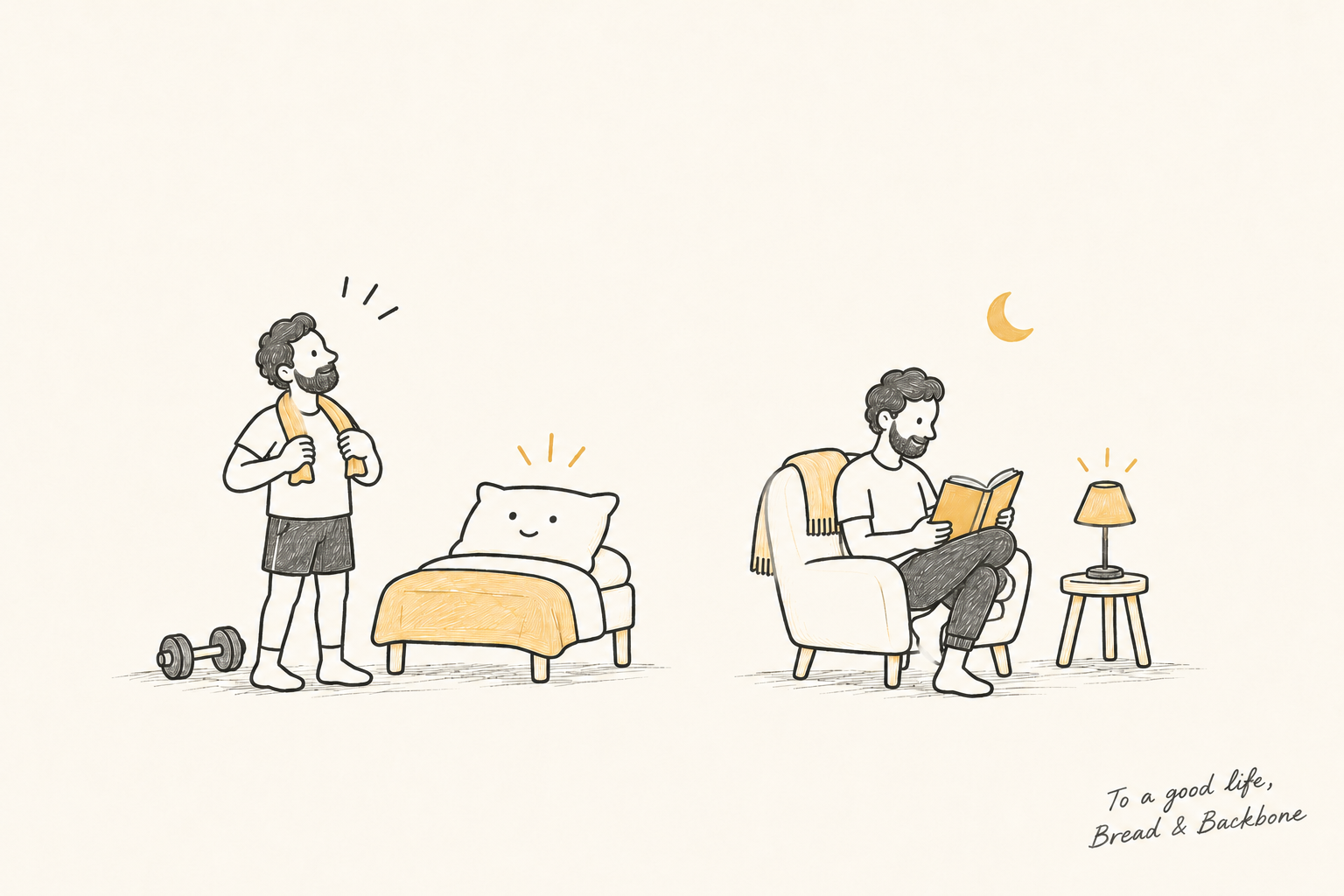
Start with your actual evening
If you train late and sleep comfortably, do not invent a problem simply because a headline found one.
If you regularly finish a demanding session feeling too wired for bed, look at the sequence. When did exercise end? When did you intend to sleep? Was the evening also crowded with caffeine, work, a late meal, or a long journey home?
You do not need to identify a single villain on the first attempt. You are looking for a pattern you can work with.
Our practical suggestion is to change one feasible part of the routine and observe what happens over several ordinary evenings. Perhaps the hardest session moves to an earlier opening. Perhaps the late slot becomes easier movement. Perhaps the useful change is simply leaving more unhurried time before bed.
This is a personal experiment, not a diagnosis or a reproduction of the study. A few notes about how you feel may be enough; a new device is not required.
Avoid a new kind of perfectionism
There is something faintly comic about rushing through dinner, worrying about your recovery score, and then wondering why bedtime does not feel restful.
The aim is not to optimize every minute. It is to find a relationship between training and sleep that works within your life. A theoretically beautiful schedule that requires someone else’s job, commute, and childcare arrangement is not your schedule.
Persistent sleep difficulty deserves attention beyond workout timing, especially if it affects daytime functioning. A clinician can help assess the bigger picture.
For everyone else, consider this permission to be curious rather than rigid. Keep the movement. Notice the landing. Your evening does not need to end with a personal best in either squats or self-monitoring.
Sources
Leota and colleagues, 2025: evening exercise and sleep in a wearable cohort. Read the full paper.