

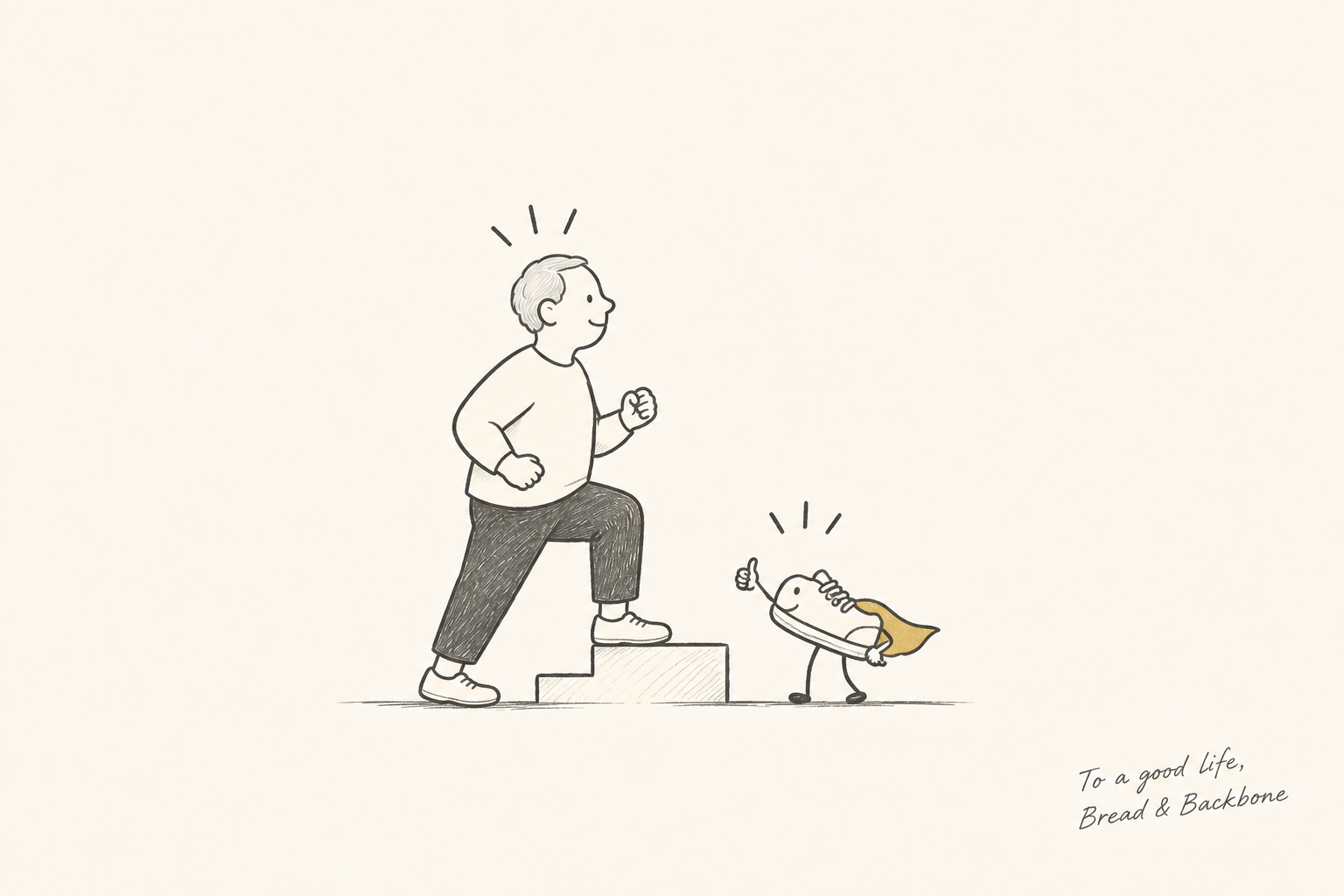
Short movement breaks can be a useful beginning. Whether they change fitness depends on what actually happens during them.
In this story
“Exercise snacks” is an excellent phrase. It sounds friendly. It fits between appointments. Unlike most fitness terminology, it leaves room for lunch.
The appealing idea is to scatter very short bouts of exercise through the day instead of waiting for a large, uninterrupted training window. But a good name can hide a complicated question: what kind of movement, for whom, and compared with what?
Recent research makes that question much more interesting than a simple yes or no.
Two studies, different stories
A 2025 randomized trial assigned 77 inactive adults, averaging 54 years old, to remotely delivered bodyweight exercise snacks or brief stretching sessions for 12 weeks. Participants were encouraged to complete at least three bouts per day, each a minute or less, on at least three days weekly. People generally managed the program, but the snacks did not produce a clear advantage in measured cardiorespiratory fitness or blood biomarkers over stretching. Feasibility did not establish a fitness benefit over that comparison program.
Contrast that with an October 2026 trial involving 27 younger women with overweight or obesity. Its six-week program used supervised, vigorous stair climbing, jump squats, and high knees. The researchers reported improvements in estimated fitness and strength, but metabolic measurements did not change. Twenty-four women completed the study; fitness was predicted from a submaximal test, not directly measured at maximum effort.
These are not interchangeable recipes. One comparison involved stretching; the other, no exercise. Supervision, intensity, participants, and measurements differed.
A doorway is not the whole house
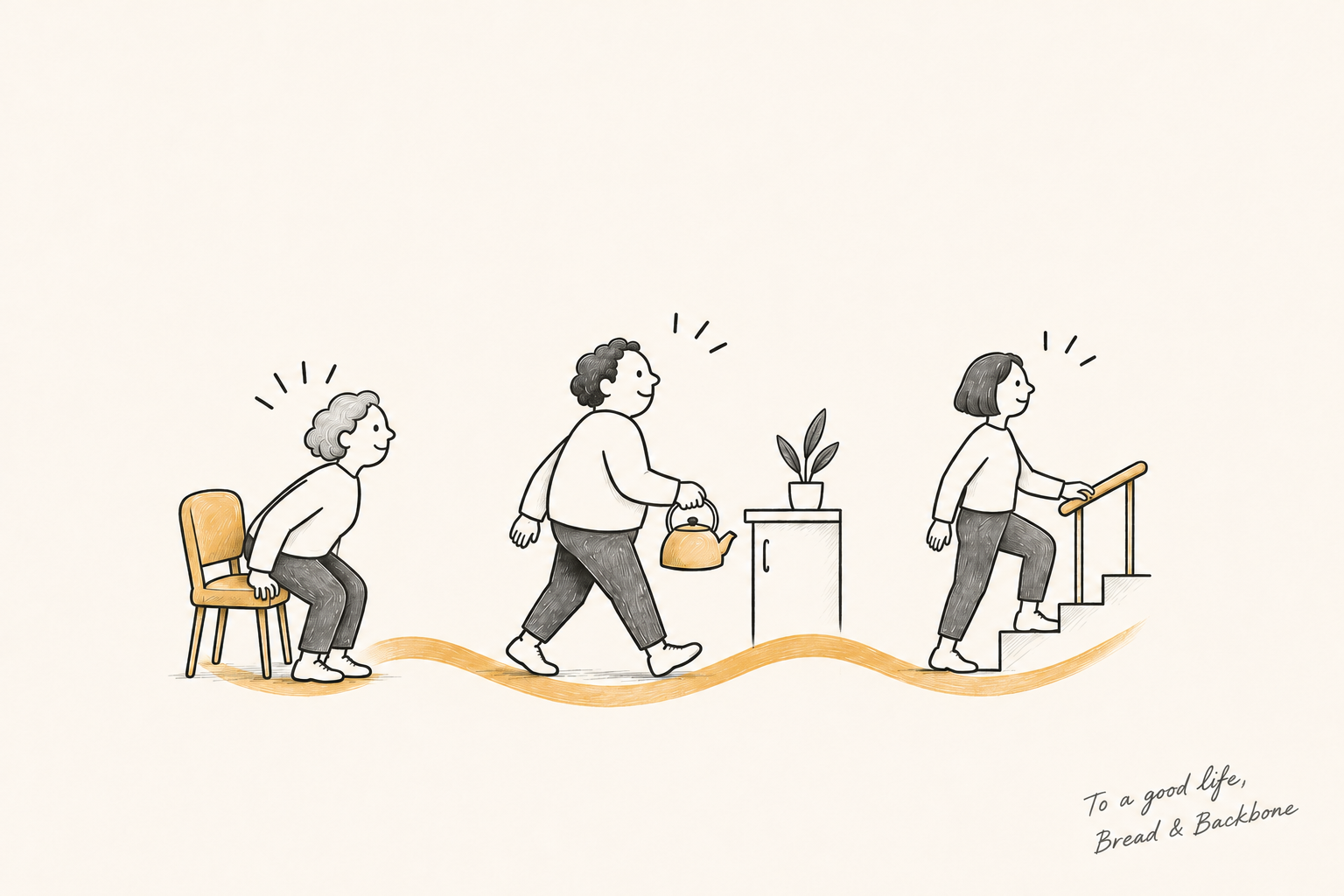
We would rather treat a manageable movement break as a doorway than sell it as a shortcut to everything.
If you have been struggling to begin, a small commitment may be an appealing place to start. That is a practical choice about your routine, not a promise that one minute will deliver a particular laboratory result.
Try separating two questions in your own planning:
- Can I do this consistently? Consider time, space, confidence, comfort, and whether you actually like it.
- Is it serving the goal I chose? A habit that helps you interrupt desk time is not automatically a complete strength or endurance program.
Answering the first question is worthwhile. It simply does not answer the second on your behalf.
Keep the ambition. Lose the miracle
There is no need to leap from sitting all afternoon to vigorous stair sprints because a study used them. An exercise description is not personal clearance, and jumping exercises are not suitable for everybody. Start with activity appropriate to your ability; seek professional guidance if symptoms, a medical condition, or uncertainty make harder exercise a question.
You can also reject the idea that every available minute must become productive. A quiet cup of coffee is allowed to remain a quiet cup of coffee.
The useful promise here is smaller and more humane: training does not always need an elaborate entrance. But if you want a specific result, the details still matter. Tiny can be a starting point. It does not need a superhero cape.
Sources
Babir and colleagues, 2025: real-world exercise-snack randomized trial. Full text.
Park and colleagues, October 2026: supervised exercise-snack randomized trial.