

In this story
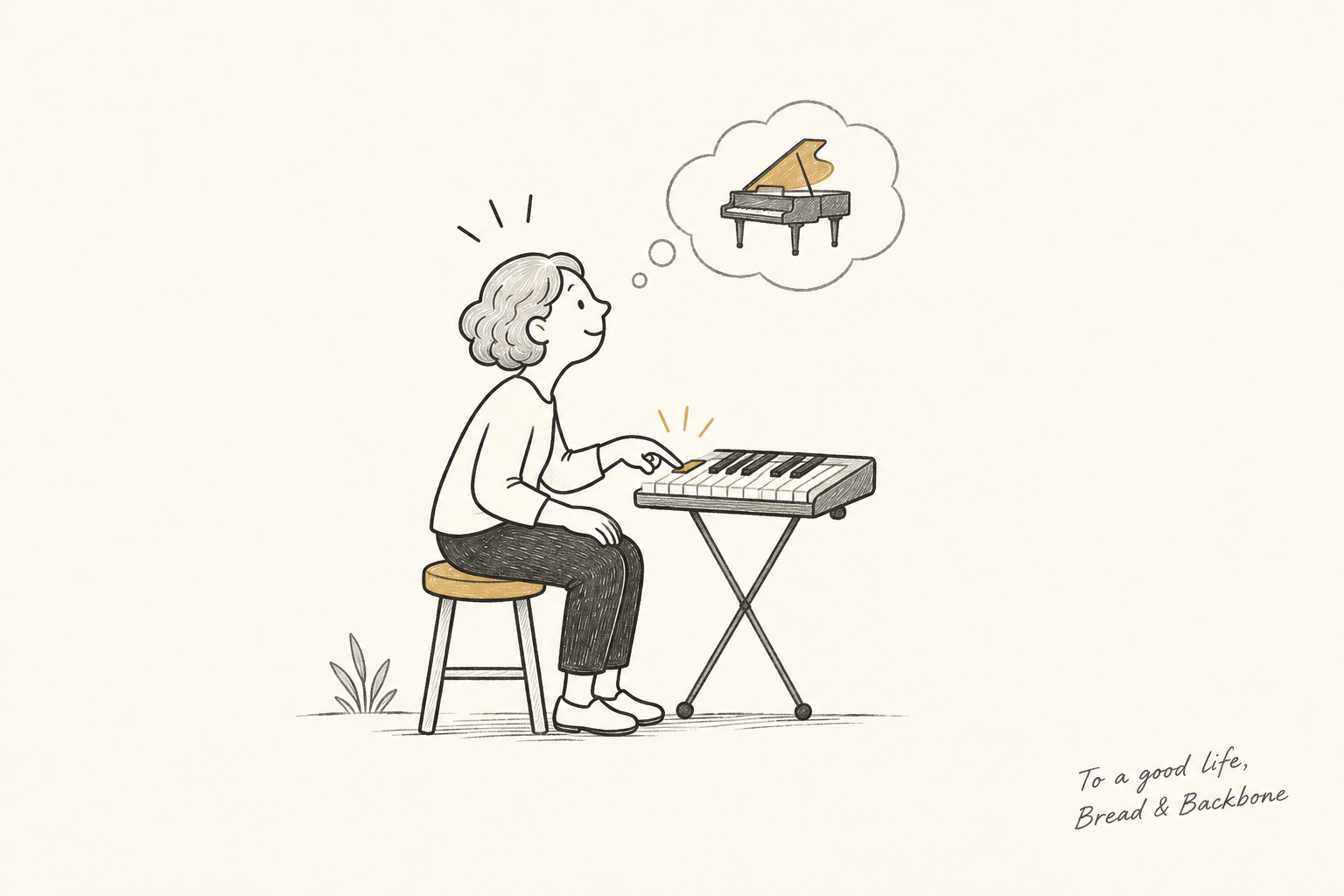
There is a strangely strict rule we sometimes apply to adult hobbies: before starting, we should already show signs of being good at them.
Children are allowed to make an uncertain noise. Adults apparently need a five-year plan and a promising audition.
A 2025 piano study offers a different reason to begin. Its interesting question was not whether older beginners could become concert performers. It was whether learning could make everyday life feel better.
What the researchers did
The randomized trial involved 156 healthy older adults. Participants attended weekly hour-long piano or music-listening/culture lessons for a year. During the first six months, the piano group fared better than the music-culture group on psychological, physical, and environmental quality-of-life measures. This mainly reflected maintaining quality of life or slowing a decline, rather than a statistically clear improvement from participants’ own starting scores. There was no clear between-group benefit for social quality of life. PubMed record.
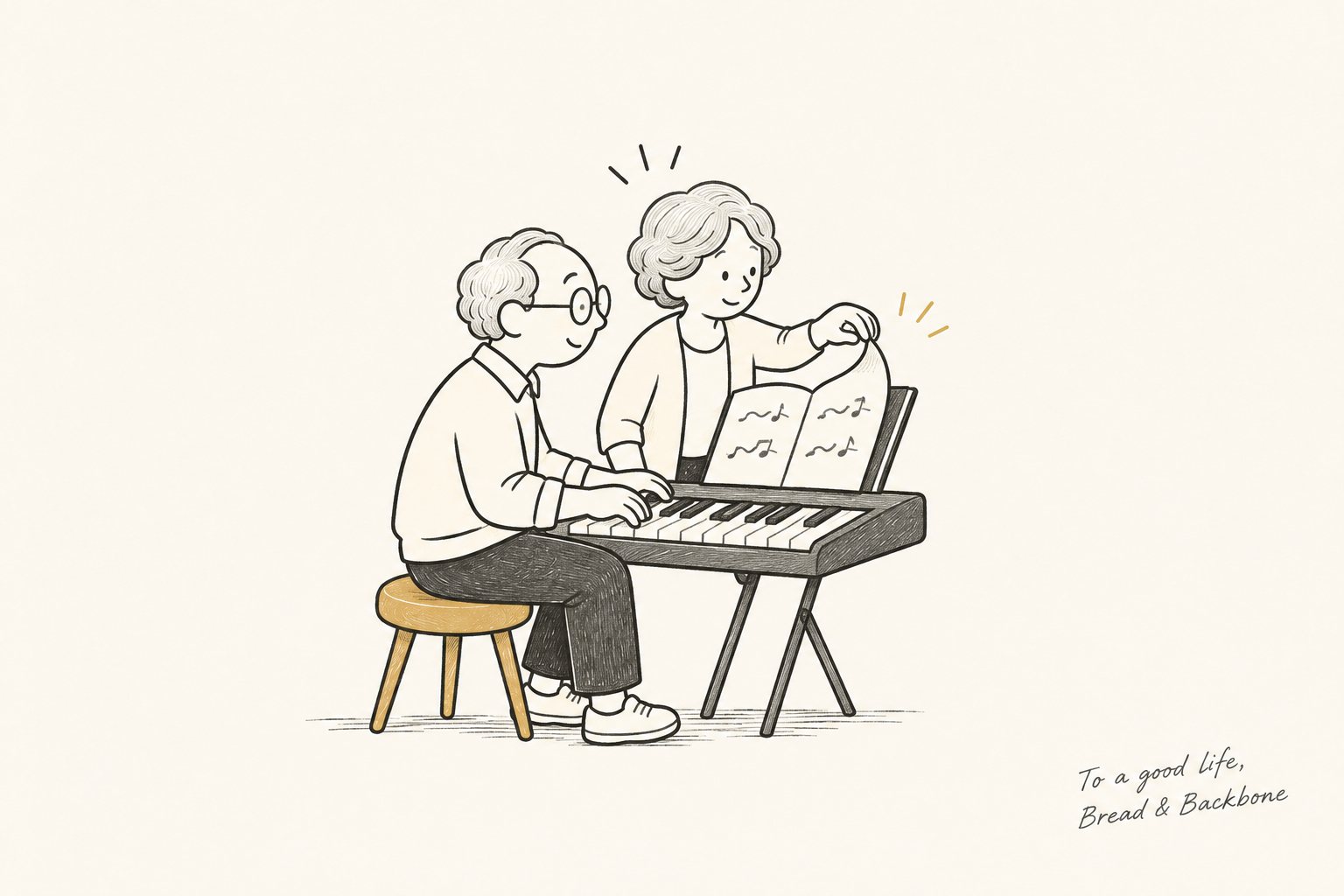
The full paper adds important context: participants were retired beginners aged 62–78, and the comparison group also received teaching and musical engagement. Both groups had homework. The piano group received an electronic keyboard and equipment for practice. This was not a test of buying an instrument and leaving it in the corner. Full study.
Quality of life is a worthwhile outcome
We do not need to translate every enjoyable activity into a claim about living longer. Feeling more satisfied with parts of everyday life is worth investigating on its own terms.
It is also worth being precise. A quality-of-life questionnaire is not the same as diagnosing disease, measuring independence directly, or proving dementia prevention. The study reported associations with some brain-volume changes, but those do not establish a protective mechanism or promise a younger brain.
The participants were a selected, healthy group. The results do not automatically tell us what would happen for every age, health condition, instrument, or teaching format.
Make beginning easier, not more impressive
If you are curious about learning, a useful first question is not “Could I ever be good?” It is “What would make this enjoyable enough to explore?”
That might mean a teacher comfortable with adult beginners, an accessible instrument, an introductory session, or permission to start with music you actually like. Consider the practical details too: cost, space, physical comfort, hearing needs, and whether you have a realistic way to practice.
These are editorial suggestions, not a substitute for the study’s program and not a guarantee of its results. There is no need to buy an expensive piano to prove that you are taking curiosity seriously.
Before committing, ask a teacher how lessons are adapted for beginners and what equipment is genuinely needed. A borrowed keyboard and a sensible conversation may be a better opening than an elaborate shopping cart.
Let the hobby remain a hobby
You can notice progress without turning every practice into a health score. You can enjoy a piece before playing it perfectly. You can decide another activity suits you better without treating that as a failure to age correctly.
The most humane reading of this research is not an instruction that everybody should learn piano. It is permission to take the experience of learning seriously at an age when people are too often encouraged only to maintain what they already have.
A beginner is not a failed expert. A beginner is someone who has started.
Keep exploring healthy aging, or read how to look past a health headline before turning an enjoyable activity into a promise.