

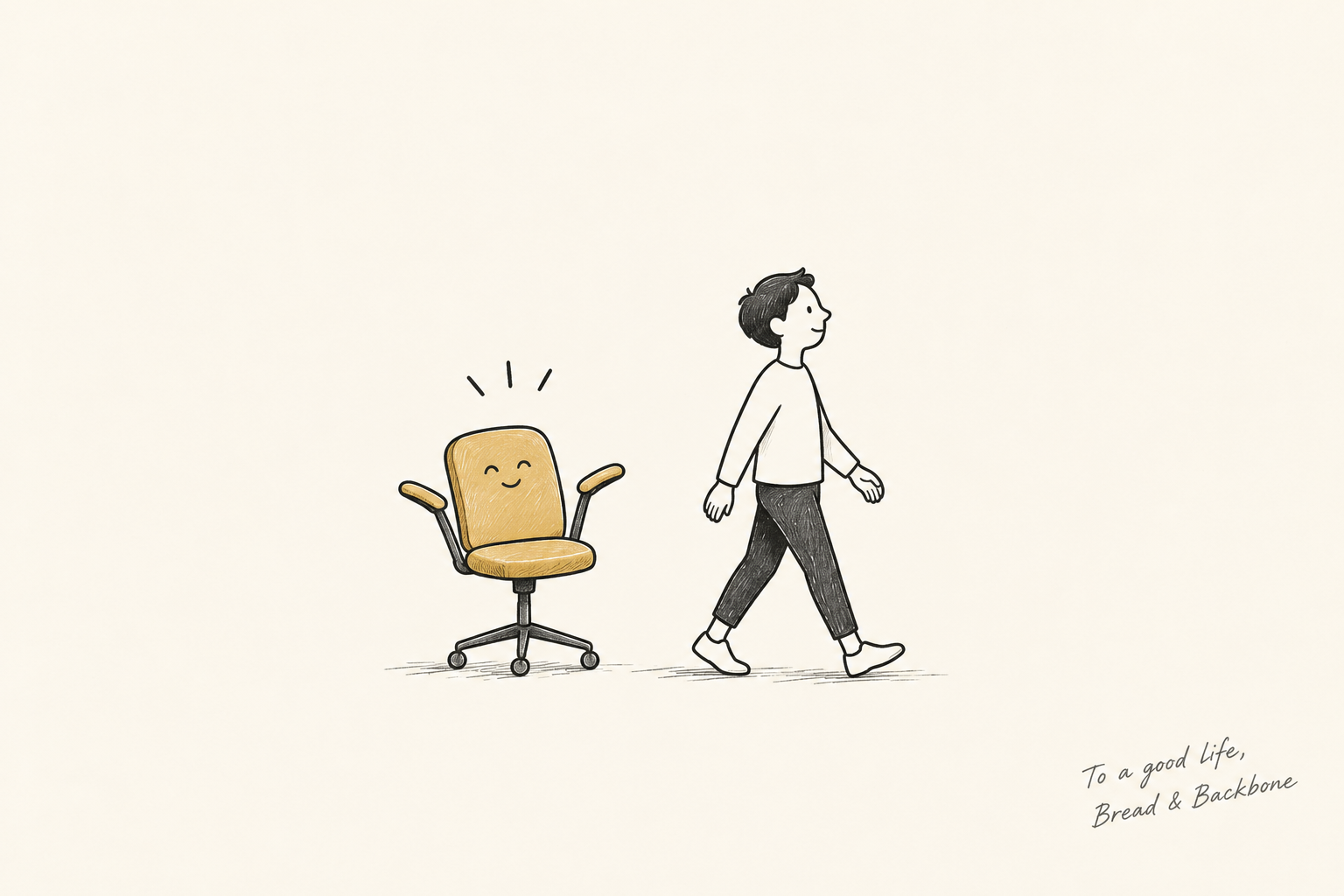
Sometimes the most useful movement plan is not another workout. It is a little less uninterrupted sitting.
In this story
There is a particular kind of afternoon that disappears into a chair. One email becomes twelve. Lunch happens beside the keyboard. Suddenly the light has changed, and your legs would like to speak to management.
The usual response is to promise a magnificent workout later. But there is another question worth asking: could the hours before that workout contain a little more movement?
Not a transformation. Not a sweat challenge in office clothes. Just a break.
What the research actually measured
A 2026 systematic review in Obesity Reviews examined 53 short laboratory studies, with 39 included in its pooled analysis. Adults completed both prolonged-sitting conditions and conditions interrupted by activity. On average, breaks reduced the measured glucose and insulin response after meals. Walking was a promising option.
These were experiments lasting less than 24 hours, not demonstrations that desk breaks prevent diabetes or extend life. Participants and protocols varied. The review also had no preregistered protocol, and its search ended in October 2024 despite its 2026 publication.
The practical distinction is between a modest short-term physiological finding and a sweeping health promise. This evidence supports taking movement breaks seriously. It does not turn your calendar into a medical prescription.
Make room, not rules
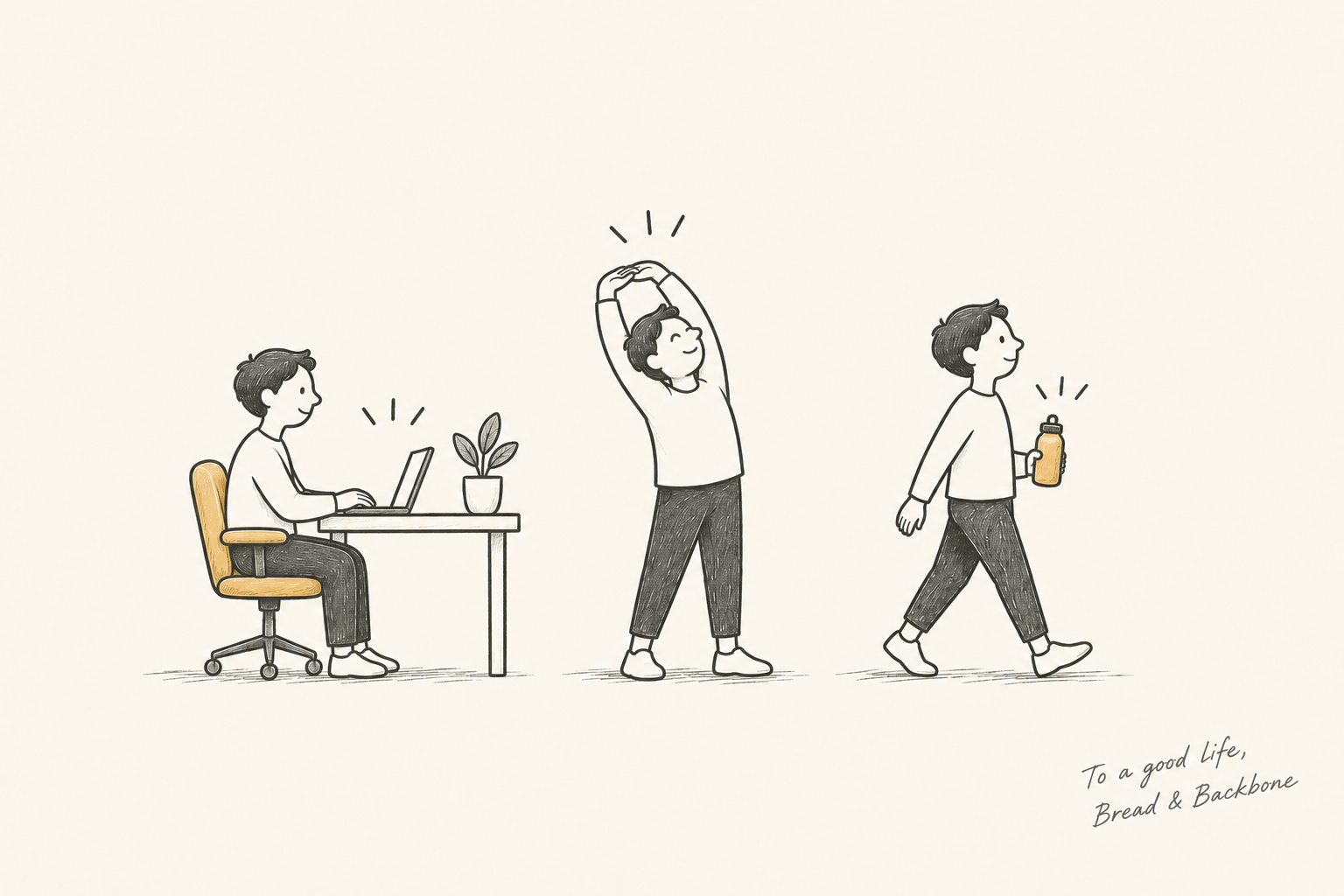
Our suggestion is deliberately ordinary: look for one stretch of your day in which you tend to stay planted, then design a break you can actually take.
Perhaps you walk to fill your glass between calls. Perhaps you finish lunch away from the desk and take the longer route back. Perhaps a recurring meeting becomes audio-only while you move somewhere safe and quiet.
Choose a cue that belongs to your life. A finished task can be a cue. So can a natural pause in a conversation. If a timer helps, use it. If it becomes another tiny supervisor demanding perfect compliance, try something gentler.
This is an invitation to experiment with your routine, not the precise intervention tested in every study. Nor does a walking example fit everyone. If walking is uncomfortable or inaccessible, discuss suitable movement options with a clinician or physical therapist rather than treating someone else’s routine as a requirement.
Leave the guilt at the desk
Some work is genuinely difficult to interrupt. Some days are organized around caregiving, pain, transportation, or meetings you did not choose. A useful suggestion should acknowledge that rather than announce that everyone has the same twenty minutes.
Ask a smaller question: where is there one opening?
You do not need a wearable to answer it. You do not need to earn lunch, cancel out lunch, or analyze lunch as though it were a suspicious transaction. The point is simply to make your day a little less motionless when circumstances allow.
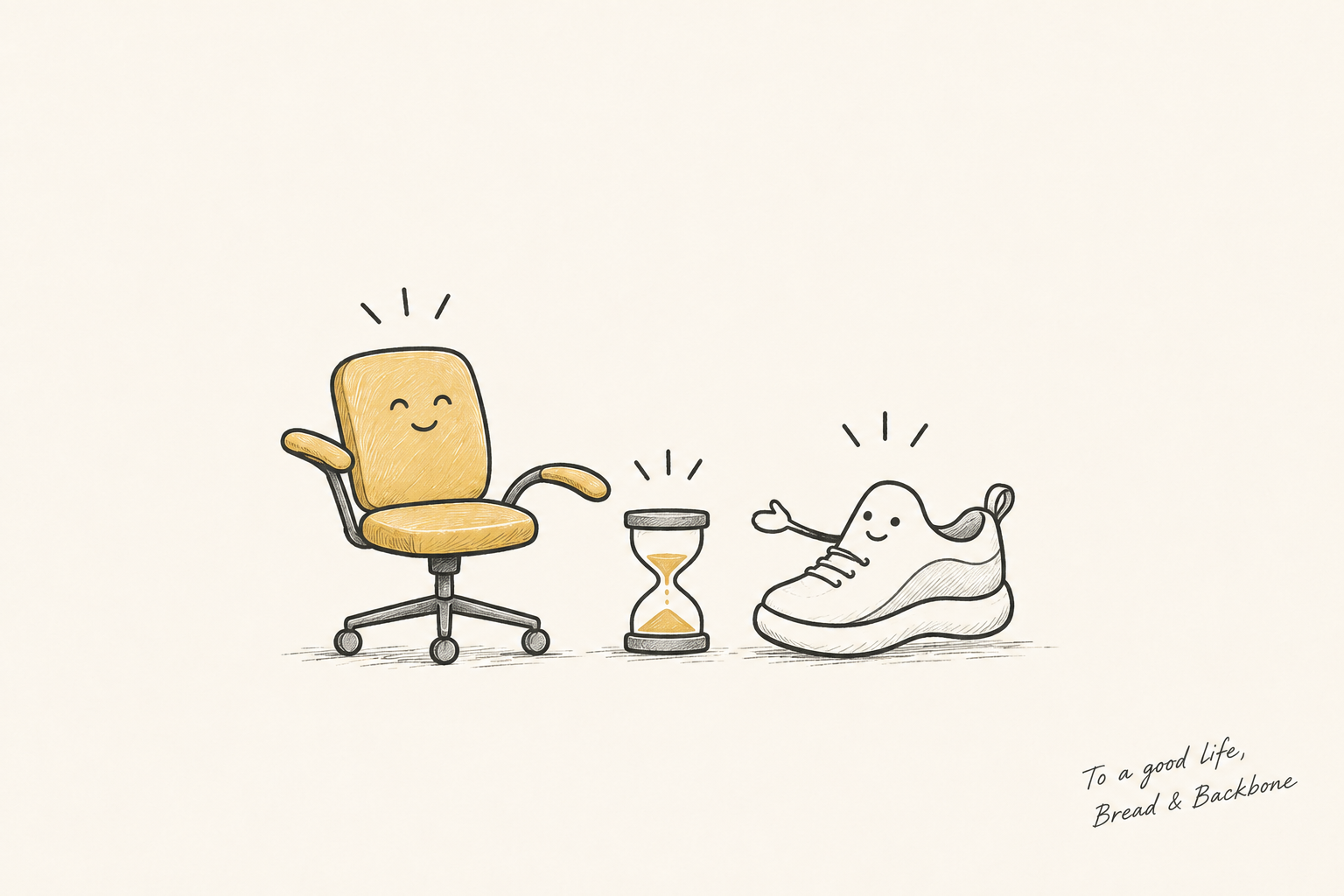
Your workout can remain your workout. Your walk can remain a walk. And your chair can enjoy a brief, well-deserved moment alone.
Sources
Gale and colleagues, 2026: systematic review of activity breaks and post-meal glucose and insulin. Read the full paper.